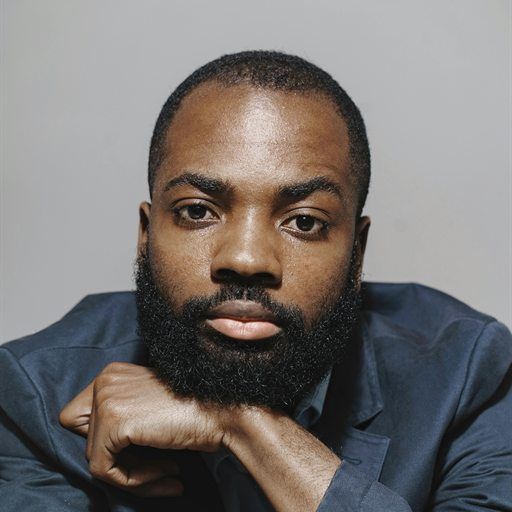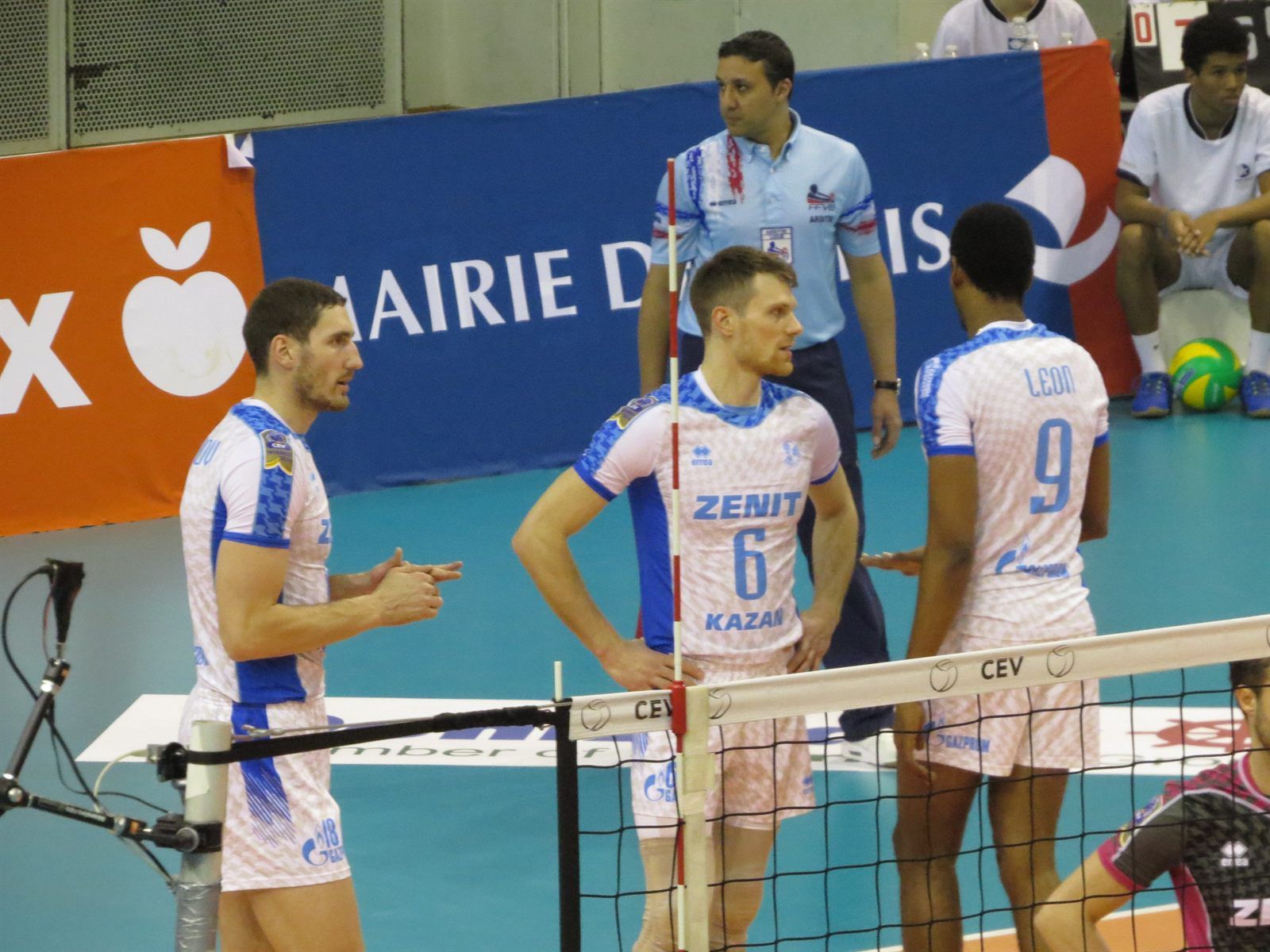
Wilfredo Leon is easy to describe as power.
He is 201 cm tall, is widely listed with a 385 cm spike reach, serves with frightening speed, and attacks from both the front and back rows with the kind of force that immediately stresses a blocking system.
So the nickname-style idea of him as volleyball's ultimate cannon makes sense.
But it is not enough.
The better question is: why is Leon often viewed as a modern outside hitter ceiling?
An outside hitter does not only score. At the elite level, the position requires serve receive, out-of-system attacking, back-row involvement, serving pressure, defensive coverage and key-point responsibility. Leon's value is that he combines absolute firepower with a broad outside-hitter workload.
The Short Answer
| Area | Leon's profile | Why it matters |
|---|---|---|
| Attack height | 201 cm frame and elite contact point | Keeps attacking angles alive against high blocks |
| Serve pressure | Heavy jump serve | Can damage the opponent before the rally is built |
| Back-row attack | Strong pipe and transition value | Keeps his team dangerous across rotations |
| Out-of-system swings | Can score from imperfect sets | Crucial in pressure points |
| International path | Cuba youth star, European club champion, Poland core player | Success across systems |
| Complete role | Can receive, attack, serve and carry difficult balls | Close to the modern outside-hitter ideal |
Volleyball World's Tokyo 2020 player page lists Leon as a 201 cm outside hitter for Poland. FIVB's feature on Leon records his early medals with Cuba, including 2010 Men's World Championship silver and 2012 World League bronze. Volleyball World profile, FIVB: Wilfredo Leon
Career Timeline
| Year | Event | Why it matters |
|---|---|---|
| 1993 | Born in Santiago de Cuba | Product of a major volleyball culture |
| 2007-2012 | Represented Cuba | Reached senior international volleyball as a teenager |
| 2010 | Won World Championship silver with Cuba | Proved elite ability very early |
| 2014 | Joined Zenit Kazan | Entered Europe's top club ecosystem |
| 2015-2018 | Won major European titles with Zenit | Became a championship outside hitter |
| 2019 | Began representing Poland | Completed a major national-team transition |
| 2023 | Poland won EuroVolley and Leon was MVP | National-team value fully validated |
| 2024 | Poland won Olympic silver in Paris | Entered Olympic medal history with Poland |
CEV's 2016 Champions League report said Zenit Kazan won the title and that Leon earned MVP honours for the second straight year. CEV: Zenit Kazan Champions League title
Why Outside Hitter Is So Difficult
New viewers sometimes think an outside hitter is simply "the player who spikes."
That is not accurate.
| Duty | Requirement | Why it is difficult |
|---|---|---|
| Serve receive | Handle jump serves and float serves | Bad passing breaks the whole offense |
| Left-side attack | Score from high balls and tempo balls | Opponents often key their block on the outside |
| Back-row attack | Hit from zone six or pipe patterns | Requires timing, approach space and setter connection |
| Defensive coverage | Help in backcourt and transition | The player cannot only wait to attack |
| Pressure swings | Handle bad sets and key points | Decides the ceiling of elite teams |
Leon is praised not because he hits hard in isolation, but because he keeps cannon-level offense inside this complicated role.
Power Is Not the Whole Story
Leon looks violent, but his value is not only raw force.
Modern men's volleyball blocks are too tall and organized for pure power to solve everything. The best hitters need angles, timing, contact point, line variation and tactical patience.
| Ability | Why it is not just strength |
|---|---|
| High-contact attack | Lets him hit around or over block shapes |
| Line and cross variation | Makes the same approach hard to read |
| Back-row attack | Depends on timing and setter rhythm |
| Jump serve | Requires toss control, speed and target selection |
| Out-of-system attack | Requires reading block and defense under bad conditions |
That is what separates Leon from a normal power hitter. His physical gifts are the base. His ability to convert them in messy volleyball situations is the real separator.
The Cuba Years
Leon became important very early.
FIVB lists several early medals with Cuba: 2009 U21 World Championship silver, 2010 Youth Olympic gold, 2010 Men's World Championship silver and 2012 World League bronze. He was not a late bloomer. He was placed into elite volleyball almost immediately.
His career then split into three chapters:
| Stage | Keywords | Value |
|---|---|---|
| Cuba | Teenage star, national-team exposure, raw ceiling | Proved rare talent |
| European clubs | Zenit Kazan, Champions League, league titles | Proved professional-system dominance |
| Poland | EuroVolley, VNL, Olympic silver | Proved national-team core value in a new environment |
Leon is not the product of one system. He is one of the rare players whose value survived across systems.
EuroVolley 2023
EuroVolley 2023 was a major statement.
CEV reported that Poland defeated Italy 3-0 in the final, with Leon scoring 13 points and being named tournament MVP. CEV: Poland claim EuroVolley crown
That matters because it showed that Leon was not only a club monster. He could be central to Poland's national-team success.
| Meaning | Explanation |
|---|---|
| Team result | Poland's system worked at the highest European level |
| Individual award | MVP confirmed he was not a supporting figure |
| Opponent quality | Beating Italy in the final carried real weight |
| Role confirmation | He moved from naturalized star to key national-team player |
Le Monde's Paris 2024 preview noted that Poland entered the Olympic cycle after winning the Nations League and European Championship in 2023. Le Monde: Leon and Poland before Paris 2024
Paris 2024 Still Matters
Poland lost the Paris Olympic final to France and took silver.
That is not the dream ending, but it is still meaningful. Olympic men's volleyball is brutally difficult, and Poland's return to the final was an important breakthrough.
Le Monde's Olympic final report described France defending its title and noted Leon's role in the closing sequence, where he helped save match points, including with an ace. Le Monde: Paris 2024 men's volleyball final
That image explains Leon's status. Even when the situation is almost gone, he is still the player expected to create a way out.
Leon and Ngapeth: Two Outside-Hitter Aesthetics
Fans often compare Leon with Earvin Ngapeth because both changed how people imagine the outside hitter.
| Area | Wilfredo Leon | Earvin Ngapeth |
|---|---|---|
| Main image | Height, power, serve pressure, heavy attack | Creativity, touch, rhythm, improvisation |
| Attack style | Contact point and force with line variation | Deception, tempo changes and unusual solutions |
| Entertainment value | Heavy weapon pressure | Artist-like unpredictability |
| Risk | Physical load and injury management | Volatility from improvisational choices |
| Shared value | Not ordinary outside hitters | Both expanded the position's imagination |
Leon is not the more theatrical player. He is more like a repeatable heavy solution.
Limits and Risks
A good player profile should not be pure praise.
Leon also carries real risks:
| Risk | Why it matters |
|---|---|
| Physical load | Jump serving, high-contact attacking and back-row hitting stress the body |
| Injury impact | If explosiveness drops, his intimidation changes |
| Serve-receive targeting | Opponents can serve at him to reduce attacking rhythm |
| Age curve | Born in 1993, he must increasingly rely on efficiency and experience |
| System dependence | Even elite outside hitters need passing, setting and middle pressure |
These risks do not diminish his status. They make the evaluation more realistic. Volleyball is not a one-on-one sport, and even the best outside hitter must function inside a system.
How to Watch Leon
If you want to understand Leon, do not only watch spike highlights.
Watch these details:
| Detail | What to observe |
|---|---|
| Serve rotation | Does he break the opponent's first pass? |
| Out-of-system balls | Can he score when the set is imperfect? |
| Back-row attack | Is his pipe timing connected with the setter? |
| Receive-to-attack | Can he pass and still become an option immediately? |
| Key-point choices | Does he hit hard, tool the block, tip, or change line? |
Seen this way, Leon is not only violent. He is a way for a team to keep an answer in difficult rotations.
FAQ
Is Wilfredo Leon Cuban or Polish?
He was born in Cuba and represented Cuba early in his career. He later obtained Polish citizenship and has represented Poland internationally since 2019.
Why is he considered an elite outside hitter?
Because he combines high-point attack, serve pressure, back-row offense, difficult-ball scoring and major success in both club and national-team volleyball.
Is he the best active outside hitter?
That is subjective. Leon has long belonged in the top-tier discussion, but volleyball evaluation depends on form, health, role and team system.
Is the 385 cm spike reach reliable?
It is a widely repeated figure and matches the source video's description, but different databases may use different measurement standards. His match value should not be reduced to one number.
What should new fans watch first?
Watch Zenit Kazan Champions League matches, Poland's 2023 EuroVolley run, Paris 2024 Poland matches, and compilations that include his serve rotations and back-row attacks.
Conclusion
Leon is a cannon.
But he is not only a cannon.
If a player only hits hard, elite volleyball eventually solves him. Leon's special value is the combination: height, power, serving, back-row attack, pressure swings and cross-system adaptability.
From Cuban prodigy to European club champion to Polish national-team star, his career shows what the modern outside hitter can be.
The position's ceiling is not simply about how hard a player can hit.
It is about whether, when the pass is bad, the set is late, the block is waiting and the score is tight, the team still has an answer.
For many years, Wilfredo Leon has been that answer.