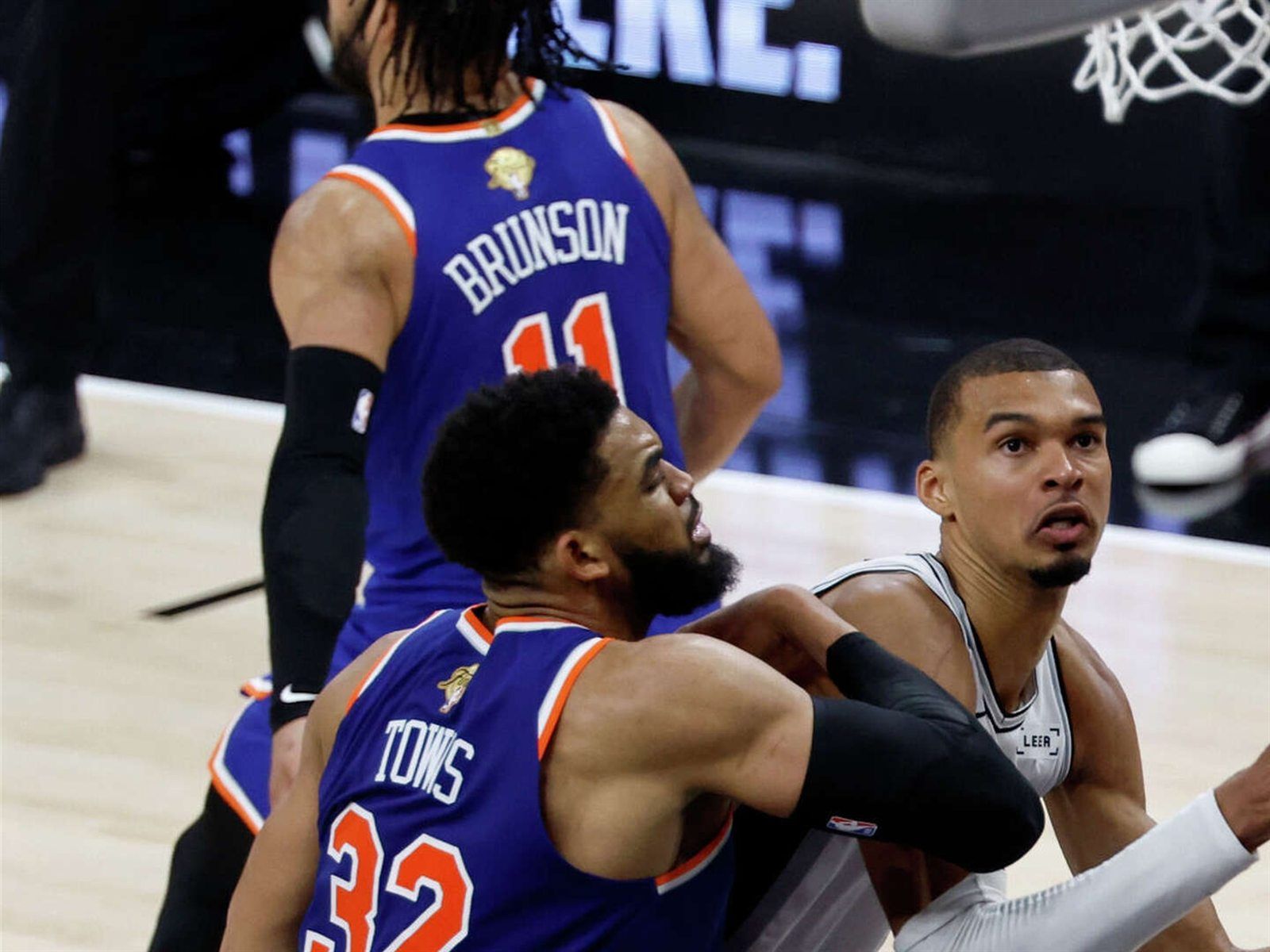
The New York Knicks beat the San Antonio Spurs 105-104 in Game 2 of the 2026 NBA Finals.
That one-point margin can make the game feel like a coin flip. It was not. The Spurs had the comeback, the crowd, the ball and the chance to steal it back. Then the Knicks owned the final details.
Victor Wembanyama's box score was strong: 29 points and 9 rebounds. But the final minute told a harsher story. He committed the late turnover that led to Jalen Brunson's go-ahead free throw, then missed the jumper that would have won the game.
That does not make Wembanyama a failure. It does make Game 2 a Finals lesson.
The lesson is simple: at this level, talent gets you into the last possession. Execution decides whether you leave with the win.
The Verified Game 2 Picture
| Category | What happened |
|---|---|
| Game | 2026 NBA Finals, Game 2 |
| Venue | Frost Bank Center, San Antonio |
| Final score | Knicks 105, Spurs 104 |
| Series | Knicks lead 2-0 |
| Key swing | San Antonio erased a 14-point fourth-quarter deficit |
| Final sequence | Wembanyama turned it over, Brunson hit the go-ahead free throw, Wembanyama missed at the end |
| Knicks leaders | Karl-Anthony Towns: 21 points, 13 rebounds; Jalen Brunson: 20 points; Mikal Bridges: 20 points |
| Spurs leader | Victor Wembanyama: 29 points, 9 rebounds |
AP reported that the Spurs went up 104-102 on Wembanyama's three-point play with 57 seconds left. New York then scored the final three points of the game.
The headline is not that Wembanyama had a bad statistical night. He did not.
The headline is that New York was cleaner when the game stopped being about production and became about decisions.
Turning the Source Commentary Into Basketball Analysis
The source video is emotionally forceful. Its central argument is that Wembanyama did not bring enough urgency early, that Karl-Anthony Towns gave him problems, and that the Knicks looked more mature.
There is a basketball point inside that criticism, but it needs sharper wording.
| Emotional version | Better basketball version |
|---|---|
| Wembanyama was soft | Wembanyama's numbers were good, but his early impact and late decision-making were below what San Antonio needed |
| Towns destroyed him | Towns consistently pulled Wembanyama into uncomfortable decisions with shooting, spacing, rebounding and physicality |
| Wembanyama did not respect the Knicks | That cannot be verified. What can be said is that he did not impose his defensive and offensive influence early enough |
| The late turnover was historically awful | It was a severe Finals mistake, but the useful point is how San Antonio got there |
| The series is over | New York has a huge advantage, but the series still moves to Madison Square Garden for Game 3 |
Good Finals analysis should not be a character trial. It should explain why the decisive possessions happened.
The Final 57 Seconds
The Spurs' comeback deserved more than a loss.
They were down 14 in the fourth quarter and answered with a 14-0 run. With 57 seconds left, Wembanyama converted a three-point play to put San Antonio ahead 104-102. That should have been the moment the game flipped.
Instead, the Knicks won the last possessions.
- Brunson scored to tie the game.
- Wembanyama missed a long jumper.
- New York failed to score, giving San Antonio another chance.
- Wembanyama turned the ball over.
- Brunson was fouled and hit the go-ahead free throw with 9.5 seconds left.
- San Antonio called timeout, De'Aaron Fox found Wembanyama, and Wembanyama missed the potential winner.
The Spurs did not lose because they lacked a chance.
They lost because their two best late chances did not become clean outcomes.
Wembanyama's Problem Was Not the 29 Points
Wembanyama's 29 points are not the issue.
The issue is possession quality.
In a Finals game, a superstar has to do more than accumulate points. He has to shape the game early, organize pressure, and make the safest high-value choice late.
Wembanyama's Game 2 exposed three areas.
1. His Impact Arrived Too Late
The source commentary argues that Wembanyama only fully showed visible urgency late. That is subjective, but the basketball concern is real.
San Antonio need him to set the tone from the first quarter. That does not mean forcing shots. It means controlling the rim, triggering transition, demanding early catches and making New York feel his presence every trip.
If the Spurs wait until desperation time, they are letting the Knicks choose the terms of the game.
2. Towns Made Him Defend More Than the Rim
Towns' 21 points and 13 rebounds matter, but his bigger value was positional.
Towns is not a traditional center who stays in one place. He can shoot, face up, rebound and drag a rim protector into space. When Wembanyama follows him, San Antonio's back line loses its biggest deterrent. When Wembanyama stays home, Towns becomes a spacing and shooting problem.
That is the matchup pressure.
Towns did not need to win every possession. He only needed to keep forcing Wembanyama to choose.
3. The Last Turnover Was a Decision-Making Error
The late turnover is the play everyone will remember.
San Antonio had the ball with the game tied. In that situation, the priorities are simple:
- advance the ball safely;
- create a shot or a foul;
- use a timeout if needed;
- avoid a live-ball mistake;
- make New York defend one more complete possession.
Instead, the ball went back to the Knicks. Brunson turned that mistake into the decisive point.
That is the difference between a spectacular comeback and a missed opportunity.
Why Towns May Be the Series' Hidden Pivot
Brunson is New York's closer, but Towns is a major reason the Knicks are up 2-0.
| Towns' role | Why it matters |
|---|---|
| Floor spacing | Pulls Wembanyama away from the rim |
| Rebounding | Limits San Antonio's chance to run after stops |
| Physicality | Makes Wembanyama work for position |
| Shooting threat | Punishes conservative coverages |
| Secondary star power | Reduces the burden on Brunson when he is trapped |
NBA.com's film study noted that while Brunson and Wembanyama were central to the final minute, the bigger difference was New York's 3-point edge, with the Knicks outscoring the Spurs by 12 from beyond the arc.
That matters because it shows New York's offense was not only Brunson isolation. The Knicks created value around the pressure Brunson draws.
Towns is essential to that.
Brunson's Maturity: Winning Without a Perfect Shooting Night
Brunson did not have a clean, dominant shooting night. He still ended up deciding the game.
That is mature Finals guard play.
Some nights, the defense traps you. Some nights, the shot is not smooth. Some nights, the game is ugly. Brunson's value is that he remains usable in the mess. He keeps probing, keeps drawing contact and keeps the Knicks organized enough to be ready when the final mistake comes.
The contrast with San Antonio is not talent.
It is late-game certainty.
New York knows where the ball is going and what type of result it wants. San Antonio still looks like a young team discovering that in real time.
San Antonio's Comeback Still Matters
The Spurs should not ignore the good part.
They erased a 14-point fourth-quarter deficit. They pushed New York to the final shot. They showed urgency, length and defensive pressure that can bother the Knicks.
That is real.
But a comeback is not a plan. It is evidence that a plan might exist if the Spurs start earlier.
The next question is whether they can bottle that fourth-quarter desperation and play that way before the scoreboard forces them to.
What the Spurs Must Change in Game 3
The series now shifts to New York. San Antonio's room for delay is gone.
| Game 2 issue | Game 3 adjustment |
|---|---|
| Wembanyama's urgency came late | Use him early as a screener, roller, post target and defensive transition trigger |
| Towns stretched the matchup | Clarify when Wembanyama switches, drops or pre-rotates |
| Knicks punished attention on Brunson | Rotate earlier and stay attached to shooters |
| Late possessions became improvised | Build two or three reliable crunch-time actions around Fox and Wembanyama |
| Wembanyama's final decisions were rushed | Prioritize safe advancement, timeout awareness and shot quality |
The biggest adjustment is psychological only in the broadest sense. More specifically, it is structural.
Wembanyama cannot wait for the game to become dramatic before he becomes forceful. The Spurs need his force built into the first quarter.
The Real Meaning of 2-0
The Knicks are not up 2-0 by accident.
They won two road games because they are more stable late, more comfortable in ugly possessions and more connected around their stars.
The Spurs are not done. But they are no longer in control.
Wembanyama has already shown he can produce in the Finals. Game 3 asks a harder question: can he control the Finals?
That means fewer rushed choices, cleaner late-game reads and a stronger tone from the opening tip.
New York has the lead.
San Antonio still has the talent.
The next game will show whether the Spurs can turn talent into structure before the series moves out of reach.
FAQ
What was the Knicks-Spurs Game 2 score?
The Knicks beat the Spurs 105-104 and took a 2-0 lead in the 2026 NBA Finals.
What happened to Victor Wembanyama at the end?
Wembanyama committed a late turnover that led to Jalen Brunson's go-ahead free throw, then missed the potential game-winning jumper on San Antonio's final possession.
Did Wembanyama play badly?
Not statistically. He had 29 points and 9 rebounds. The problem was late-game execution and how consistently he shaped the game before the final minute.
Why was Karl-Anthony Towns so important?
Towns had 21 points and 13 rebounds, but his larger value was forcing Wembanyama away from comfortable rim-protection spots while giving New York spacing and physical rebounding.
What must the Spurs fix in Game 3?
They need earlier Wembanyama involvement, clearer late-game actions, better rotations against Brunson-created advantages and more careful final-possession decision-making.