When people think about golf, they often think about money before they think about sport.
Films and social media tend to connect golf with businesspeople, private clubs, carts, clubhouses, villas, dress codes and high membership fees. A video title about entering a club with million-level dues almost invites viewers to watch with curiosity and suspicion.
But a useful article should go beyond "rich people are strange."
The better question is: where does golf's cost actually come from? Is golf naturally a rich person's sport, or does it become expensive in certain cities, countries and club models?
The answer is layered. Golf is not expensive only because clubs cost money. It combines land, maintenance, time, instruction, equipment, etiquette and social space. You see one swing; behind it is an entire cost structure.
The Short Answer
| Cost layer | What it looks like | Why it feels elite |
|---|---|---|
| Land | An 18-hole course requires a large footprint | Scarce urban land pushes prices upward |
| Maintenance | Turf, irrigation, bunkers, greens, equipment and staff | A course keeps costing money every day |
| Time | A full round needs several uninterrupted hours | Players need both money and flexible time |
| Learning | Beginners often need lessons and practice | Entry is harder than running or casual basketball |
| Scene costs | Apparel, shoes, gloves, bags, caddies, carts, clubhouse services | Spending happens around the sport, not just on clubs |
| Social access | Memberships, privacy, business relationships | The club can become a status filter |
Golf is not expensive because a swing is magical. It is expensive because many scarce resources are packaged into the same experience.
Globally, Golf Is Not Only for the Rich
First, golf is not a tiny activity played only by elites.
The R&A's Global Golf Participation Report 2023 estimates that, across its affiliated markets outside the United States and Mexico, 42.7 million adults played 9- or 18-hole on-course golf in 2023. When driving ranges, simulators, miniature golf and other alternative formats are included, total adult engagement reached 61.2 million. The R&A Global Golf Participation Report 2023
The United States shows the same layered reality. National Golf Foundation data summarized in 2024 reported about 45 million Americans participating in golf in 2023, split among on-course only players, off-course only participants, and people who do both. NGF: Golf Participation Update
In mature markets, golf has many entry levels:
| Format | Barrier | Typical use |
|---|---|---|
| Driving range | Lower | Beginner practice and casual hitting |
| Indoor simulator | Low to medium | Urban practice, entertainment, social play |
| 9-hole short course | Medium | Less time-intensive course experience |
| Public 18-hole course | Medium to higher | Full traditional golf |
| Private club | High | Privacy, service and member access |
| Luxury resort course | High | Travel, business and premium leisure |
So the real issue is not that golf must belong to rich people. It is that some markets and club models make it much easier to sell golf as a premium lifestyle product.
The Course Is the Biggest Cost
The swing is not the expensive part. The course is.
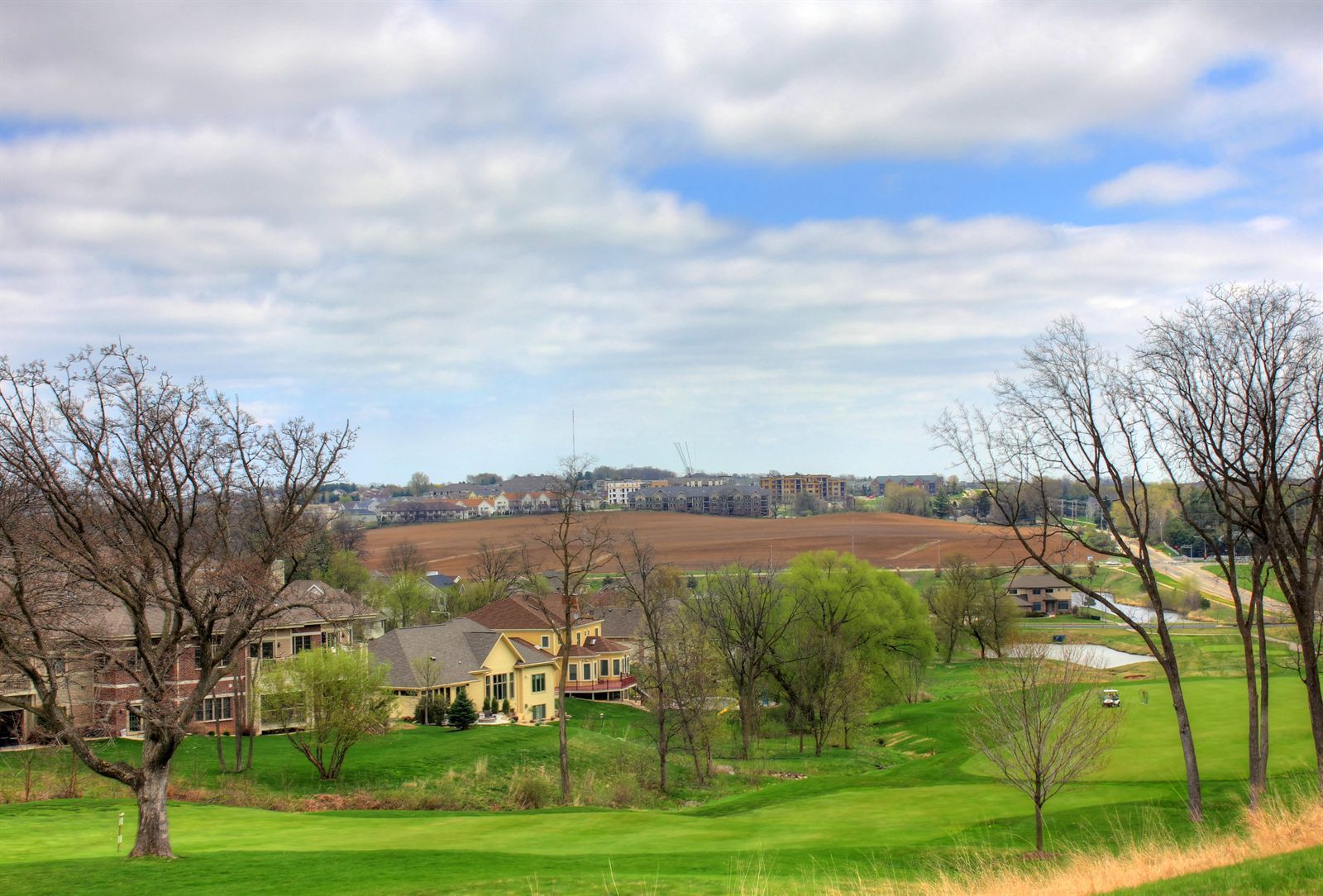
GCSAA's golf course property report states that U.S. golf facilities occupy about 2.24 million acres of land and that an average 18-hole course is about 150 acres. GCSAA Golf Course Property Profile
That footprint is completely different from a basketball court, a running track or a gym room. It includes tees, fairways, greens, rough, bunkers, water features, cart paths, practice areas, clubhouses, parking and maintenance zones.
And the cost continues every day.
| Cost item | Why it continues |
|---|---|
| Greens | Speed, smoothness and turf health shape the whole experience |
| Irrigation | Grass needs water management |
| Mowing | Different playing areas require different heights |
| Bunkers | Sand quality, drainage and edges need work |
| Carts and paths | Convenience creates depreciation and repair costs |
| Clubhouse services | Food, locker rooms, reception and member services add overhead |
| Environmental management | Water, drainage, vegetation and habitat require planning |
USGA's sustainability resources also emphasize environmental management plans, water protection and maintenance practices. A golf course is not just land with holes; it is long-term land and resource management. USGA Sustainability
That is golf's base economics: large land use, limited players per hour, and high ongoing maintenance.
Why Golf Feels More Expensive in Some Countries and Cities
The same sport can feel middle-class in one place and elite in another.
The difference is supply, land and positioning.
In the United States, Japan, Canada, the United Kingdom, Australia and other mature golf markets, public courses, community courses, school pathways, driving ranges and used-equipment markets are more developed. More supply creates more price tiers.
In dense and expensive cities, the picture changes.
| Factor | Effect |
|---|---|
| High land prices | Courses near wealthy cities cannot easily be cheap |
| Limited supply | Fewer options help maintain high prices |
| Strong club model | Clubs sell privacy and access, not only sport |
| Business image | Golf becomes associated with networking |
| Limited public familiarity | Many people's first image is a premium club |
That does not mean ordinary people cannot play golf. It means golf is easily packaged as luxury when land is scarce and clubs position themselves around exclusivity.
What Does a Membership Club Sell?
A high golf membership fee is not simply the price of hitting balls.
Private clubs often sell a bundle:
| Membership feature | Underlying value |
|---|---|
| Tee-time access | Better access to scarce playing windows |
| Privacy | Fewer strangers and a controlled environment |
| Service consistency | Caddies, dining, lockers, reception and member care |
| Social network | Members may form business or personal relationships |
| Status filtering | High fees themselves screen participation |
| Course quality | More stable turf, greens and service standards |
This is why golf attracts criticism. A basketball court can charge money, but it usually does not feel like a social filter. A private golf club often does.
Does a Beginner Really Need to Spend a Lot?
Not necessarily.
If your goal is to understand the sport, you can start with a low-cost path instead of jumping into a premium club.
| Stage | Recommended path | Purpose |
|---|---|---|
| First try | Driving range or simulator, rented or borrowed clubs | See whether you enjoy swinging |
| First 1-3 months | A few basic lessons | Learn grip, posture, rotation and safety |
| After stable contact | Entry-level used clubs or a half set | Avoid overspending before commitment |
| First course experience | 9-hole, short course or off-peak time | Reduce time pressure and social anxiety |
| Long-term interest | Shoes, bag, full set and regular coaching | Let spending follow frequency |
The key is to treat golf as skill learning, not identity buying.
A beginner does not need the most expensive clubs. The first needs are safety, basic contact, and enough etiquette to avoid disrupting other players.
Etiquette Is Also a Barrier
Golf is not only a physical sport. It is a rule culture.
For example:
- check that the area ahead is safe before hitting;
- stay quiet and still when someone swings;
- do not step on another player's putting line;
- repair divots and ball marks;
- rake bunkers after use;
- keep pace with the group ahead;
- follow dress codes when a course requires them.
These rules are not meaningless. They protect safety, pace and course conditions.
But they also create social pressure. Some beginners are not afraid of the swing; they are afraid of looking ignorant. That is one reason golf feels less approachable than many casual sports.
Expensive Does Not Mean Valueless
It is fair to criticize expensive golf culture. It is not fair to say golf has no sporting value.
Golf combines coordination, rhythm, judgment, emotional control and long feedback loops.
| Sporting value | What it looks like |
|---|---|
| Coordination | Hips, shoulders, arms and core must work together |
| Rhythm | Swinging too hard or too fast often destroys the shot |
| Spatial judgment | Distance, wind, lie and hazards affect decisions |
| Mental control | A bad shot must be followed by the next decision |
| Long-term feedback | Small technical changes show up over repeated practice |
This is why people get hooked. Golf is not fun only because every shot feels good. It is fun because when one shot finally feels right, you can sense your body, technique and judgment briefly lining up.
Off-Course Golf Is Lowering the Barrier
One major change is that more people now touch golf without playing a traditional 18-hole round.
NGF's 2024 update says that in the U.S. in 2023, 18.5 million people participated only in off-course golf, such as ranges, entertainment golf or simulators. Another 14.5 million participated both on and off course. NGF: Golf Participation Update
That means golf is being unbundled.
| Traditional golf | Off-course golf |
|---|---|
| Requires a large time block | Can be tried in about an hour |
| Depends on a course | Can happen indoors or in urban ranges |
| Strong etiquette pressure | More beginner-friendly and entertainment-oriented |
| Single experience may be expensive | Spending is more controllable |
| Often carries social filtering | Closer to casual leisure |
For ordinary beginners, this is the most practical entry point. You do not need to become a member before you begin.
What Is the Real Debate About?
Golf creates debate not because swinging a club is immoral.
The debate is about three things.
First, land. In dense cities, people naturally ask why so much land serves relatively few users.
Second, resources. Turf, water, maintenance and environmental management cost money and require responsible operations.
Third, social signaling. High fees, private clubs and business networking can turn a sport into a status marker.
These are real questions. But they should be separated. Some issues are about club business models, some about urban land planning, and some about consumer culture. They should not all be reduced to "golf itself is guilty."
FAQ
Is golf always expensive?
No. Driving ranges, simulators, used clubs and short courses can reduce entry costs. Premium clubs and full 18-hole experiences can become expensive quickly.
Should beginners buy a full set of clubs immediately?
Usually no. Renting, borrowing or buying used entry-level clubs is more reasonable until you know you will keep playing.
Why is golf useful for business networking?
A round takes time, moves slowly, allows conversation and often happens in a controlled environment. That makes it suitable for social and business interaction.
Is golf physically easy?
It is not a collision sport, but a full round can involve hours of walking, repeated swings and sustained concentration. Its physical load is different, not nonexistent.
What is the best way to start?
Try a driving range or simulator first, take one or two basic lessons, learn safety and etiquette, then move to a 9-hole or short course when you can make stable contact.
Conclusion
Golf can be expensive, especially in premium clubs and dense urban markets.
But the expensive part is not the moment of impact. It is the system behind that moment: land, maintenance, service, time, etiquette, membership and social meaning.
Once you separate those layers, golf becomes easier to understand.
It is not only a rich person's costume. It is a sport that has been repriced by land scarcity, supply, leisure time and consumer culture.
Ordinary people do not need to be scared away by million-level memberships. They also do not need to romanticize golf. Start with a range, a simulator, a short course or a basic lesson. Criticize the land use and club economics when necessary, but understand the sport itself as a layered activity.
The real question is not who deserves to play golf.
It is why the same sport can be priced so differently in different social environments.