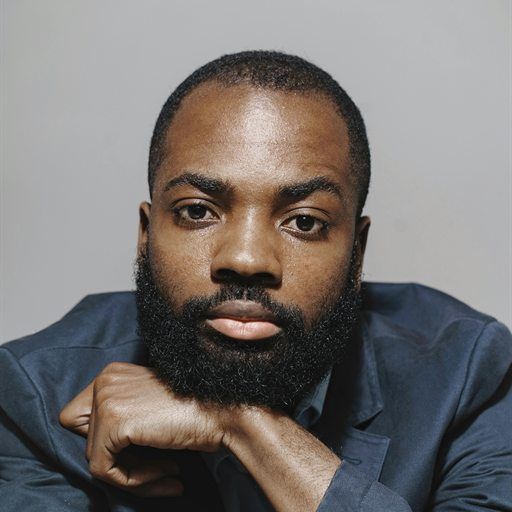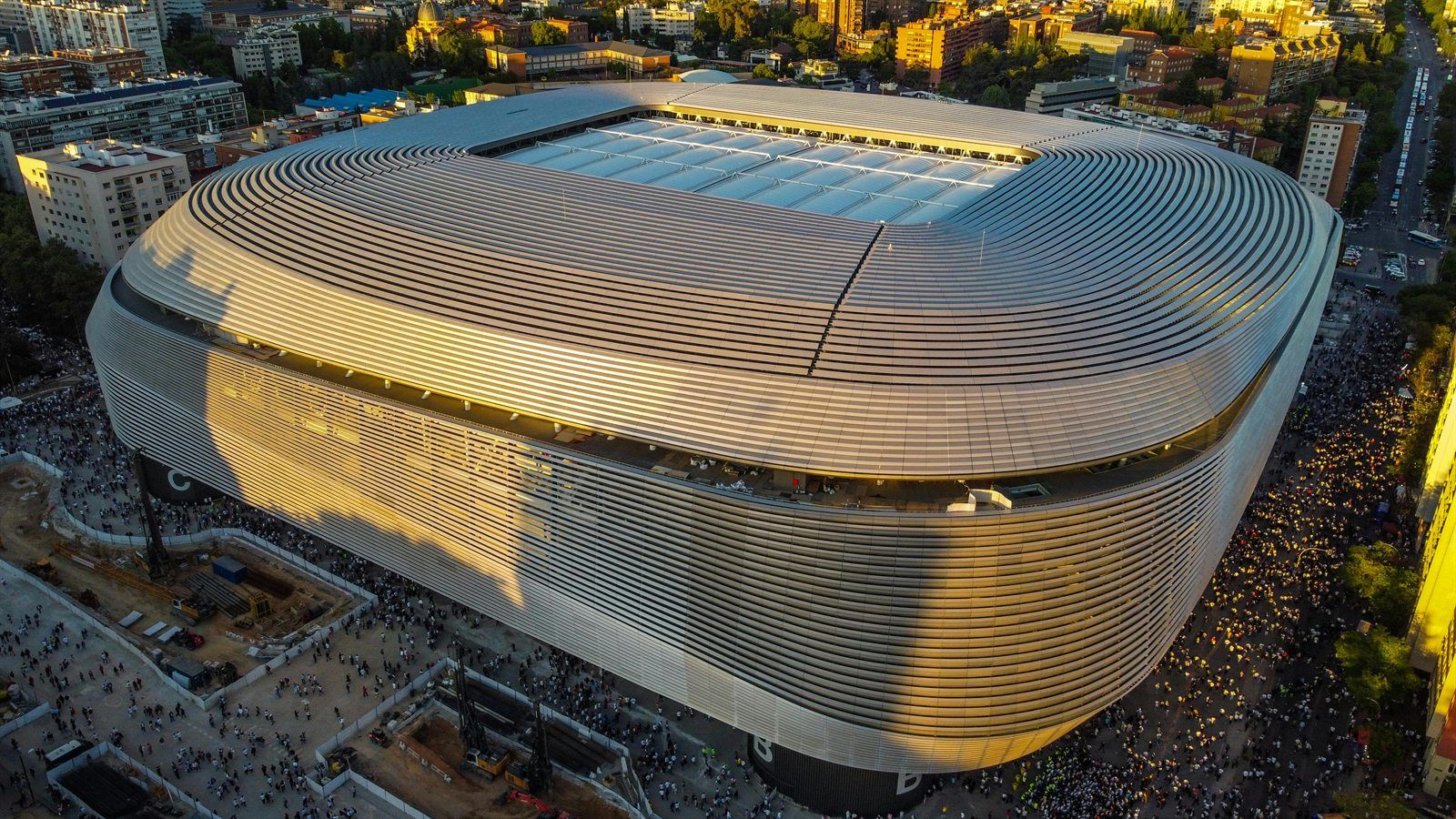
The ESPN FC discussion begins with breaking news: Andoni Iraola is officially Liverpool's new head coach.
But the hour is not really about one appointment. It is about four football institutions facing the same problem in different forms: how to manage transition when the margin for patience is shrinking.
Liverpool are changing managers. Real Madrid are fighting an unusually dramatic presidential election. Spain are preparing for a World Cup with elite talent but fitness questions. France are trying to turn one last Didier Deschamps tournament into another deep run while avoiding the trap of assuming talent solves everything.
That is the useful way to read the episode.
The Short Version
| Topic | Verified context | Real question |
|---|---|---|
| Andoni Iraola to Liverpool | Liverpool have appointed the former Bournemouth boss on a two-year deal, according to Sky Sports. | Can his pressing model scale from Bournemouth to Anfield quickly enough? |
| Real Madrid election | Florentino Perez faces Enrique Riquelme, whose campaign has made bold Haaland/Rodri claims. | Are the transfer promises strategy, theatre or a real alternative plan? |
| Real Madrid squad | The panel debates Mbappe, Vinicius Junior and whether Madrid have the pieces to make the attack work. | Can Madrid build a team structure rather than only collect stars? |
| Spain at the World Cup | FIFA lists Spain in Group H with Cape Verde, Saudi Arabia and Uruguay. | Can Spain manage injured stars without losing rhythm? |
| France at the World Cup | FIFA lists France in Group I with Senegal, Iraq and Norway. | Is the schedule more dangerous than the talent gap suggests? |
Iraola at Liverpool: Exciting, Logical and Still Risky
The panel's first segment is built around Iraola's appointment at Liverpool.
The optimism is easy to understand. Iraola's Bournemouth were intense, aggressive and tactically clear. He built a team that could press, run, compete and survive player turnover. That matters because Liverpool are not only hiring a coach. They are trying to recover an identity.
The appeal is not that Iraola is a guaranteed superstar manager. It is that he has a recognizable football idea.
Liverpool's risk is scale.
At Bournemouth, difficult periods could be explained as part of a project. At Liverpool, a slow adaptation period becomes front-page pressure. The same pressing principles that look brave at Bournemouth will be judged by trophies, Champions League qualification, squad harmony and whether Anfield believes the team is moving forward.
Iraola's Liverpool To-Do List
| Job | Why it matters |
|---|---|
| Rebuild energy without creating chaos | Liverpool need intensity, but elite teams also need control. |
| Replace or redistribute Mohamed Salah's influence | The transcript repeatedly frames Salah's departure as a major attacking question. |
| Make Florian Wirtz central rather than ornamental | A high-value creator must become part of the team structure, not a luxury piece. |
| Manage aging leaders | Virgil van Dijk is discussed as part of a squad that must refresh without losing authority. |
| Win early trust | Liverpool may be patient by reputation, but elite-club patience is never unlimited. |
The Arteta comparison in the episode is useful but incomplete. Iraola has more head-coaching experience than Mikel Arteta had when Arsenal hired him, but that does not make the Liverpool job easier. Experience at a smaller club proves principles. It does not prove that those principles survive the politics, expectation and squad complexity of a giant.
Real Madrid's Election: Transfer Promise or Political Theatre?
The Real Madrid segment is more volatile.
The show discusses Enrique Riquelme's campaign claim that Erling Haaland, and reportedly Rodri as well, would join Madrid if he were elected president. It also notes denials or pushback from the player's side and compares the drama to the Luis Figo election-era saga of 2000.
This is where careful wording matters.
Riquelme's claim is a campaign claim. It is not the same as a completed transfer.
El Pais and Globo Esporte both covered the election fight and the Haaland/Rodri promise. But until there is club confirmation, contract registration and agreement from all parties, it belongs in the category of political football messaging.
That does not make it irrelevant. In a Real Madrid election, symbolic power matters. A challenger must prove he can speak in the language Madrid socios understand: stars, power, Bernabeu ambition and institutional control.
The Haaland/Rodri promise does two things at once:
- it forces attention onto Riquelme;
- it pressures Florentino Perez to answer with his own vision.
Even if it never becomes a transfer, it changes the campaign.
The Figo Parallel Is Tempting, but Dangerous
The transcript mentions the Luis Figo precedent. Florentino Perez's 2000 campaign is the obvious historical reference because it turned a supposedly impossible Barcelona-to-Real Madrid transfer into the defining act of a presidency.
But the comparison should not be stretched too far.
In 2000, the football economy, release-clause culture and media environment were different. In 2026, Haaland is central to Manchester City's sporting and commercial identity, Rodri is one of the most valuable midfielders in the world, and the global transfer market is more financially regulated and politically visible.
The Figo story explains why Spanish media take bold election promises seriously.
It does not prove those promises will happen again.
The Real Madrid Football Problem: Stars Need a System
The panel then moves from election theatre to a more durable question: how Real Madrid should build around Kylian Mbappe and Vinicius Junior.
This is the strongest analytical thread in the show.
Madrid's problem is not having too little star power. It is making sure star power has a structure.
Mbappe can be devastating for France because Didier Deschamps has often built a team that accepts his strengths and covers his trade-offs. The panel's point is that Madrid must do something similar. A player like Mbappe does not automatically solve pressing balance, defensive spacing, Vinicius' role, midfield control or chance creation.
If Madrid's plan is simply "Mbappe will be Mbappe," they risk becoming less than the sum of their parts.
The Mbappe-Vinicius Question
| Issue | Why it matters |
|---|---|
| Left-side overlap | Both players are most dangerous attacking from similar zones. |
| Defensive work | The team around them must absorb transition risk. |
| Vinicius' contract leverage | A World Cup summer could strengthen or weaken his position. |
| Midfield balance | Madrid need service, control and pressing support, not only finishers. |
| Managerial authority | Whoever coaches Madrid must define roles clearly enough that stars buy in. |
The panel treats Vinicius Junior's situation as delicate, and that is the right word. Selling him would be drastic. Keeping him without resolving role clarity could also be costly.
Madrid's next era depends less on another headline signing than on whether the club can turn elite individuals into a repeatable team.
Spain: Favorites With a Fitness Question
Spain's World Cup section is calmer but important.
FIFA's official group-stage page lists Spain in Group H with Cape Verde, Saudi Arabia and Uruguay. On paper, Spain should progress. The panel's concern is not whether Spain have enough quality. It is whether Luis de la Fuente can manage fitness, rhythm and expectation.
The transcript highlights questions around players such as Lamine Yamal, Mikel Merino and Nico Williams. It also notes that some young support players featured in warm-up action even though they are not expected to be part of the final World Cup group.
Spain's advantage is depth.
Their danger is timing.
Winning Euro 2024 raised the bar. Spain were not merely champions; they were convincing champions. That creates a different kind of pressure. Anything less than a deep World Cup run will feel like regression.
Spain's Group H
| Team | What Spain must respect |
|---|---|
| Cape Verde | First-time or lower-profile opponents can turn the opening game into a pressure test. |
| Saudi Arabia | Organized, tournament-experienced and capable of disrupting rhythm. |
| Uruguay | The strongest group opponent on pedigree and physicality. |
Spain probably have enough room to ease injured stars back into minutes. But they must avoid treating the group as a rehearsal. In expanded tournaments, qualification may be easier, but seeding, rhythm and knockout-path momentum still matter.
France: Talent Is Not the Same as a Kind Schedule
France's group is more awkward.
FIFA's schedule lists France with Senegal, Iraq and Norway in Group I. The panel spends time on a sensible point: France should go through, but the group is not soft.
Norway are dangerous because their attack can hurt elite teams. Erling Haaland, Martin Odegaard, Alexander Sorloth and others give them a forward line that can punish any lapse.
Senegal are dangerous because they arrive as a serious tournament side with physicality, organization and enough attacking quality to make France's opener uncomfortable.
Iraq may be the least discussed team in the group, but in a 48-team World Cup, the biggest mistake for a favorite is assuming the first round is only a warm-up.
France's Group I
| Team | Why the matchup matters |
|---|---|
| Senegal | France start against a physically strong, confident opponent. |
| Iraq | A game France should control, but rotation choices could matter. |
| Norway | The final group match could affect first place and knockout seeding. |
The Deschamps farewell element adds another layer. A final tournament can sharpen focus, but it can also turn every setback into a referendum.
France are good enough to win the World Cup. That does not mean their path is emotionally simple.
What Extra Time Adds
The back half of the upload shifts into ESPN FC's Extra Time format. Much of it is studio banter, but several football points add useful context to the main show.
First, Shaka Hislop's power rankings put France and Spain at the top, with England, Argentina, Portugal, Norway, Brazil, Colombia, the Netherlands and Morocco in the wider contender group. The exact order is subjective, but the logic matches the earlier discussion: France and Spain may be the two strongest teams, while Norway are unusually dangerous because their attacking talent is better than their historical World Cup profile.
Second, the Barcelona striker question shows the same structure-versus-star theme. The panel is skeptical that every famous No. 9 automatically fits Barcelona. A pure penalty-box striker can help, but Hansi Flick's attack also needs movement, pressing and combination play. That is why the discussion treats names such as Victor Osimhen, Dusan Vlahovic and Harry Kane as profile questions, not only transfer-market trophies.
Third, Frank Leboeuf's story about Aime Jacquet before the 1998 World Cup underlines a point that applies to Spain and France now: national-team management is about clarity. A coach cannot train players every day like a club manager, so role definition, trust and squad psychology matter even more.
Fourth, the Mbappe discussion returns to the Real Madrid problem. The panel argues that Mbappe must understand that elite football is not only goals and individual statistics. For France, PSG and Madrid, the recurring question is whether the team can defend and press around him without losing balance.
Finally, the Spain goalkeeper debate around Unai Simon, David Raya and Joan Garcia makes the same point in another position. International football is not always a pure form table. Coaches often choose the player they trust in tournament conditions, even when another goalkeeper may be in better club form.
In other words, Extra Time does not change the article's thesis. It reinforces it: at the highest level, talent is only the start. Fit, trust and role clarity decide whether talent becomes a team.
The Episode's Bigger Theme
The transcript jumps from Liverpool to Madrid to Spain to France, but the hidden theme is consistent:
Big football institutions are no longer judged only by talent. They are judged by how they handle transition.
Liverpool must turn an exciting coach into an elite-club project. Real Madrid must turn election theatre into a coherent sporting plan. Spain must turn Euro dominance into World Cup control. France must turn a star-heavy squad and a departing manager into another serious run.
That is why the episode is more valuable when read as analysis rather than news chatter.
The question is not who has the biggest names.
The question is who has the clearest structure when the pressure arrives.
FAQ
Is Andoni Iraola officially Liverpool's new head coach?
Yes. Sky Sports and Sky News reported that Liverpool appointed Iraola as head coach on a two-year deal ahead of the 2026-27 season.
Did Real Madrid sign Erling Haaland or Rodri?
No confirmed transfer is established in the sources used here. The episode discusses Enrique Riquelme's campaign claim that he would sign Haaland and Rodri if elected Real Madrid president.
Who are Spain's 2026 World Cup group opponents?
FIFA lists Spain in Group H with Cape Verde, Saudi Arabia and Uruguay.
Who are France's 2026 World Cup group opponents?
FIFA's schedule lists France in Group I with Senegal, Iraq and Norway.
What is the main football lesson from the episode?
The strongest teams are not simply the ones with the biggest stars. Liverpool, Real Madrid, Spain and France all need structure, role clarity and risk management before their talent can decide games.
Sources
- Sky Sports: Liverpool appoint Andoni Iraola as head coach
- Sky News: Andoni Iraola named Liverpool head coach
- El Pais: Florentino Perez vs Enrique Riquelme in Real Madrid election
- Globo Esporte: Riquelme claim over Haaland and Rodri
- FIFA: 2026 World Cup group stage fixtures
- FIFA: 2026 World Cup match schedule