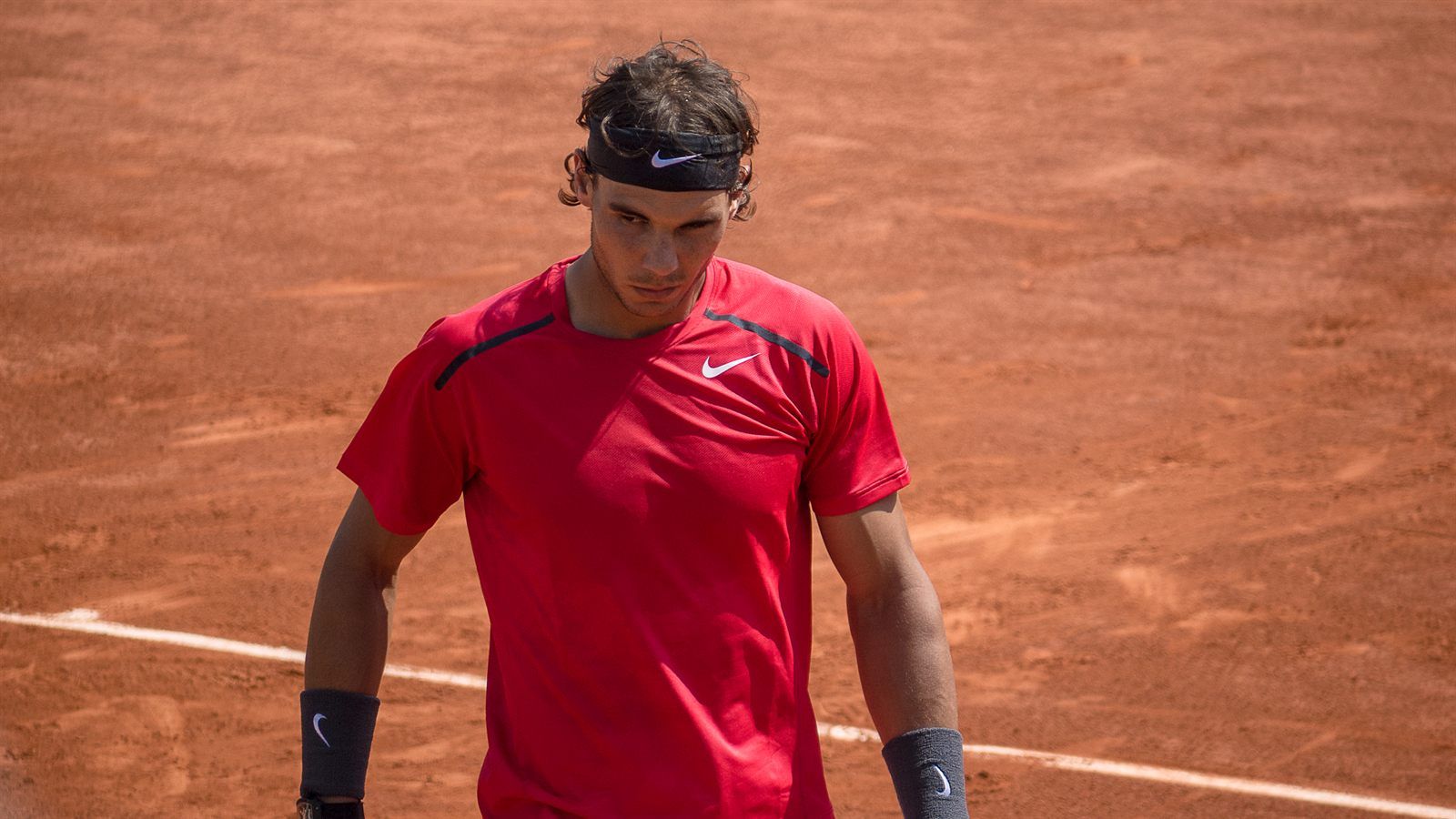
Rafael Nadal's most famous label is obvious: the King of Clay.
It is also accurate. Fourteen Roland-Garros titles and a 112-4 record in Paris are not just tennis statistics; they are one of the cleanest examples of venue-specific dominance in modern sport. Roland-Garros' own statistical review notes that Nadal reached 14 finals at the tournament from 2005 to 2024 and won all 14 of them. Roland-Garros: Nadal numbers
But the label can also become a shortcut that hides the bigger story.
As of May 26, 2026, Nadal's playing career is complete. That gives us a better vantage point. He is no longer a star still trying to add one more comeback, one more clay season, or one more Davis Cup chapter. His career can now be studied as a full case: how a player combined extreme topspin, physical pressure, mental endurance, injury management, and era-defining rivalries to become one of the most important athletes tennis has produced.
The question is not whether Nadal was great.
The better question is: what exactly made his greatness so hard to copy?
The Short Answer
| Dimension | Key fact | Why it matters |
|---|---|---|
| Clay dominance | 14 Roland-Garros titles, 112-4 in Paris | The highest form of single-event dominance |
| All-court value | 22 majors: 2 Australian Opens, 14 Roland-Garros, 2 Wimbledons, 4 US Opens | He was not only a clay specialist |
| Career volume | 92 ATP titles, 1,080 tour-level wins | Long-term production, not a short peak |
| Ranking stability | 209 weeks at No. 1, 912 consecutive weeks in the Top 10 | Both peak and base level were historically strong |
| Tactical identity | Left-handed topspin, court coverage, long-rally pressure | His style was a complete system |
| Era impact | Federer, Djokovic and Nadal reshaped men's tennis together | His legacy is inseparable from elite rivalry |
| Cost of greatness | Injuries repeatedly shaped his schedule and career | His model is inspiring, but not simple to imitate |
ATP's retirement release listed the scale of Nadal's resume: 22 major titles, 92 ATP singles titles, 1,080 tour-level wins, 36 ATP Masters 1000 titles, two Olympic gold medals, and 912 straight weeks in the ATP Top 10. ATP retirement release
Career Timeline: From Mallorca to a Completed Historical Case
| Year | Event | Why it matters |
|---|---|---|
| 1986 | Born in Manacor, Mallorca | His identity remained tied to Mallorca throughout his career |
| 2001 | Turned professional | Entered elite competition early |
| 2004 | Helped Spain win the Davis Cup | National-team meaning became part of his story |
| 2005 | Won his first Roland-Garros title | The clay dynasty began at 19 |
| 2008 | Won Wimbledon and Olympic singles gold in Beijing | Proved he could win beyond clay |
| 2010 | Won the US Open and completed the career Grand Slam | Became a true all-surface great |
| 2013 | Returned from injury to an elite level | Comebacks became a central part of the Nadal narrative |
| 2020 | Won his 13th Roland-Garros title and reached 20 majors | Maintained clay supremacy deep into his 30s |
| 2022 | Won the Australian Open and a 14th Roland-Garros title | Produced another historic late-career peak |
| 2024 | Retired after the Davis Cup Finals | Closed the loop with Spain's national team |
ATP reported that Nadal announced in October 2024 that the Davis Cup Final 8 would be his final event. Spain's loss to the Netherlands later that November made his defeat to Botic van de Zandschulp the final match of his professional career. ATP retirement announcement, ATP Davis Cup report
Why Clay Magnified Nadal
Clay is not simply a slower tennis surface. It changes the economics of a point.
On grass and many hard courts, first-strike tennis can end points quickly. Clay often extends rallies. It rewards movement, recovery, patience, topspin, and the ability to win the same argument over and over again. For many players, clay is a tax. For Nadal, it was an amplifier.
His clay advantage came from four connected pieces:
| Component | What Nadal did | Why it hurt opponents |
|---|---|---|
| Left-handed forehand topspin | Drove the ball high into right-handers' backhands | Opponents often had to hit from uncomfortable shoulder height |
| Court coverage | Turned defensive positions into neutral rallies | Opponents had to hit several winning-quality shots per point |
| Rally tolerance | Accepted long points instead of rushing | He made opponents carry the mental cost of every exchange |
| Competitive intensity | Treated routine points like pressure points | He rarely gave opponents emotional relief |
That is the core of Nadal's clay dominance. He did not merely play well on clay. He turned clay's demands into his own operating system.
Roland-Garros' numbers show how complete that system was: 90 of his 112 Paris wins came in straight sets, and only four players defeated him there across 19 appearances. That is not a highlight reel. It is sustained suppression of the field.
He Was Not Just a Clay Player
The phrase "King of Clay" is so powerful that it can accidentally shrink Nadal.
ATP's retirement release confirms that his 22 major titles were spread across all four Grand Slam tournaments: two Australian Opens, 14 Roland-Garros titles, two Wimbledons, and four US Opens. It also describes him as the first men's player to complete the career Grand Slam twice.
That matters because a surface specialist can dominate a niche. Nadal was bigger than that. Clay was his strongest base, not the border of his game.
Why 2008 Wimbledon Changed the Nadal Story
Nadal's rivalry with Roger Federer was one of the great aesthetic contrasts in modern sport.
Federer represented fluidity, timing, early contact, and almost frictionless attacking tennis. Nadal represented spin, physical pressure, defensive resistance, and repeated stress. Their rivalry was not only about who won. It was about two different visions of tennis colliding.
The 2008 Wimbledon final is still central to Nadal's legacy because it was not a victory in his safest environment. It was a victory at Federer's cathedral.
That match moved Nadal from being Federer's clay-court problem to being a full-era rival.
| Rival | What the rivalry proved about Nadal |
|---|---|
| Roger Federer | He could beat the most graceful and efficient grass-court player of his era |
| Novak Djokovic | He could remain relevant in the most physically and tactically demanding rivalry of modern tennis |
| Andy Murray, Stan Wawrinka, Dominic Thiem and others | He could survive more than one generation of elite challengers |
Nadal's greatness did not exist in isolation. Federer forced him to leave the comfort of clay. Djokovic forced him to confront a higher standard of hard-court consistency, returning and durability. The Big Three did not simply share an era; they made one another more complete.
Injury Was Not a Side Story
Nadal's career is often described through the language of willpower. That is understandable, but it can become misleading.
His game was physically expensive: explosive movement, sliding defense, heavy topspin, long rallies, and constant recovery from wide positions. Those qualities helped make him great. They also contributed to the recurring injury questions that shaped his calendar and late career.
The right lesson is not "play through pain."
The better lesson is that Nadal built a whole professional system around his strengths: training, recovery, scheduling, shot selection, team judgment and mental routine.
| Feature | Competitive value | Cost or boundary |
|---|---|---|
| Extreme movement | Made him hard to hit through | Increased long-term physical load |
| Heavy topspin | Created a unique attacking lane | Demanded a lot from the kinetic chain |
| Every-point intensity | Applied constant mental pressure | Hard to maintain cheaply over years |
| Comeback ability | Turned recovery into part of his legacy | Should not be romanticized as a model for amateurs |
Nadal should inspire young players, but copying him badly would be dangerous. His legacy is not just effort. It is effort inside a highly disciplined system.
Where Nadal Stands in the Big Three Era
Nadal's place in history cannot be separated from Federer and Djokovic.
Federer made tennis look like art. Djokovic pushed hard-court stability, returning and body management to extraordinary levels. Nadal turned spin, pressure and competitive suffering into a championship language.
If the conversation is only about total major titles, Nadal finished with 22, behind Djokovic. But that single ranking does not capture his full historical value.
His case includes:
- 14 titles at one Grand Slam tournament;
- a 14-0 record in Roland-Garros finals;
- one of the greatest rivalries in tennis history with Federer;
- a long tactical and physical battle with Djokovic;
- repeated elite comebacks after injury disruption;
- a cultural footprint in Spain, youth tennis and global sports fandom.
Nadal does not need to lead every total-count metric to be irreplaceable. His uniqueness comes from the shape of his career: an extremely high peak, an almost untouchable favorite surface, enough all-court success, and enough era pressure to make the achievement durable.
How to Rewatch Nadal
If you watch classic Nadal matches now, do not only look at the score.
Watch these details:
| Detail | What to watch |
|---|---|
| Forehand shape | Does the ball jump above the opponent's ideal contact point? |
| Return depth | Can he enter the rally even when he starts behind? |
| Defense-to-attack transition | When does a desperate retrieval become a heavy counterpunch? |
| Pressure-point selection | Does he choose safer, higher-margin patterns under stress? |
| Emotional reset | How does he use routine to stabilize himself after a difficult point? |
Seen this way, Nadal is not simply a player who ran harder than everyone else. He was a system. Every slide, every high forehand, every long exchange and every pre-point reset served the same purpose: make the opponent solve one more problem than they wanted to solve.
FAQ
Was Nadal only a physical player?
No. His physicality was obvious, but his tactical intelligence was just as important. His left-handed patterns, spin use, court positioning and pressure-point decisions were highly sophisticated.
Was he only great on clay?
No. He won every major, including Wimbledon, the US Open and the Australian Open. Clay was his greatest strength, not his only skill.
Did injuries weaken his legacy?
They limited some stretches of his career, but they also became part of the story. A more precise view is that Nadal's game produced huge rewards and significant physical costs.
Can another player copy him?
Not easily. Young players can learn from his discipline, footwork, spin awareness and competitive habits. They should not copy his workload or physical stress without the same professional support structure.
Conclusion
Nadal was the King of Clay.
But that title is the entrance, not the full room.
His deeper legacy is that he made tennis look like a long confrontation between technique, body, mind and time. He turned clay into a philosophy: do not rush the point, do not surrender the rally, do not abandon the identity that makes you dangerous.
His career is over, but the case study remains.
To understand Nadal, do not only count the 14 Roland-Garros trophies. Watch how he stood between Federer's elegance, Djokovic's precision, his own injuries and the pressure of time, and still became a name tennis cannot replace.
Greatness is not always light, effortless or unscarred. Sometimes it is the ability to sustain yourself, for years, in the place where sustaining yourself is hardest.