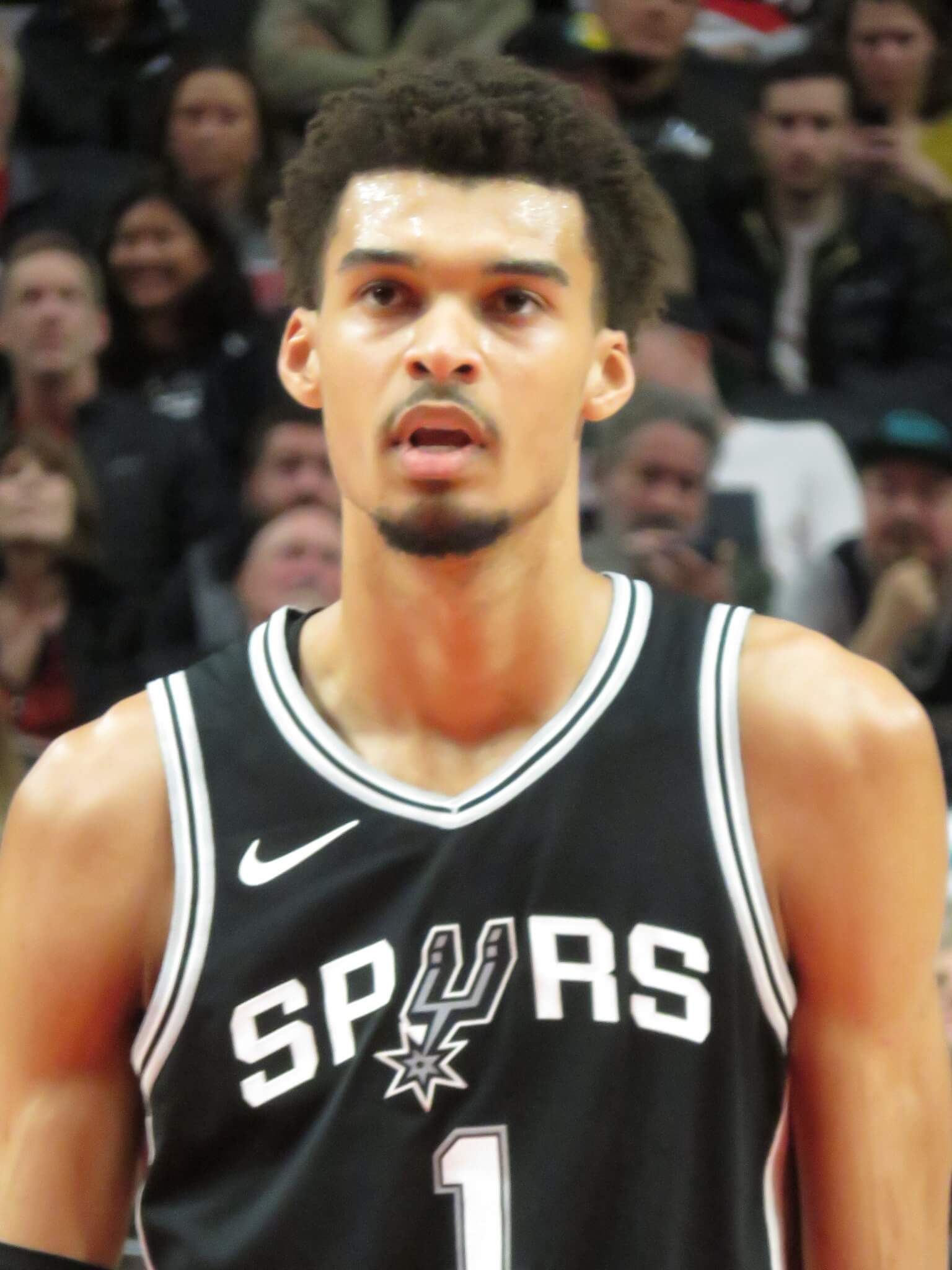
The San Antonio Spurs' 127-114 loss to the Oklahoma City Thunder in Game 5 was not just a bad night on the scoreboard. It was a warning about playoff structure.
Victor Wembanyama finished with 20 points, but the number looks better than the performance felt. He shot 4-of-15 from the field, missed all five of his three-point attempts, and had to rely heavily on free throws to keep his scoring line respectable.
The point is not simply that Wembanyama "played badly." The deeper issue is that San Antonio did not make him the center of the offense early enough, while Oklahoma City used defensive discipline, bench scoring and Shai Gilgeous-Alexander's mid-range control to push the game into Thunder territory.
For the Spurs to extend the series, they need more than emotion. They need a clearer plan.
The Box Score Tells the Story
According to the NBA official box score, the Thunder beat the Spurs in the areas that usually decide a playoff Game 5.
| Category | Spurs | Thunder | Why it mattered |
|---|---|---|---|
| Final score | 114 | 127 | Oklahoma City took control of the series |
| Field-goal percentage | 40.2% | 48.2% | San Antonio struggled to generate clean offense |
| Three-point percentage | 29.3% | 43.8% | Oklahoma City created more efficient spacing |
| Rebounds | 41 | 48 | Thunder won extra-possession pressure |
| Victor Wembanyama | 20 points, 4-of-15 FG, 0-of-5 3PT | - | His scoring lacked rhythm |
| Shai Gilgeous-Alexander | - | 32 points, 9 assists | Thunder had a reliable half-court closer |
AP's game report, published by The Washington Post, also noted that Alex Caruso scored 22 points off the bench as Oklahoma City moved within one win of the NBA Finals.
That matters because this was not only a Wembanyama problem. It was a full-team pressure problem.
Wembanyama Needed Earlier Involvement
Wembanyama's 20 points were not empty, but they were inefficient.
When a franchise player scores mostly through fouls rather than controlled half-court touches, the offense often becomes unstable. Teammates lose the hierarchy of the possession. Defenders stop reacting to the star and start dictating where the ball goes.
That was San Antonio's biggest issue.
Wembanyama does not need to force 30 shots, but he has to bend the defense in every quarter. He should touch the ball early as a passer, screener, roller, spacer and post target. Even when he does not shoot, the Thunder should have to shift their shell because he is involved.
In Game 5, that pressure arrived too late.
How Oklahoma City Made Him Uncomfortable
The Thunder did not stop Wembanyama with one defender. They disrupted his comfort zones with layers.
| Defensive layer | What Oklahoma City did | Effect on Wembanyama |
|---|---|---|
| Before the catch | Crowded passing lanes and denied easy position | Catches came farther from danger areas |
| After the catch | Sent quick help and crowded his vision | Shot rhythm became less natural |
| After the pass | Rotated hard to San Antonio's secondary options | Role players had to punish pressure consistently |
That is the difference between guarding a star and reducing his role. Oklahoma City did not have to erase Wembanyama. It only had to make him feel like a late option instead of the first problem every possession.
Shai and Caruso Were the Two Swing Points
Gilgeous-Alexander gave the Thunder their floor. His 32 points and 9 assists were not just volume. They gave Oklahoma City a calm answer whenever San Antonio threatened to build momentum.
Caruso gave the Thunder their ceiling. A bench guard scoring 22 while also providing defense, toughness and decision-making is a massive swing in a playoff game.
That combination is brutal for a young team. The Spurs can survive one star performance. It is much harder to survive a star performance plus a bench player who turns non-star minutes into winning minutes.
What the Spurs Should Change
San Antonio does not need to reinvent its identity. It needs to move Wembanyama's involvement earlier in the possession and earlier in the game.
1. Give Wembanyama Early Touches in Multiple Locations
The goal is not to make him shoot every time. The goal is to make Oklahoma City react.
Useful actions include:
- elbow catches where he can pass over the defense;
- high-post handoffs with guards cutting around him;
- quick duck-ins before the Thunder set their help;
- pick-and-pop possessions to pull bigs away from the rim;
- fake screens into slips to attack overplaying defenders.
If Wembanyama touches the ball only after the first action dies, the Thunder have already won the possession.
2. Make De'Aaron Fox and Stephon Castle Play Through the Star
Fox is naturally aggressive. Castle is still developing as a playoff decision-maker. Neither fact is a problem by itself.
The issue is hierarchy. San Antonio's guards should enter each half-court possession by first checking whether Wembanyama can receive the ball at the elbow, in the post, or as a screener. If not, then they can flow into secondary offense.
That does not weaken the guards. It makes their drives more dangerous because Wembanyama's gravity has already moved the defense.
3. Reconsider the Backup Frontcourt Minutes
If a backup center cannot protect the glass, finish reliably or change driving lanes, his value drops quickly in a playoff series.
San Antonio can consider several alternatives.
| Option | Benefit | Risk |
|---|---|---|
| More Kelly Olynyk | Shooting, experience, offensive spacing | Lateral defense and rim protection |
| More Harrison Barnes | Veteran spacing and wing size | Matchup speed |
| Smaller lineups | Better switching and offensive spacing | Rebounding risk |
| Wembanyama with bench units | Keeps a star gravity source on the floor | Greater fatigue burden |
The key is not that one option is perfect. The key is that the Spurs cannot keep losing the non-Wembanyama minutes by too much.
4. Treat Caruso as a Real Scoring Threat
Caruso cannot be defended like a low-usage role player right now. If he is scoring 22 off the bench, San Antonio has to respect him as a playoff swing piece.
That means:
- do not over-help off him from the strong-side corner;
- rotate earlier when he relocates;
- make him work defensively on the other end;
- avoid giving him rhythm threes after scramble situations.
If Oklahoma City gets both Gilgeous-Alexander's control and Caruso's bench scoring, the Spurs will struggle to win a 48-minute game.
The Real Lesson
Wembanyama is not a traditional center, and he is not a normal perimeter star. The answer is not simply "let him shoot more."
The Spurs need a playoff hierarchy:
- Wembanyama must enter the offense early every quarter.
- Guard penetration should build from his gravity, not bypass it.
- Bench lineups must protect rebounding and spacing.
- Oklahoma City's bench scoring has to be treated as a primary threat.
- San Antonio must change its coverage faster when Gilgeous-Alexander finds his mid-range rhythm.
The Spurs still have enough talent to respond. But after losing Game 5, talent is no longer enough. Game 6 requires clarity, maturity and a plan that makes Wembanyama the first problem Oklahoma City has to solve.
FAQ
Did Wembanyama really play that badly?
He was not useless. Twenty points and 12 made free throws show he still created pressure. But 4-of-15 shooting and 0-of-5 from three are below the standard for San Antonio's franchise player in a pivotal playoff game.
Was the loss more about Wembanyama or his teammates?
Both. Wembanyama needed to demand the ball earlier, but the Spurs also needed to design cleaner early touches for him. A young team cannot let its best player disappear from the structure of the offense.
Why did Oklahoma City look more stable?
Because the Thunder had layers: Gilgeous-Alexander's shot creation, Caruso's bench scoring, stronger team shooting and better rebounding. In playoff basketball, that kind of stability travels possession by possession.
Can the Spurs still come back?
Yes, but only if Game 6 looks structurally different. Wembanyama's involvement, the bench rotation, rebounding, and Caruso coverage all need to improve immediately.