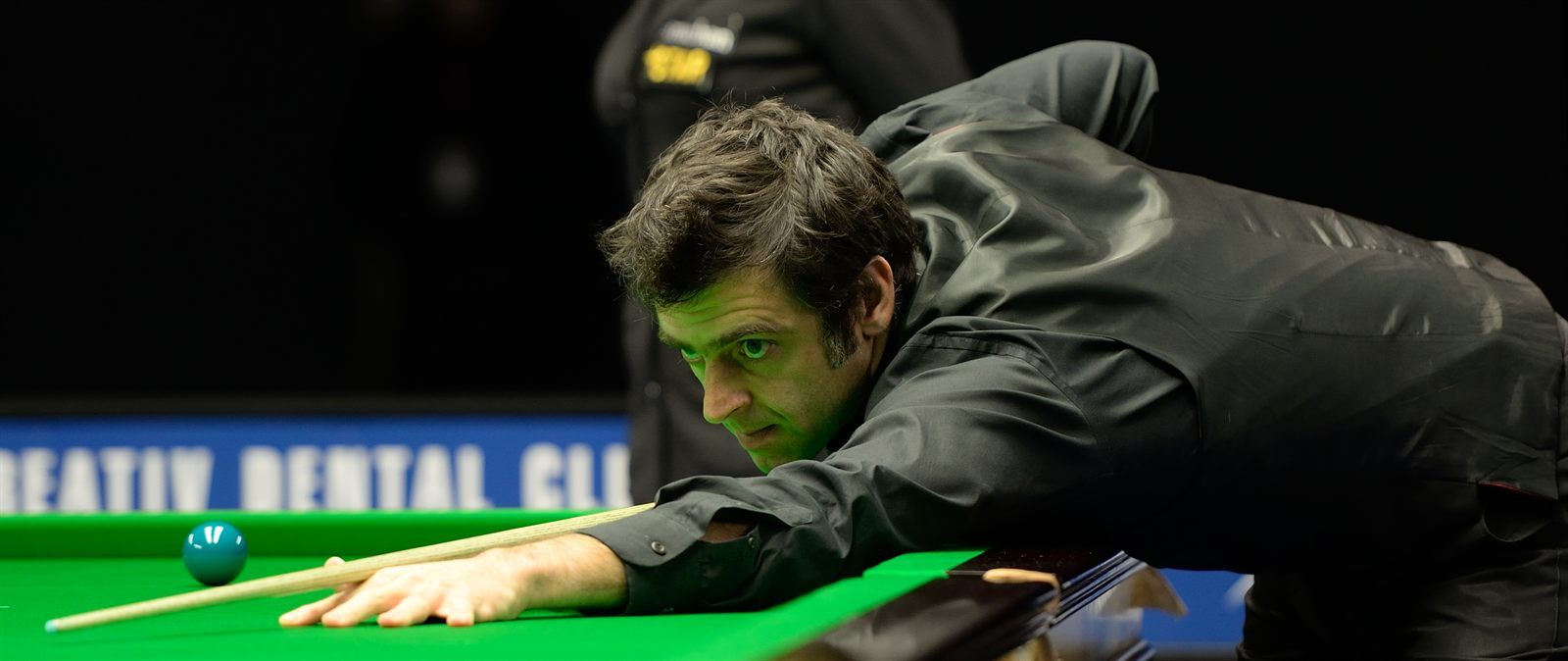
Ronnie O'Sullivan's easiest label is the Rocket.
It fits. He plays quickly, sees patterns early, builds breaks with startling fluency, and can make a precision sport look like instinct. At his best, he does not seem to solve the table; he seems to remember an answer that already existed.
But calling him only a genius is too thin.
As of May 26, 2026, O'Sullivan should not be written as a confirmed retired player. Retirement discussions have followed him for years, and the source video opens with that kind of framing, but the safer current view is that his career has already produced a complete historical case even if the final line is not formally fixed.
The better question is: why did O'Sullivan change how snooker is watched, judged and imagined?
The Short Answer
| Area | Key fact | Why it matters |
|---|---|---|
| World titles | 7 World Championships | Tied Stephen Hendry's modern-era Crucible record |
| Triple Crown | 23 Triple Crown titles | Long-term dominance across the sport's three biggest events |
| Ranking titles | 41 ranking-event titles | Sustained elite production across eras |
| Early greatness | Won the 1993 UK Championship at 17 years 358 days | Genius became top-level results almost immediately |
| Playing style | Speed, cue-ball control, ambidexterity, break-building | Changed the viewing rhythm of snooker |
| Longevity | Won elite titles from the 1990s into the 2020s | His career span is part of the record |
| Human complexity | Mood swings, withdrawals, public criticism and vulnerability | He is not a clean corporate champion, which makes him more compelling |
BBC Sport reported in 2024 that O'Sullivan had seven world titles, eight Masters titles and 41 ranking titles. BBC Sport: O'Sullivan career records
Career Timeline
| Year | Event | Why it matters |
|---|---|---|
| 1975 | Born in Essex, England | Part of snooker's famous Class of '92 generation |
| 1992 | Turned professional | Entered the game during Stephen Hendry's dominant era |
| 1993 | Won the UK Championship at 17 | Shocked the sport by beating Hendry in a Triple Crown final |
| 1997 | Made the famous 5-minute-8-second 147 | Turned the Rocket nickname into a global snooker memory |
| 2001 | Won his first World Championship | Moved from genius to historical champion |
| 2004-2013 | Added multiple world and Masters titles | Converted peak talent into repeat major success |
| 2020 | Won a sixth World Championship | Returned to the top in his 40s |
| 2022 | Won a seventh World Championship | Equalled Hendry's seven world titles at age 46 |
| 2023 | Won an eighth UK Championship | Extended his Triple Crown record |
| 2024 | Won an eighth Masters title | Became both the youngest and oldest Masters champion |
Guinness World Records lists O'Sullivan as the youngest UK Championship winner, aged 17 years and 358 days in 1993. Guinness World Records
Why 1993 Changed the Story
The 1993 UK Championship was not just a teenager winning a tournament.
O'Sullivan beat Stephen Hendry, the defining champion of the 1990s. Hendry represented discipline, ruthless scoring, and a winning machine built for the modern game. A 17-year-old defeating him in a Triple Crown final told snooker that another type of future had arrived.
| Hendry represented | O'Sullivan introduced |
|---|---|
| Championship order | Creative disruption |
| Cold match discipline | Instinctive rhythm |
| 1990s dominance | A new genius narrative |
| Traditional champion image | A more unpredictable star personality |
This tension has defined O'Sullivan's career: he can win the hardest titles while refusing to look like the standard model of a champion.
What Makes the Rocket So Fast?
O'Sullivan's speed is not only about average shot time.
The remarkable part is that he can play quickly without making the game look careless. Many fast players become loose. O'Sullivan often becomes clearer. He does not skip the thinking; he appears to have done much of it before the viewer has noticed the problem.
| Technical module | O'Sullivan's strength | Effect |
|---|---|---|
| Shot rhythm | Very little delay between decision and execution | The match can suddenly accelerate |
| Cue-ball control | Smooth routes with few wasted movements | Break-building looks effortless |
| Ambidexterity | Can play many shots left- or right-handed | Fewer interruptions with rests or awkward bridges |
| Long potting | Can open frames aggressively | Opponents cannot simply slow him with safety |
| Clearance ability | Centuries and maximums become entertainment events | Snooker gains highlight-friendly drama |
"The Rocket" is not just speed. It is speed plus accuracy, flow and nerve.
Why the 147 Matters
A 147 maximum break is already one of snooker's purest tests: potting, position, concentration and pattern recognition must align.
O'Sullivan made the 147 feel like theatre.
His famous 1997 World Championship maximum in about five minutes and eight seconds is not only remembered because it was perfect. It is remembered because it made snooker feel fast, musical and explosive. For many casual viewers, it was the moment they realized snooker could have momentum like a sprint.
That is one of O'Sullivan's biggest cultural contributions. He gave a slow sport a new kind of speed.
Why Triple Crown Records Matter
Snooker's Triple Crown usually means three events: the World Championship, the UK Championship and the Masters.
| Event | Character | What it tests |
|---|---|---|
| World Championship | Longest, heaviest and most prestigious | Stamina, pressure, long-match adjustment |
| UK Championship | Historic ranking event | Season-level form and all-round quality |
| Masters | Elite invitational event | Short-event sharpness against top players |
SnookerHQ's Triple Crown records table lists O'Sullivan with 23 Triple Crown titles: seven Worlds, eight UK Championships and eight Masters. SnookerHQ: Triple Crown records
That matters because it shows range. He did not build his case from one tournament type. He won across snooker's main prestige formats.
Why the Seventh World Title Was So Important
In 2022, O'Sullivan beat Judd Trump 18-13 to win his seventh World Championship.
ESPN reported that he became the oldest world champion at 46 and equalled Hendry's record of seven world titles. ESPN: 2022 World Championship
That title strengthened the GOAT argument because it made the resume match the talent. Before 2022, some could argue that Hendry's seven world titles gave him the harder statistical case. After 2022, O'Sullivan had both the genius narrative and the Crucible total.
| Meaning of the 2022 title | Why it matters |
|---|---|
| Matched Hendry | Removed a major numerical gap |
| Won at 46 | Proved late-career endurance |
| Beat Trump | Cross-generational validation |
| Added narrative weight | Shifted the debate from talent to talent plus record |
The 2024 Masters Showed a Different Kind of Greatness
In 2024, O'Sullivan beat Ali Carter 10-7 to win an eighth Masters title. BBC Sport reported that he recovered from behind to win the final. BBC Sport: 2024 Masters
This title mattered because it was not simply another display of youth-like brilliance.
At 48, O'Sullivan could still win elite events without always looking perfect. That is a different skill. Young Ronnie made viewers ask, "How can anyone play that fast?" Older Ronnie makes them ask, "How can he still keep finding ways to win?"
The Class of '92 Context
O'Sullivan should not be understood alone.
He belongs to the same professional generation as John Higgins and Mark Williams. All three were born in 1975 and became central figures in modern snooker.
| Player | Main image | Why he matters to O'Sullivan's story |
|---|---|---|
| Ronnie O'Sullivan | Genius, speed, records, volatility | The biggest public star and most explosive talent |
| John Higgins | Safety, tactics, pressure play | Represents a calmer and more strategic championship model |
| Mark Williams | Relaxed rhythm, potting, longevity | Shows another path to late-career relevance |
Together, they prove that snooker longevity has more than one shape. O'Sullivan is the most spectacular of the three, but the others make his greatness easier to measure.
Controversy Is Part of the Legacy
O'Sullivan is not a frictionless champion.
He has withdrawn from events, spoken critically about the sport, discussed mental strain, and sometimes seemed tired of the machine around professional snooker. Some fans love that honesty. Others see it as inconsistency.
Both reactions are understandable.
| Positive side | Risk |
|---|---|
| Makes him feel human and unscripted | Can make participation feel unpredictable |
| Gives snooker more media attention | Controversy can overshadow play |
| Brings mental pressure into public conversation | Some viewers interpret it as unprofessional |
A good evaluation should not flatten this. O'Sullivan's career shows both the brightness and the cracks of extreme talent under long-term pressure.
The GOAT Case
If the discussion is greatest snooker player ever, O'Sullivan, Hendry, Steve Davis and John Higgins all belong somewhere in the conversation.
O'Sullivan's case rests on five arguments:
| Argument | Evidence |
|---|---|
| Major record | Seven world titles, 23 Triple Crowns, 41 ranking titles |
| Longevity | Elite titles from the 1990s through the 2020s |
| Technical ceiling | Break-building, rhythm, ambidexterity and creativity |
| Audience impact | Many casual viewers watch snooker because of him |
| Era-crossing wins | Beat champions across several generations |
The counterargument is also real. Hendry's 1990s dominance was more concentrated. Davis helped define the sport's television era. Higgins has a tactical and match-play case that specialists deeply respect.
The safest conclusion is that O'Sullivan does not need unanimous GOAT agreement. He is impossible to exclude from the top tier, and he is probably the player who most changed how snooker feels to watch.
How to Watch O'Sullivan
If you are new to O'Sullivan, do not only watch the 147 clips.
Watch these details:
| Detail | What to observe |
|---|---|
| Cue-ball routes | Does he make the next shot simpler than expected? |
| Tempo shifts | When does he speed up, and when does he slow down for safety? |
| Hand switching | How often does he avoid using the rest by changing hands? |
| Break-building | How does he manage the black spot and red clusters? |
| Bad-frame survival | Can he win frames when he is not fluent? |
Seen this way, O'Sullivan is not only fast. He makes complex tables look solved.
FAQ
Has Ronnie O'Sullivan officially retired?
As of May 26, 2026, it is not safe to write him as officially retired. Retirement talk exists, but the article treats it as discussion rather than confirmed fact.
Is he great only because of natural talent?
No. Talent is the beginning, but a 30-plus-year career requires adjustment, practice, experience, recovery and a changing relationship with pressure.
Why is he called the Rocket?
Because of his quick shot-making, flowing break-building and ability to make frames accelerate suddenly. The nickname is about speed and spectacle.
Is O'Sullivan greater than Hendry?
It depends on the criteria. Hendry's 1990s domination was extraordinary. O'Sullivan's technical ceiling, longevity, Triple Crown total and audience impact are stronger parts of his case.
Where should a new viewer start?
Start with the 1997 World Championship 147, the 2001 World Championship, the 2012 and 2013 world titles, the 2020 comeback run, the 2022 final against Trump, and the 2024 Masters.
Conclusion
O'Sullivan is not a simple perfect champion.
He has breathtaking talent and visible flaws. He has produced magical clearances and confusing withdrawals. He shocked snooker as a teenager, then kept reshaping the sport into his late 40s.
That is why he matters.
Ordinary geniuses amaze for a few seasons. Historical figures change what a sport feels like. O'Sullivan made snooker faster, more watchable, more emotional and more publicly discussable.
The most fascinating thing about the Rocket is not that he never left the track.
It is that he drifted, doubted, burned out, and still kept reigniting.