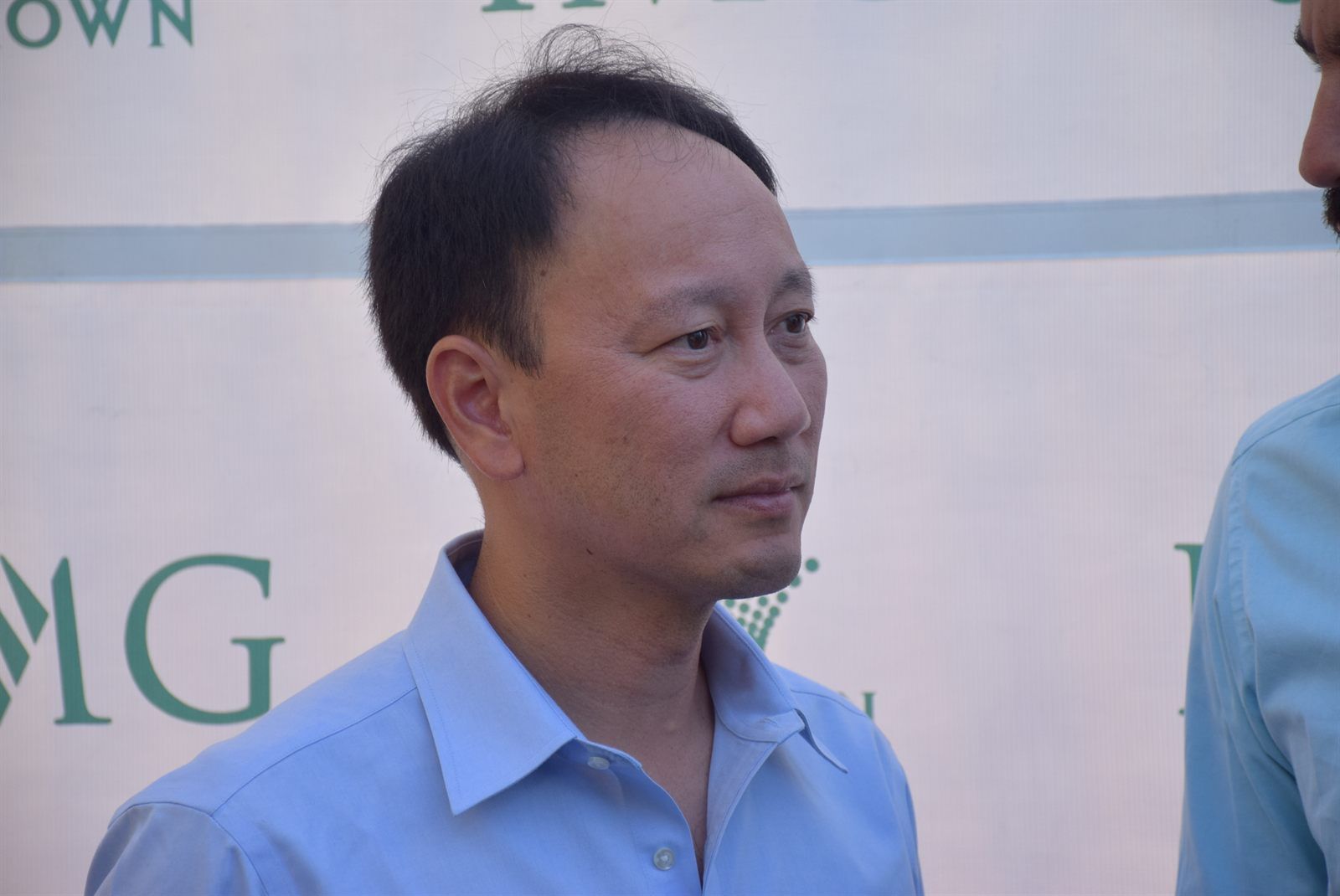
Michael Chang's return to Roland-Garros for Tennis Channel's The Big T at RG: Dropshot Edition works because it is not only nostalgia.
Yes, Chang is forever linked with 1989: the cramps against Ivan Lendl, the underarm serve, the five-set final against Stefan Edberg, and the image of a 17-year-old American doing something that still feels almost impossible. Guinness World Records lists Chang as the youngest male Grand Slam singles champion of the Open Era after his 1989 French Open victory at 17 years and 109 days.
But the more useful part of this interview is what Chang does with that memory. He turns it into a coaching manual.
His message is simple: clay is not just a slower version of hard court. It is a different tennis language. The players who learn its footwork, bounces, patience and emotional tolerance can become more complete anywhere.
That idea connects three careers: Chang's own 1989 breakthrough, Kei Nishikori's rise under Chang's guidance, and Learner Tien's current attempt to become more than a California hard-court prospect.
The Short Version
| Question | Answer |
|---|---|
| Why did Chang adapt to clay better than many Americans? | He had elite movement, a coach who understood the surface, and enough youth to learn without fear. |
| What made the 1989 Lendl match historic? | Chang fought cramps, changed rhythm, used the underarm serve, and refused to quit. |
| What did the Edberg final prove? | Chang could solve a completely different style: serve-and-volley pressure over five sets. |
| Why does this matter now? | Chang is applying the same clay-court learning process to Learner Tien. |
| What is the bigger lesson? | Clay rewards patience, problem-solving, and belief as much as raw power. |
Chang's 1989 Run Was Not a One-Match Miracle
The Lendl match is the famous one, and for good reason. Roland-Garros' own archive still highlights Chang's 1989 fourth-round win over Ivan Lendl and the underarm serve that became part of tennis folklore.
But the interview reminds us that 1989 was bigger than one trick shot.
Chang had to learn the surface before he could shock the field. He credits Jose Higueras, the Spanish clay-court specialist who coached him, with teaching details many American juniors did not grow up absorbing: how far a slide carries, how the ball jumps in different conditions, how to construct points when winners do not come quickly.
That matters because Chang's title is sometimes remembered as pure heart. It was heart, but it was also preparation.
A Timeline of the Clay Lesson
| Year | Moment | Why it matters |
|---|---|---|
| 1988 | Chang plays his first Roland-Garros | A learning year on a surface he did not grow up mastering |
| 1989 | Chang beats Lendl in the fourth round | The match becomes a case study in survival, creativity and courage |
| 1989 | Chang beats Edberg in the final | He becomes the youngest Open Era male Grand Slam champion |
| 1995 | Chang loses another Roland-Garros final to Thomas Muster | A reminder that clay mastery still meets specialists at their peak |
| 2014 | Kei Nishikori reaches the US Open final with Chang as part of his team | Chang's coaching influence becomes relevant to another Asian male star |
| 2026 | Learner Tien wins Geneva while coached by Chang | The clay-court teaching tree continues |
Clay Is a Different Sport Under the Same Rules
Chang says in the interview that moving on clay can feel like a different sport. That is not an exaggeration.
Hard-court movement rewards sharp stops and first-strike balance. Clay asks for controlled sliding, recovery after imperfect bounces, patience through longer exchanges, and the ability to build points several shots ahead.
| Skill | Hard court version | Clay court version |
|---|---|---|
| Footwork | Stop, plant, change direction | Slide, recover, rebalance |
| Point construction | Take time early and finish quicker | Build pressure in layers |
| Defense | Counterpunch from stable footing | Defend while sliding and stretching |
| Offense | Hit through the court | Use shape, height and angles |
| Mental rhythm | Shorter bursts of control | Longer tolerance for discomfort |
This is why so many American players have historically looked less natural on European clay. It is not only about liking the surface. It is about learning a full movement grammar early enough for it to become instinct.
Chang learned it from Higueras. Now he is trying to pass it on.
The Lendl Match Was Really About One Decision
The underarm serve against Lendl remains the visual headline. But Chang's own explanation points to a deeper moment: he nearly stopped.
He describes being close to walking toward the chair in the fifth set while cramping. In his telling, the decisive point was not tactical. It was whether he would finish the match at all.
That is why the match still resonates. It was not simply a teenager upsetting a No. 1 player. It was a player discovering, in real time, that refusing to quit could change the entire arc of his life.
The lesson is not that every player should serve underarm while cramping. The lesson is that great clay-court matches often become psychological endurance tests. The surface stretches rallies, exposes footwork, magnifies fatigue, and forces players to keep solving problems after the clean plan has disappeared.
Chang solved enough of them to beat Lendl. Then he solved a different puzzle against Edberg.
The Edberg Final Proved Chang Was More Than a Survivor
Stefan Edberg presented the opposite problem. Lendl was a physical and baseline giant. Edberg attacked the net, mixed first and second-serve pressure, and forced Chang to pass, lob and defend under constant forward pressure.
Contemporary reports list Chang winning the 1989 final 6-1, 3-6, 4-6, 6-4, 6-2. The pattern matters: Chang led, then lost control, then survived the fourth set, then outlasted Edberg in the fifth.
That is a complete clay-court education in one tournament:
- survive physical collapse against Lendl;
- solve serve-and-volley pressure against Edberg;
- manage pressure as a teenager;
- win without a giant serve;
- prove that movement and decision-making can beat size and reputation.
Why Chang's Coaching Fits Nishikori and Tien
Chang's coaching career makes more sense when viewed through that lens.
Kei Nishikori did not have the biggest serve on tour, but he had timing, speed, balance, return quality and a gift for taking the ball early. Chang's job was not to turn Nishikori into someone else. It was to sharpen the qualities that could let him survive against bigger, stronger opponents.
ATP's 2014 US Open report noted that Nishikori, coached by Chang and Dante Bottini, made history by reaching the final before losing to Marin Cilic. ATP's profile also lists Nishikori's career-high ranking as No. 4.
Learner Tien is a different case, but the overlap is obvious. Like Chang and Nishikori, Tien is not being sold as a one-shot power player. He is a mover, thinker and counterpuncher who needs to turn defense into offense more often.
Chang says Tien is already mentally tough and cerebral. That is important. Coaches can teach patterns. They can refine a serve. They can add net play. But a player who actually wants more information every day gives the coach something to build with.
Learner Tien's Geneva Title Makes the Interview Timely
This interview landed at the right moment.
ATP reported that Tien won the 2026 Geneva title by defeating Mariano Navone 3-6, 6-3, 7-5. The same ATP report noted that Tien became the youngest Geneva champion since Marc Rosset in 1989 and the youngest American man to win a tour-level title on European clay since Chang won Roland-Garros in 1989.
That is not just a trivia connection. It is the central story.
Chang knows what it means for an American player to feel unnatural on clay. He also knows how quickly that can change when movement, patterns and belief line up. Tien's Geneva run suggests the work is already visible.
What Chang Seems to Be Building With Tien
From the interview, Chang's coaching plan sounds less like a technical overhaul and more like an expansion.
| Area | Tien already has | Chang's likely target |
|---|---|---|
| Movement | Natural speed and balance | More clay-specific sliding and recovery |
| Backhand | Stable rally tool | Use it to redirect and control patterns |
| Forehand | Improving weapon | Turn it into a finishing shot more often |
| Serve | Growing as a real weapon | Earn cheaper points, especially on faster courts |
| Net play | Better than Chang says he was at 20 | Add ways to finish after defense turns into offense |
| Mental game | Calm, analytical, resilient | Convert belief into wins against the top tier |
That last row may matter most. Chang understands that beating elite players is partly technical and partly psychological. Young players do not automatically believe they can beat the best. They collect evidence through sets, close matches and eventually wins.
The coach's job is to help the player interpret those small wins correctly.
The American Men's Clay Question Is Still Open
Chang, Jim Courier and Andre Agassi all won Roland-Garros. Since Agassi's 1999 title, no American man has won the tournament.
That drought can make American clay hopes feel like a cultural problem. Chang's answer is more optimistic. He points to depth: many American men in the Top 100, more dangerous players, more chances for someone to make a breakthrough.
The challenge is that modern clay is brutal. Jannik Sinner arrived at Roland-Garros 2026 as one of the central contenders, and the official Roland-Garros site reported Carlos Alcaraz's withdrawal from the tournament because of a wrist issue. The path is never simple, even when a draw changes.
But Chang's larger point stands: Americans can win on clay if they stop treating the surface as an obstacle and start treating it as a skill set.
The Best Lesson From the Interview
The most valuable thing Chang offers is not a story about 1989. It is a way to think about development.
Clay asks players to be honest. It exposes lazy footwork, rushed shot selection, weak endurance and emotional impatience. But it also gives creative players more ways to win. A player who can move, think, defend, improvise and stay calm can turn the surface into a laboratory.
That is why Chang's 1989 title still matters to tennis coaching in 2026. It was not just a miracle by a teenager. It was proof that the right player, taught the right way, can learn a surface that supposedly does not belong to him.
Learner Tien does not need to become Michael Chang. That would be the wrong lesson.
The real lesson is better: learn the surface deeply enough that it gives you more options, not fewer.
FAQ
What was Michael Chang's biggest achievement?
Chang's defining achievement was winning Roland-Garros in 1989 at 17 years and 109 days, making him the youngest Open Era male Grand Slam singles champion according to Guinness World Records.
Why is the Chang-Lendl match so famous?
Chang beat Ivan Lendl in the fourth round of Roland-Garros 1989 while fighting cramps. The match is remembered for his tactical creativity, including a famous underarm serve, and for his refusal to retire from the match.
Why does Chang matter as a coach?
Chang's playing career was built on movement, discipline, problem-solving and mental toughness. Those qualities translate well to players like Kei Nishikori and Learner Tien, who rely on timing, footwork and tactical clarity rather than overwhelming power alone.
What did Learner Tien do in Geneva?
Tien won the 2026 Geneva title, beating Mariano Navone in three sets. ATP reported that he became the youngest Geneva champion since 1989 and the youngest American man to win a European clay tour-level title since Chang's 1989 Roland-Garros triumph.
Is this article a transcript of the interview?
No. It is based on the interview transcript but independently restructured, fact-checked and expanded with historical context, tactical analysis and current ATP/Roland-Garros references.
Sources
- Guinness World Records: youngest male Grand Slam singles champion in the Open Era
- Roland-Garros archive: Chang-Lendl 1989
- Roland-Garros video: Chang-Lendl underarm serve
- ATP: Learner Tien wins Geneva 2026
- ATP: Cilic beats Nishikori in the 2014 US Open final
- ATP: Kei Nishikori profile
- Roland-Garros: Carlos Alcaraz withdraws from 2026 tournament