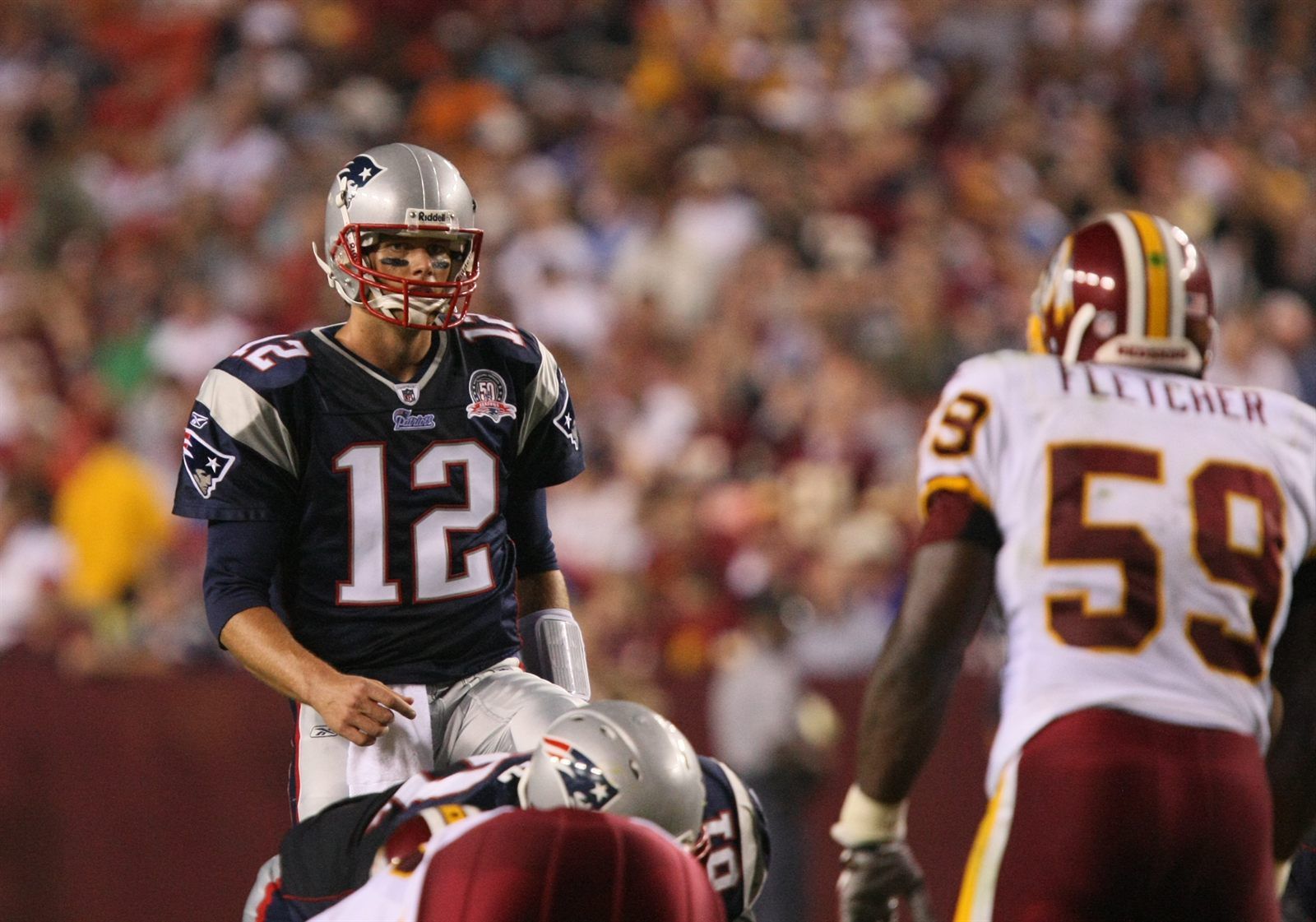
Tom Brady's career is often reduced to two numbers: 199 and 7.
The first number is the origin story: the 199th pick in the 2000 NFL Draft, a sixth-round quarterback out of Michigan whom almost nobody saw as a future superstar.
The second number is the ending: seven Super Bowl championships, more than any player in NFL history and more than most franchises.
But a useful article should go beyond "low pick wins everything."
The better question is: why does Brady have the strongest case as the greatest quarterback in NFL history?
The answer is not just rings. It is playoff dominance, longevity, adaptability, leadership, late-game execution, regular-season volume, and the fact that he proved himself in both New England and Tampa Bay.
NFL.com reported on February 1, 2023 that Brady retired after 23 NFL seasons with seven Super Bowl titles, three NFL MVP awards, five Super Bowl MVP awards, 15 Pro Bowls and 10 Super Bowl appearances. NFL.com: Tom Brady retires for good
The Short Answer
| Area | Key fact | Why it matters |
|---|---|---|
| Championships | 7 Super Bowl wins | Most by any NFL player |
| Playoffs | 35 postseason wins, 10 Super Bowl appearances | Long-term dominance in the highest-pressure games |
| Individual awards | 3 NFL MVPs, 5 Super Bowl MVPs | He was not only a system passenger |
| Career volume | 89,214 passing yards, 649 passing touchdowns | Regular-season production also reached record level |
| Origin | 199th pick in 2000 | The career began from extreme underestimation |
| Team proof | 6 titles with Patriots, 1 with Buccaneers | Won outside the Belichick system |
| Longevity | 23 seasons, retired at 45 | Redefined quarterback aging |
Pro Football Reference lists Brady with 89,214 regular-season passing yards and 649 regular-season passing touchdowns. Pro Football Reference: Tom Brady
Career Timeline
| Year | Event | Why it matters |
|---|---|---|
| 1977 | Born in San Mateo, California | Grew up a 49ers fan, with Joe Montana as an idol |
| 1995-1999 | Played at Michigan | Had to fight for playing time and credibility |
| 2000 | Drafted 199th overall by New England | The GOAT story began with being overlooked |
| 2001 season | Drew Bledsoe was injured; Brady became starter | Patriots dynasty began |
| 2002 | Beat the Rams in Super Bowl XXXVI | First title and massive upset |
| 2003-2004 | Won back-to-back Super Bowls | Early Patriots dynasty formed |
| 2007 | Went 16-0 in regular season, won MVP | Proved he could produce elite passing numbers |
| 2014 season | Beat the Seahawks in Super Bowl XLIX | Restarted the championship run |
| 2016 season | Completed 28-3 comeback against Falcons | The central myth of Brady's career |
| 2018 season | Beat the Rams in Super Bowl LIII | Final Patriots title |
| 2020 season | Joined Buccaneers and won Super Bowl LV | Cross-team proof |
| 2023 | Retired for good | Ended a 23-season playing career |
ESPN's feature argues that Brady's career can be divided into three separate Hall of Fame-level chapters. ESPN: Tom Brady's three Hall of Fame careers
Why the 199th Pick Matters
Being drafted low does not automatically make a player great.
But the 199th pick explains Brady's competitive personality. He did not enter the league as a physical marvel or a guaranteed franchise savior. He had to win the practice field, the backup role, the coaching staff's trust and the locker room before he could win the Super Bowl.
| Early doubt | Brady's answer |
|---|---|
| Not viewed as an elite athlete | Developed reading, timing and decision-making |
| Low draft status | Treated preparation as survival |
| Started as a backup | Learned the system before owning it |
| Constant skepticism | Turned doubt into competitive fuel |
Brady was not the quarterback who overwhelmed scouts with mobility and arm talent. His ceiling came from processing, rhythm, discipline and game management.
Seven Rings Do Not All Mean the Same Thing
The seven championships are the core of Brady's case, but each title added a different layer.
| Ring | Season | Opponent | Meaning |
|---|---|---|---|
| 1 | 2001 | Rams | Upset win and dynasty origin |
| 2 | 2003 | Panthers | Proved the first title was not a fluke |
| 3 | 2004 | Eagles | Early Patriots dynasty fully formed |
| 4 | 2014 | Seahawks | Restarted the title era after a long gap |
| 5 | 2016 | Falcons | 28-3 comeback became football mythology |
| 6 | 2018 | Rams | Final Patriots championship |
| 7 | 2020 | Chiefs | Won immediately with Tampa Bay |
The seventh title matters most for the debate. It answered the system question.
Could Brady win without Bill Belichick and the Patriots structure?
Yes. He joined the Buccaneers at 43 and won Super Bowl LV in his first season there.
What Actually Made Brady Great?
"Clutch" is true, but too vague.
Brady's value came from several specific skills:
| Skill | What it looked like | Why it mattered |
|---|---|---|
| Defensive reading | Identified pressure and coverage before the snap | Decided where the ball should go |
| Quick release | Did not wait too long for deep routes | Reduced sacks and mistakes |
| Pocket movement | Small steps, not big scrambles | Extended passing windows |
| Short and intermediate control | Kept offenses on schedule | Ideal for playoff football |
| Late-game stability | Stayed functional when trailing | Explained comebacks and game-winning drives |
Brady was not always the flashiest quarterback. He was the one who kept finding the correct answer.
Why 28-3 Is the Center of the Myth
In Super Bowl LI, the Patriots trailed the Falcons 28-3.
The comeback matters not only because of the score. It condensed Brady's career argument into one game: no panic, no magical single play, just relentless problem-solving until the impossible became manageable.
| Comeback requirement | Brady's answer |
|---|---|
| Time management | Did not try to solve everything in one snap |
| Execution | Turned each possession into positive value |
| Emotional control | Did not collapse under the deficit |
| Trust in defense | Kept the game alive long enough |
| Overtime finish | Completed the comeback with a full drive |
After that game, "never count out Brady" became more than a phrase. It became a league-wide instinct.
System or Player?
The Brady debate always returns to Bill Belichick and the Patriots system.
Belichick mattered enormously. So did defense, special teams, coaching stability, cap management and roster discipline. Explaining the dynasty as one man winning alone is wrong.
But calling Brady merely a system passenger is also wrong.
| Patriots system | Brady's contribution |
|---|---|
| Reliable defense and special teams | Executed crucial offensive possessions |
| Elite preparation | Understood and applied complex game plans |
| Tactical flexibility | Adjusted to changing personnel |
| Cap discipline | Helped maintain long title windows |
| Stable winning culture | Reinforced standards through preparation |
The best explanation is mutual amplification. The Patriots gave Brady an ideal environment. Brady raised that environment's ceiling to a historic level.
Why Tampa Changed the Debate
When Brady left New England for Tampa Bay, he was already 43.
Many expected the move to expose age, system dependence or both. Instead, he won a Super Bowl in his first season with the Buccaneers and beat Patrick Mahomes' Chiefs in Super Bowl LV.
| Question | Tampa answered |
|---|---|
| Can he win without Belichick? | Yes |
| Can he learn a new offense late? | Yes |
| Was age already too much? | Not yet |
| Had the new quarterback era fully taken over? | Not while Brady was still there |
That title made the GOAT case more complete. Brady was not only the Patriots quarterback. He was a championship quarterback in another system.
Criticism and Boundaries
High-quality sports analysis should not only count trophies.
Brady's case is strong, but several boundaries matter:
| Issue | Fair view |
|---|---|
| Rings as a metric | Quarterbacks matter, but championships are still team achievements |
| Belichick's role | Coaching and defense were essential, especially early |
| Athletic tools | Brady was not the most physically dynamic quarterback |
| Era context | Modern passing rules helped quarterbacks and receivers |
| Controversies | Deflategate affects some perceptions but does not erase the full resume |
The safer conclusion is not that Brady leads every possible category. It is that when championships, playoffs, longevity, production, late-game execution and cross-team proof are combined, his overall case is the hardest to beat.
How to Watch Brady
If you are new to the NFL, do not only watch Brady's deep throws.
Watch these details:
| Detail | What to observe |
|---|---|
| Pre-snap control | How does he adjust protection and routes? |
| Pocket steps | How does he move half a step to avoid pressure? |
| Third downs | Does he find the reliable route under stress? |
| Red-zone decisions | How does he handle compressed space? |
| Two-minute drives | How does he manage clock, sideline and timeouts? |
Brady became great not because he looked like the best athlete on the field, but because he turned offensive football into a series of higher-probability decisions.
FAQ
Is Tom Brady officially retired?
Yes. NFL.com reported on February 1, 2023 that Brady retired "for good" after 23 seasons.
Why was he drafted so low?
He was not viewed as a top physical prospect coming out of Michigan. His NFL value came later through processing, accuracy, preparation and competitive discipline.
Did he only win because of Belichick?
No. Belichick was essential, but Brady's Buccaneers Super Bowl title showed that his value traveled beyond New England.
Is Brady greater than Joe Montana?
Montana remains an all-time icon and was Brady's childhood idol. Brady's advantage is scale: more titles, more playoff volume, longer career and success across more eras.
Can Patrick Mahomes catch Brady?
He can enter the debate, but catching Brady requires more than peak talent. It requires long-term health, postseason consistency and an extraordinary championship count.
Conclusion
Brady's greatness includes seven rings, but the rings are the result, not the whole explanation.
He started as the 199th pick and turned nearly every doubt into evidence. Not athletic enough? He won with reading and timing. Not a chosen prospect? He won a job through preparation. Too dependent on the Patriots? He changed teams and won again.
He was not the quarterback who looked most like a superhero.
He was something more frightening for opponents: a constantly calibrated winning machine.
That is the real Brady story.
The player the league underestimated eventually forced the league to redefine greatness by his standard.