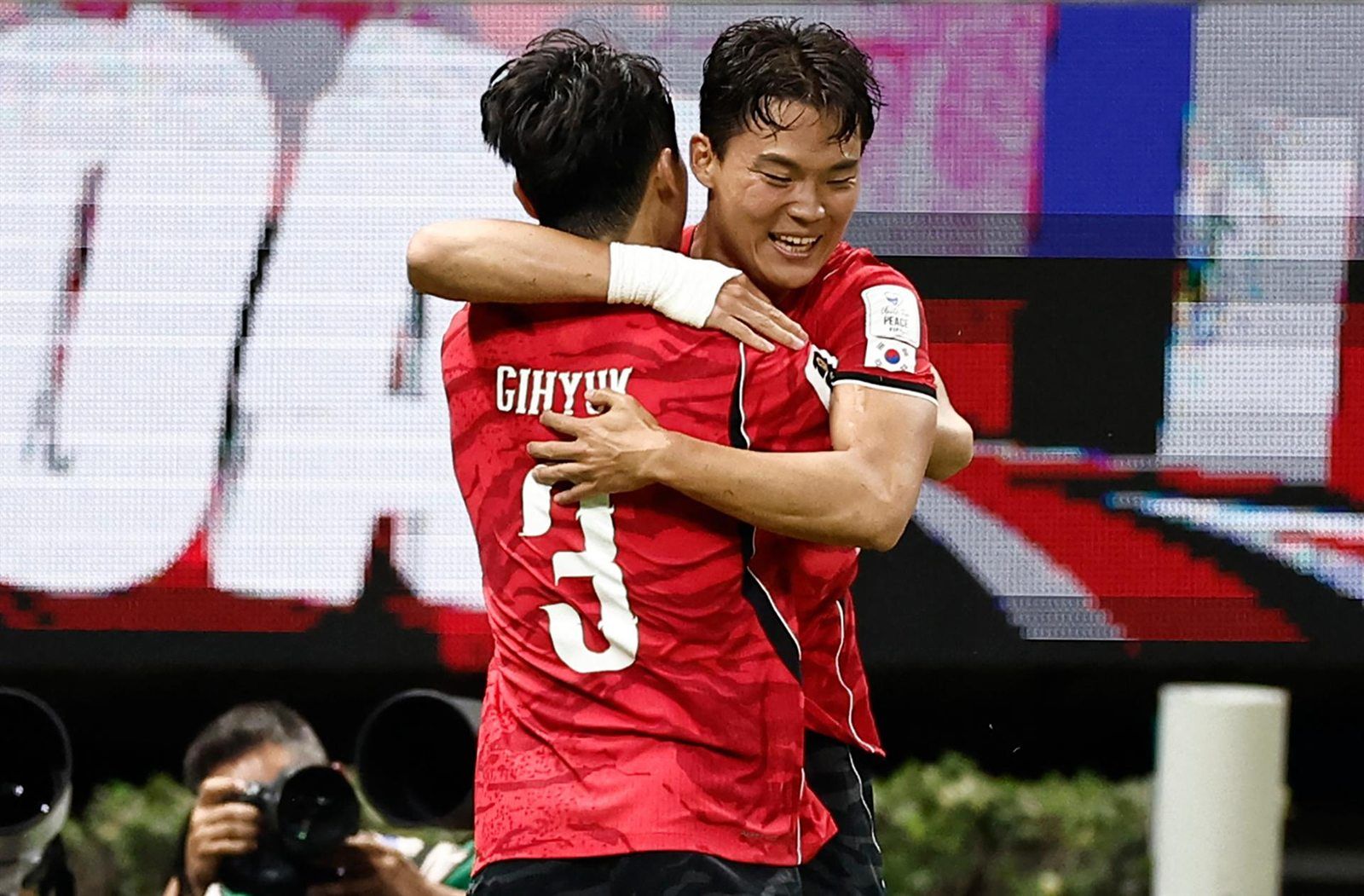
Korea Republic beat Czechia 2-1 in their opening Group A match at the 2026 FIFA World Cup.
The basic story is straightforward: Czechia scored first through Ladislav Krejci, Korea equalized through Hwang In-beom, and substitute Oh Hyeon-gyu won it from Hwang's cross.
The more interesting story is bigger than the score.
This match showed why the expanded 48-team World Cup may punish old assumptions. A European team is not automatically more refined. An Asian team is not automatically just fast and hardworking. At this level, preparation, altitude adaptation, technical security and tactical flexibility can decide games before reputation does.
The Verified Match Picture
| Category | What happened |
|---|---|
| Match | 2026 FIFA World Cup Group A: Korea Republic vs Czechia |
| Venue | Guadalajara Stadium, Mexico |
| Final score | Korea Republic 2, Czechia 1 |
| Czechia goal | Ladislav Krejci, 59' |
| Korea goals | Hwang In-beom, 67'; Oh Hyeon-gyu, 80' |
| Decisive player | Hwang In-beom: goal and assist |
| Group context | Group A includes Mexico, South Africa, Korea Republic and Czechia |
| Venue factor | Guadalajara sits at about 1,566 meters above sea level |
AP, ESPN, Al Jazeera and Sky Sports all confirmed the same basic timeline: Czechia went ahead, Hwang equalized, then Hwang assisted Oh for the winner.
That makes this more than a simple upset narrative. It was a technical and tactical contrast between two teams trying to solve the same tournament problem in different ways.
Turning Points
| Minute | Event | Meaning |
|---|---|---|
| First half | Slow, cautious rhythm | Neither team created consistent clean chances |
| 59' | Krejci scores for Czechia | Direct play and aerial pressure paid off |
| 67' | Hwang In-beom equalizes | Korea turned midfield quality into a goal |
| 80' | Oh Hyeon-gyu scores from Hwang's cross | Korea's substitution and right-side attack decided the game |
| Final stretch | Czechia chased but could not recover | Korea protected the lead better than Czechia had |
Czechia's opener made sense. Their physical profile, set-piece threat and direct approach were always likely to create at least one dangerous moment.
The problem was what happened after the goal.
Instead of making the game smaller and more controlled, Czechia left Korea enough space to play through them. The source video criticizes Czechia for pushing forward after scoring and then being opened by through balls. The wording is emotional, but the tactical point is useful: a leading team cannot stretch itself so much that the opponent gets cleaner transition lanes.
Why Korea Won: Hwang In-beom Changed the Texture
Son Heung-min remains Korea's most famous player, but this match belonged to Hwang In-beom.
Hwang's equalizer was not just a finish. It was a symbol of Korea's advantage in the decisive moments: calmer touches, better body shape, cleaner choices under pressure and the ability to turn Czechia's defensive distance into attack.
| Korea advantage | How it showed |
|---|---|
| Midfield composure | Hwang could receive, turn and choose under pressure |
| Multiple attacking routes | Korea did not need Son to decide everything |
| Better final-third timing | Oh Hyeon-gyu arrived as a substitute and finished the key chance |
| Cleaner wide combinations | Hwang's right-side cross created the winning goal |
| Stronger late-game rhythm | Korea looked clearer after falling behind |
That last point matters most.
Korea did not panic after conceding. They became more direct without becoming crude. They used the space Czechia allowed, but they still needed technical quality to punish it.
Czechia's Problem Was Not Direct Football. It Was Direct Football Without Enough Precision
Direct play is not inferior by default.
Long throws, aerial duels, early crosses and second balls can all be effective. Czechia's goal came from that broad family of ideas. The issue is what happens when those tools are not supported by enough control after the first contact.
| Czechia issue | Why Korea punished it |
|---|---|
| Heavy reliance on direct play | When the first ball failed, the second phase lacked quality |
| Open spacing after scoring | Korea found through-ball and transition lanes |
| More forwards did not equal more chances | Adding attackers cannot replace connection |
| Physical defending became reactive | Fouls and recovery runs replaced clean pressure |
| Limited technical security | Chasing the game became harder once Korea led |
The source video mentions striking numbers about Czechia's crosses and dribbles. Those exact figures were not independently verified in major match reports, so they should be treated as commentary/stat-feed claims rather than the foundation of the argument.
The broader pattern is clear enough without them: Czechia had physical tools, but Korea had more reliable technical solutions in the key moments.
Altitude and Preparation Were Part of the Match
Guadalajara is not Mexico City, but it is still an altitude venue. AP-related reporting places Guadalajara at about 5,138 feet, or 1,566 meters, above sea level.
That matters in tournament football.
Altitude does not score goals by itself. It does, however, change recovery between sprints, late-game fatigue, pressing intensity and the ability to keep concentration when the match opens up.
| Altitude effect | Tactical consequence |
|---|---|
| Slower recovery after repeated sprints | Direct teams may lose second-ball sharpness |
| More fatigue in pressing | Passing teams can benefit if they keep the ball cleanly |
| Greater punishment for poor spacing | Recovery runs become harder |
| More value in early adaptation | Teams that acclimatize better may look fresher late |
The source video says Korea arrived early in Guadalajara while Czechia had a shorter adaptation period. That specific preparation timeline was not independently verified here, so it should be handled carefully. But the larger point stands: in a World Cup spread across different climates and elevations, preparation is not background noise. It is part of performance.
What the Expanded World Cup Changes
The 2026 World Cup is the first edition with 48 teams. FIFA's format places teams into 12 groups of four. The top two from each group advance, along with the eight best third-place teams, creating a new Round of 32.
That changes the logic of group matches.
| Old assumption | 48-team reality |
|---|---|
| Group-stage margins are narrow but familiar | More teams and more paths make every point more strategic |
| Traditional confederation labels tell the story | Style, environment and preparation can override reputation |
| Third place is usually a disappointment | Third place can still be a route to the knockouts |
| Bigger names can manage slowly | A first-match win can reshape the whole group |
Korea's win matters because it puts them in control of their own path. It also pressures Czechia immediately: a team built on physicality and direct play now needs points against Mexico and South Africa without assuming that the matchup map will favor them.
This is what "everyone has a chance" really means.
It does not mean every team is equally strong. It means the expanded format gives more teams a path, and once they are there, the difference between winning and losing may come down to preparation and tactical detail rather than old hierarchy.
How Far Can Korea Go?
The win was important, but it does not solve everything.
Korea still need answers:
- Can Son remain decisive as he ages and faces heavy defensive attention?
- Can Hwang control midfield against stronger pressing teams?
- Can Korea defend aerial and long-throw pressure more cleanly?
- Can Oh Hyeon-gyu's winner become a repeatable attacking option?
- Can they handle Mexico's atmosphere and intensity in the next Group A test?
Still, the positive sign is obvious: Korea won without needing Son to produce the decisive moment.
That is what mature tournament teams need. When the biggest star does not win the match, someone else must.
The Bottom Line
Korea Republic 2-1 Czechia was not a glamour match, but it was a very modern World Cup match.
It showed that direct football still has value, but only if it comes with precision. It showed that technical security in midfield can beat raw physicality. It showed that altitude and preparation matter. And it showed why the 48-team format may create more matches where old assumptions are not enough.
Czechia had the lead. Korea had the better solutions.
That was the difference.
FAQ
What was the final score of Korea Republic vs Czechia?
Korea Republic beat Czechia 2-1 in Group A of the 2026 FIFA World Cup.
Who scored for Czechia?
Ladislav Krejci scored in the 59th minute.
Who scored for Korea Republic?
Hwang In-beom equalized in the 67th minute, and Oh Hyeon-gyu scored the winner in the 80th minute. Hwang also assisted the winning goal.
Where was the match played?
The match was played at Guadalajara Stadium in Mexico. Guadalajara is about 1,566 meters above sea level.
Why does this match matter in the expanded World Cup?
The 2026 World Cup has 48 teams and a Round of 32. That gives more teams realistic knockout paths, making first-match wins and stylistic matchups even more important.