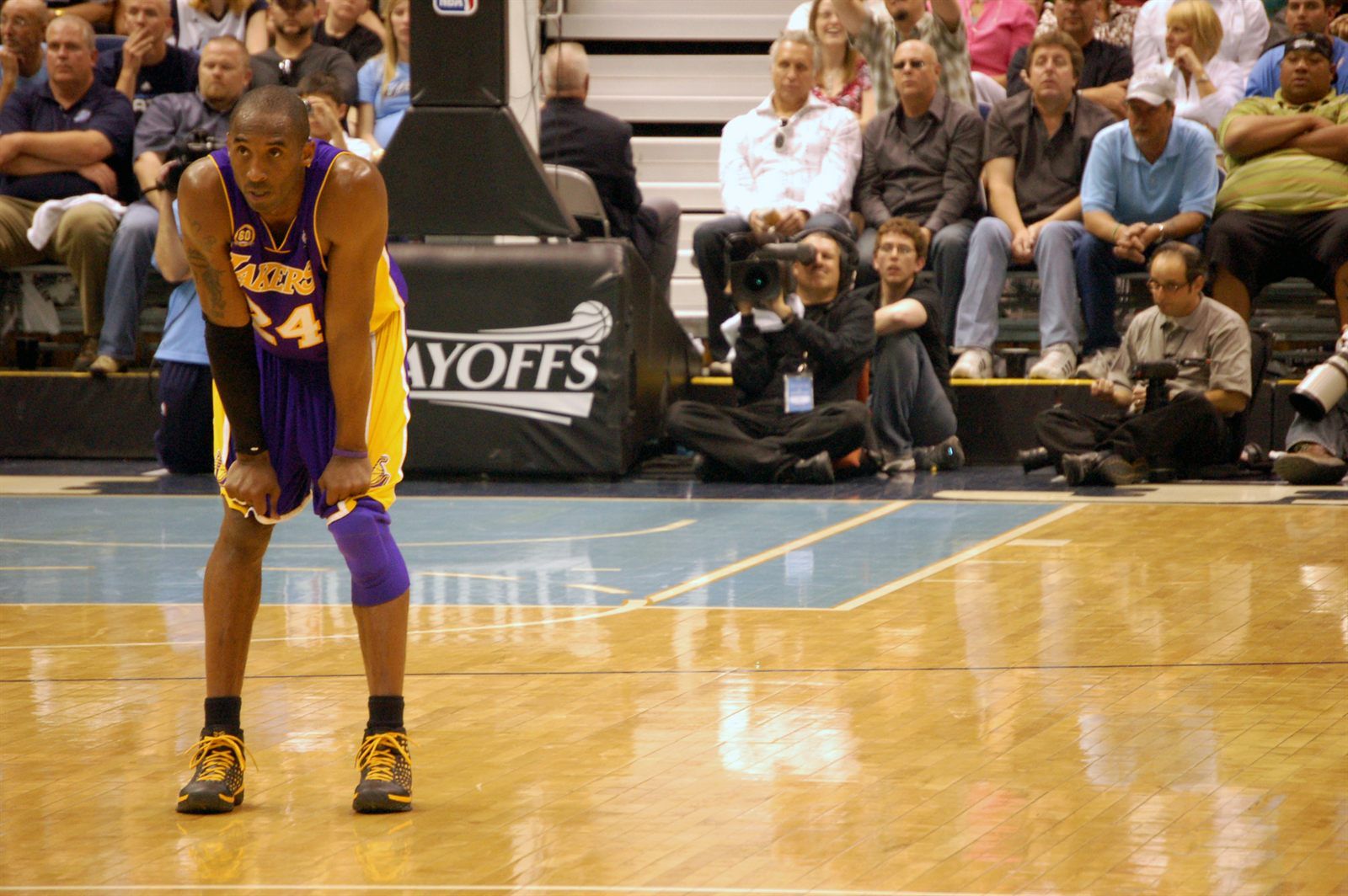
In 2026, it has been six years since Kobe Bryant died.
The debate around him has not faded. His admirers describe him as the symbol of skill, willpower, and competitive obsession. His critics point to efficiency, advanced metrics, and shot selection to argue that his legacy is sometimes exaggerated.
Both sides are partly right.
Kobe is difficult to evaluate because he does not fit one simple label. He was a five-time champion and a high-difficulty shot-maker. He was a technical master and a central figure in efficiency debates. He had real championship proof, but his legacy can also be over-mythologized through "Mamba Mentality."
This article asks a practical question: how can we evaluate Kobe Bryant fairly?
The Short Answer
| Evaluation area | Evidence in Kobe's favor | Where caution is needed |
|---|---|---|
| Resume | Five titles, 18 All-Star selections, 2008 MVP, two Finals MVPs | Resume alone does not automatically mean top five ever |
| Technical range | Footwork, post game, fadeaway, midrange, triple-threat, off-ball play, defense | Technical difficulty does not make every shot a good shot |
| Offensive burden | Long-term late-clock and high-difficulty creation | He also forced shots and had inefficient possessions |
| Playoff value | Key role in two championship eras | Shaquille O'Neal was the first dominant force during the early three-peat |
| Advanced profile | Career 23.4 PER, .555 TS, 31.8 usage rate | Not as efficient as the best modern high-efficiency creators |
| Cultural impact | Mamba Mentality, two retired Lakers jerseys, global influence | Culture should not replace basketball analysis |
NBA's tribute page summarizes the major resume: 20 seasons with the Lakers, five championships, 18 All-Star selections, 2008 MVP, two scoring titles, four All-Star Game MVPs, 12 All-Defensive selections, and 60 points in his final game. NBA Kobe Bryant tribute
Four Career Phases
| Phase | Years | Keywords | How to understand it |
|---|---|---|---|
| Young No. 8 | 1996-1999 | Talent, athleticism, rough edges | A high school guard learning NBA decision-making |
| Shaq-Kobe title years | 2000-2004 | Three-peat, defense, outer core | O'Neal controlled the paint; Kobe supplied perimeter creation and pressure |
| Extreme scoring engine | 2005-2007 | 81 points, 35.4 PPG season, huge usage | His self-creation peaked, and so did the efficiency debate |
| Mature No. 24 | 2008-2013 | MVP, two more titles, triangle mastery, Pau Gasol | A more complete championship centerpiece |
This matters because "Kobe" is not one fixed version. No. 8 Kobe, No. 24 Kobe, post-Achilles Kobe, and farewell-tour Kobe should not be flattened into one profile.
Why Two Retired Numbers Matter
The Lakers retired both No. 8 and No. 24 in 2017. NBA.com's Lakers retired-numbers page notes that the franchise has retired 13 numbers for 12 players because both of Bryant's numbers are in the rafters. NBA: Lakers retired numbers
That was not only sentiment. The two numbers represent two almost separate Hall of Fame arcs.
| Number | Image | Historical value |
|---|---|---|
| No. 8 | Explosion, ambition, athletic force, early titles | From teenage prodigy to championship perimeter star |
| No. 24 | Technique, control, responsibility, post-Shaq titles | Proved he could lead a title team as the primary star |
No. 8 was a blade being sharpened. No. 24 was a full weapon system.
What Made Kobe's Skill So Special?
Kobe's skill was not special because he had many moves. It was special because the moves connected.
| Skill area | What it looked like | Why it mattered |
|---|---|---|
| Post footwork | Turnarounds, shoulder fakes, pivots, fadeaways | Created shots without needing elite burst |
| Triple-threat game | Jab steps, pull-ups, drives, pass fakes | Forced defenders to read every movement |
| Midrange scoring | Pull-ups, turnarounds, late-clock shots | Useful when playoff spacing collapsed |
| Off-ball play | Cuts, screen navigation, weak-side catches | Helped him coexist with O'Neal and Gasol |
| Defensive pressure | Early-career ball pressure and matchup work | Gave the Lakers perimeter aggression |
| High-difficulty finishing | Balance after contact, contested shot-making | Preserved offense when normal options failed |
This is why Kobe often looks better on film than in a simple efficiency table. Many of his makes were not the easiest correct answer. They were survival answers after the defense had taken away the normal ones.
But that is also the problem. Turning difficult shots into a skill does not mean every difficult shot was the best choice.
The 81-Point Game: Genius or Excess?
On January 22, 2006, Kobe scored 81 points against the Toronto Raptors. NBA's history page identifies it as one of the greatest scoring performances in league history. NBA 81-point feature
The importance of that game is not only the total.
It showed Kobe's full scoring package: transition, threes, free throws, midrange shots, drives, heat-check jumpers, stamina, and rhythm control. Many players can explode for a quarter. Kobe sustained the eruption through the second half.
But the game can also create a false lesson. It does not prove that Kobe should play that way every night. It proves that he had historic self-creation capacity in an extreme setting.
That distinction is essential.
Was Kobe Inefficient?
The answer is not as simple as yes or no.
Basketball-Reference lists Kobe's career advanced profile with a 23.4 PER, .555 true shooting percentage, and 31.8 usage rate. Basketball-Reference Kobe Bryant stats
Those numbers suggest two things.
| Point | Meaning |
|---|---|
| He was not just an inefficient volume scorer | Maintaining positive efficiency at huge usage has value |
| He was not a modern efficiency outlier | Compared with Curry, Durant, Jokic, and other elite modern engines, his efficiency is not the selling point |
The fair view is contextual.
Kobe's prime came in an era with less spacing, more midrange value, more crowded interiors, and roster phases where the Lakers lacked a stable second creator. Many possessions asked him to create a shot after the offense had stalled.
That role lowers efficiency but raises a team's late-clock floor.
At the same time, difficulty does not excuse every forced attempt. Kobe's greatness and controversy came from the same source: he believed he could practice the unreasonable until it became almost reasonable.
Was Kobe Carried by Shaq?
This is one of the central debates.
During the early three-peat, Shaquille O'Neal was clearly the most dominant interior force, especially in the Finals. It is inaccurate to treat all three early titles as Kobe-led titles.
But saying Kobe was merely carried is also too simple.
His value included perimeter creation, transition scoring, late-clock shot-making, defensive pressure, and passing connections to O'Neal. O'Neal was the first dominant force. Kobe was the perimeter star who made the Lakers' ceiling complete.
That is the balanced answer.
Why 2009 and 2010 Changed the Conversation
The 2009 and 2010 championships mattered because they answered the post-Shaq question: could Kobe win as the primary star?
Yes.
But not alone. Pau Gasol, Lamar Odom, Derek Fisher, Ron Artest, Andrew Bynum, and Phil Jackson's system mattered. Kobe's value was that he carried gravity, finishing, playmaking, and late-game responsibility inside that structure.
No. 24 Kobe was not simply a more selfish version of No. 8. He was more patient, more technical, and more aware of how to use the triangle offense to set up teammates before taking over.
That is why 2008-2010 is the best period for evaluating Kobe as a championship centerpiece.
What Mamba Mentality Should Mean
"Mamba Mentality" can become empty if it only means "work hard."
A more useful definition is:
| Layer | Real meaning |
|---|---|
| Technical repetition | Practicing moves until they survive pressure |
| Competitive obsession | Turning failure and criticism into preparation |
| Burden acceptance | Taking responsibility when the offense breaks down |
| Cost awareness | Understanding that this style also creates wear, conflict, and questionable decisions |
The best lesson from Kobe is not that everyone should copy his contested shots.
The lesson is that skill can be broken down, repeated, refined, and carried into pressure.
A Fair Kobe Evaluation Checklist
| Question | Answer |
|---|---|
| Was he an elite perimeter star in his own era? | Yes |
| Did he have a title resume as the first option? | Yes, especially 2009 and 2010 |
| Did he have efficiency limitations? | Yes, depending on standard and context |
| Was he better than Jordan or LeBron? | The evidence is not strong enough, but he belongs in all-time-great discussions |
| Did cultural influence inflate parts of his reputation? | Sometimes, which is why basketball and mythology must be separated |
| Is his technique worth studying on its own? | Absolutely |
This framework is more useful than saying "Kobe is top five" or "Kobe is overrated." He was not perfect, but he was far more than a brand slogan.
FAQ
Is Kobe Bryant a top-10 player ever?
It depends on the criteria. By resume, influence, skill completeness, and championship success, he has a strong case. By some advanced metrics and efficiency models, he may rank lower. The safest statement is that he is one of the greatest players ever and one of the two most important shooting guards in NBA history.
Why do people call Kobe inefficient?
Because he took many midrange jumpers, fadeaways, and contested shots. Those attempts do not score well in modern efficiency models. But his role also required late-clock creation, so field-goal percentage alone is not enough.
Was Kobe a copy of Michael Jordan?
No. He studied Jordan's footwork, post game, and midrange scoring, but his era, body, roster context, and league environment were different. Kobe extended the Jordan-style shooting guard skill tree into the 2000s.
Why did the Lakers retire two Kobe numbers?
Because both No. 8 and No. 24 represent complete Lakers legacies. No. 8 includes the three-peat and young-star rise. No. 24 includes the MVP, two Finals MVPs, and post-Shaq championships.
What should ordinary players learn from Kobe?
Not the forced shots. The useful lesson is how to study technique, repeat details, build counters, and keep adapting as the body changes.
Conclusion
Kobe Bryant cannot be summarized by "Mamba Mentality," and he cannot be dismissed by an efficiency table.
He was a contradiction: difficult shots, elite technique, enormous volume, real controversy, championship proof, and cultural mythology. The more one tries to explain him in a single sentence, the more inaccurate the explanation becomes.
The fairest view is this: Kobe was one of basketball's most extreme technical competitors. He pushed shooting guard footwork, deception, midrange scoring, post play, and pressure finishing close to their limits.
But analysis should remain beside admiration.
That is the real way to understand Kobe without overpraising or underrating him: respect the greatness, name the costs, and study the details.