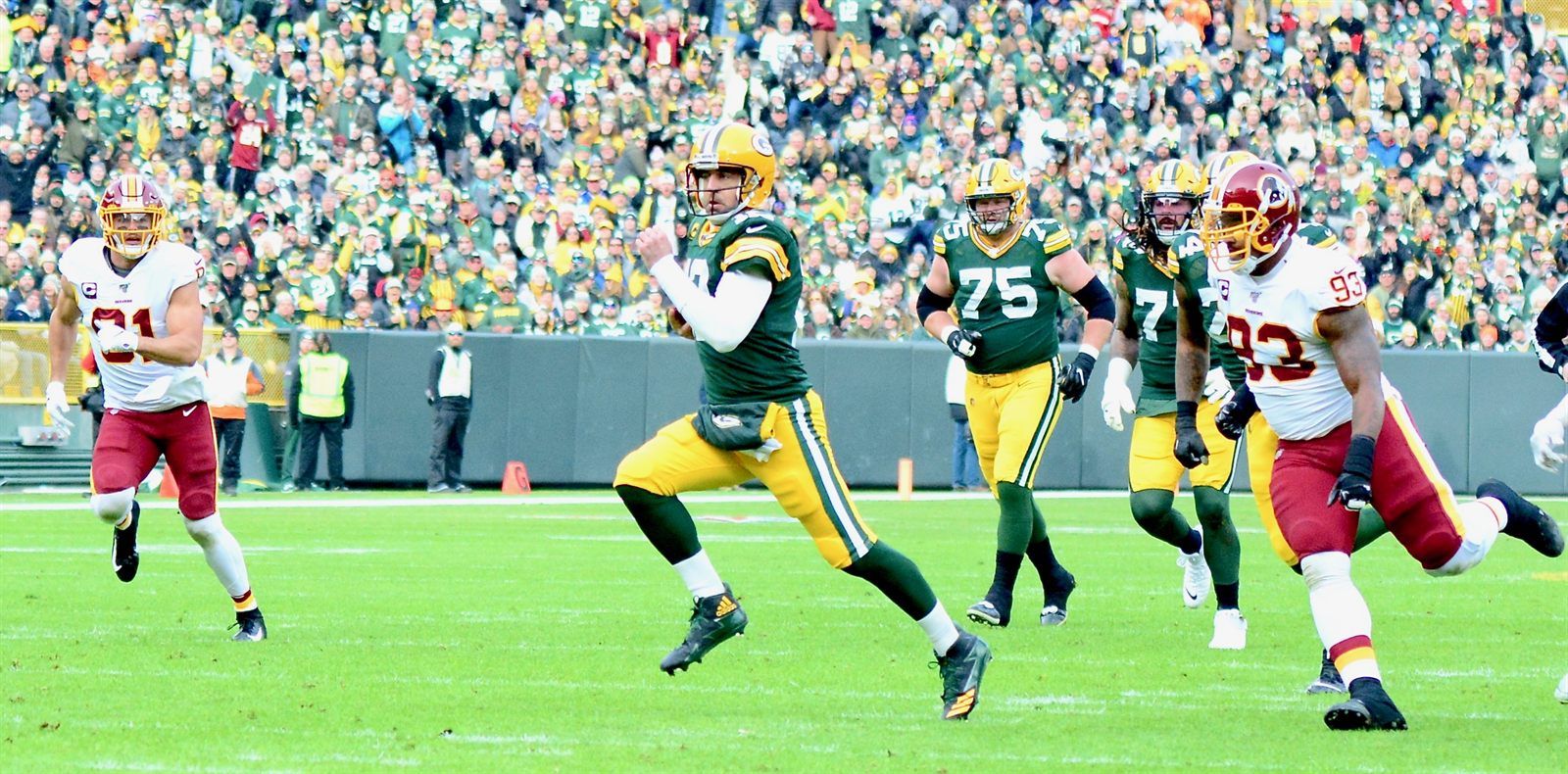
The most important update comes first: the Aaron Rodgers question is no longer unresolved.
The Pittsburgh Steelers officially announced on May 18, 2026, that they signed Rodgers to a one-year contract. NFL.com reported that the deal was worth up to $25 million, including $22 million guaranteed, and that it reunited Rodgers with Mike McCarthy for another run in Pittsburgh.
That matters because the Rich Eisen Show discussion with Steelers insider Jerry Dulac captured the tension just before the finish line: Were the Steelers losing patience? Did Rodgers really have all the leverage? And why had a deal that looked logical taken so long?
With the contract now done, the better question is not "will Rodgers sign?" It is: what did the waiting game reveal about Pittsburgh's 2026 quarterback strategy?
The Situation in One Table
| Question | Answer after the signing |
|---|---|
| Did Rodgers return to Pittsburgh? | Yes. The Steelers announced a one-year contract on May 18, 2026. |
| Was the delay about money? | Dulac said the Steelers did not view money as the main holdup. Later reporting put the deal at up to $25 million. |
| Did Rodgers have leverage? | Yes, because Pittsburgh's short-term QB plan still pointed back to him. |
| Were the optics awkward? | Yes. The longer it dragged toward OTAs, the more it looked like Rodgers controlled the timeline. |
| Did the Steelers walk away? | No. Their actions showed patience, not panic. |
| What changed after the video? | Rodgers signed and participated in OTA work, according to AP/Washington Post reporting. |
Why Rodgers Had Leverage
Dulac's strongest point in the interview was that Rodgers had the leverage. That was not just a talk-show line. It was a roster reality.
The Steelers could express impatience, but their alternatives were not clean.
Mason Rudolph offered familiarity. Will Howard and Drew Allar represented developmental paths. But if Pittsburgh wanted to maximize 2026, Rodgers was still the most plausible bridge between a veteran roster and playoff expectations.
That is how leverage works in the NFL. It does not always come from a perfect market. Sometimes it comes from being the least uncomfortable answer.
| Steelers option | Short-term upside | Short-term problem |
|---|---|---|
| Wait for Rodgers | Highest veteran ceiling, McCarthy familiarity | Calendar pressure and fan frustration |
| Start Rudolph | Lower drama, known system fit | Lower perceived ceiling |
| Push a young QB early | Future evaluation begins immediately | Risk of wasting a win-now roster |
| Reopen the market | Theoretically flexible | Few better answers available in late spring |
Once the Steelers decided Rodgers was the answer, time worked differently. Every day without a signed deal made the optics worse, but it did not necessarily make the football alternative better.
The Steelers Were Impatient With the Process, Not the Plan
The phrase "losing patience" can be misleading.
It does not mean the Steelers were ready to rip up the plan. Dulac's comments suggested something more subtle: people inside the building could be frustrated with the timing while still believing Rodgers was going to be their quarterback.
That distinction matters.
Teams can dislike a process and still accept the outcome. In this case, Pittsburgh's behavior suggested it was willing to tolerate the awkwardness because the football staff believed Rodgers was still worth the wait.
The official signing on May 18 confirmed that. The team did not pivot. It waited.
Why the May 18 Date Mattered
The interview repeatedly circled around the start of OTAs.
OTAs are voluntary, but for a quarterback, they still matter. A veteran quarterback does not need every spring rep to understand football, but he does need time to build timing with receivers, learn staff preferences, adjust protection calls and create a communication rhythm.
That is why the delay created pressure. It was not only about paperwork. It was about when the 2026 offense could start feeling real.
Once Rodgers signed and appeared at OTA work, the story shifted from uncertainty to integration.
The McCarthy Factor
Rodgers' reunion with Mike McCarthy is the emotional and tactical center of the move.
McCarthy and Rodgers won a Super Bowl together in Green Bay, but their Packers relationship also carried years of scrutiny. Reuniting in Pittsburgh raises an obvious question: can familiarity become an advantage rather than old friction?
Dulac's interview framed the relationship positively, noting that McCarthy had been in frequent communication with Rodgers. The final agreement supports the idea that the two sides believed the partnership could work again.
The football logic is clear:
- Rodgers gets a coach who knows his language.
- McCarthy gets a quarterback who can operate a veteran offense.
- Pittsburgh avoids throwing a young quarterback directly into a win-now expectation.
- The franchise buys a one-year bridge without fully abandoning future planning.
That does not guarantee success. It simply explains why the reunion made sense.
Why Fans Were Split
Dulac suggested many Steelers fans would have been ready to move on and let younger quarterbacks play. That sentiment is understandable.
Rodgers brings upside, but he also brings delay, attention and age-related uncertainty. Fans who prefer a clean future plan do not want another season built around a veteran quarterback decision cycle.
But Pittsburgh's front office is not running a college program. It is not obligated to prioritize evaluation over contention. If the staff believed the roster could compete in 2026, then Rodgers was the most direct way to chase the season.
That is the core tension:
| Fan concern | Team counterargument |
|---|---|
| The Rodgers drama is exhausting | The contract is only one year |
| Young QBs need reps | They may benefit from sitting and learning |
| The team needs a long-term answer | The 2026 roster still needs a short-term plan |
| Rodgers is old | His experience may still beat the available alternatives |
Both sides have a point. The signing did not solve Pittsburgh's quarterback future. It clarified Pittsburgh's quarterback present.
The Contract Structure Fits the Story
The reported contract structure also makes sense.
NFL.com reported a one-year deal worth up to $25 million, with $22 million guaranteed. Pro Football Rumors reported that incentives were tied to playing time and playoff success.
That is a bridge contract, not a rebuild contract.
It says:
- Pittsburgh wants Rodgers for 2026.
- Rodgers wanted enough guaranteed money to make the return meaningful.
- The team still has performance-based upside if the season goes well.
- The arrangement does not require pretending Rodgers is the long-term future.
In other words, the contract matches the leverage. Rodgers had enough power to get the deal done on his timeline, but the team kept the commitment short.
What This Means for the Quarterback Room
The signing does not make the younger quarterbacks irrelevant.
It changes their timeline.
Instead of being forced into immediate competition for the starting job, players like Will Howard and Drew Allar can be evaluated in a lower-pressure environment. That can be frustrating for fans who want a fresh start, but it can also be useful if the coaching staff wants to rebuild mechanics, footwork and processing habits.
The risk is obvious: if Rodgers is merely average and the young quarterbacks do not develop, Pittsburgh may arrive at 2027 with the same question.
But the Steelers chose the cleaner 2026 answer. Rodgers starts the year as the veteran solution. The future remains open.
The Real Lesson: Leverage Is About Need
Rodgers did not have leverage because the Steelers had no pride. He had leverage because the Steelers had a need.
They wanted a quarterback who could help them compete immediately. They had a coach with direct Rodgers history. They had a roster that was not built to punt the season. And they did not have an obvious alternative with the same short-term ceiling.
That combination gave Rodgers room to let the process stretch.
The Steelers may not have loved the optics. They may not have loved the delay. But they loved the football answer enough to live with both.
Conclusion
The Rodgers-Steelers waiting game looked messy because it was public. But the final result was consistent with the logic that was there all along.
Rodgers had leverage because Pittsburgh still viewed him as the best 2026 answer. The Steelers waited because the alternatives did not offer the same ceiling. The one-year contract made sense because it gave both sides a final run without forcing a long-term illusion.
The drama is over. The real test is not whether Rodgers signs. He already did.
The test is whether Pittsburgh's patience turns into a season that justifies it.
FAQ
Did Aaron Rodgers sign with the Steelers?
Yes. The Steelers officially announced on May 18, 2026, that they signed Rodgers to a one-year contract.
How much is Rodgers' 2026 contract worth?
NFL.com reported that the deal is worth up to $25 million and includes $22 million guaranteed. Pro Football Rumors reported incentives tied to playing time and playoff success.
Why did Jerry Dulac say Rodgers had leverage?
Because Pittsburgh's realistic short-term quarterback plan still pointed toward Rodgers. The Steelers could become frustrated with the delay, but their best win-now option remained waiting for him.
Does this solve the Steelers' long-term quarterback problem?
No. It solves the immediate 2026 question. The long-term future still depends on the development of younger quarterbacks and what happens after Rodgers' one-year deal.
Is this article a transcript?
No. It is based on the interview transcript, but it has been independently restructured, updated after Rodgers' signing, fact-checked and expanded into a standalone analysis.