Paris Saint-Germain retained the Champions League on May 30, 2026, but their victory over Arsenal was not a showcase of effortless attacking football.
It was a lesson in control.
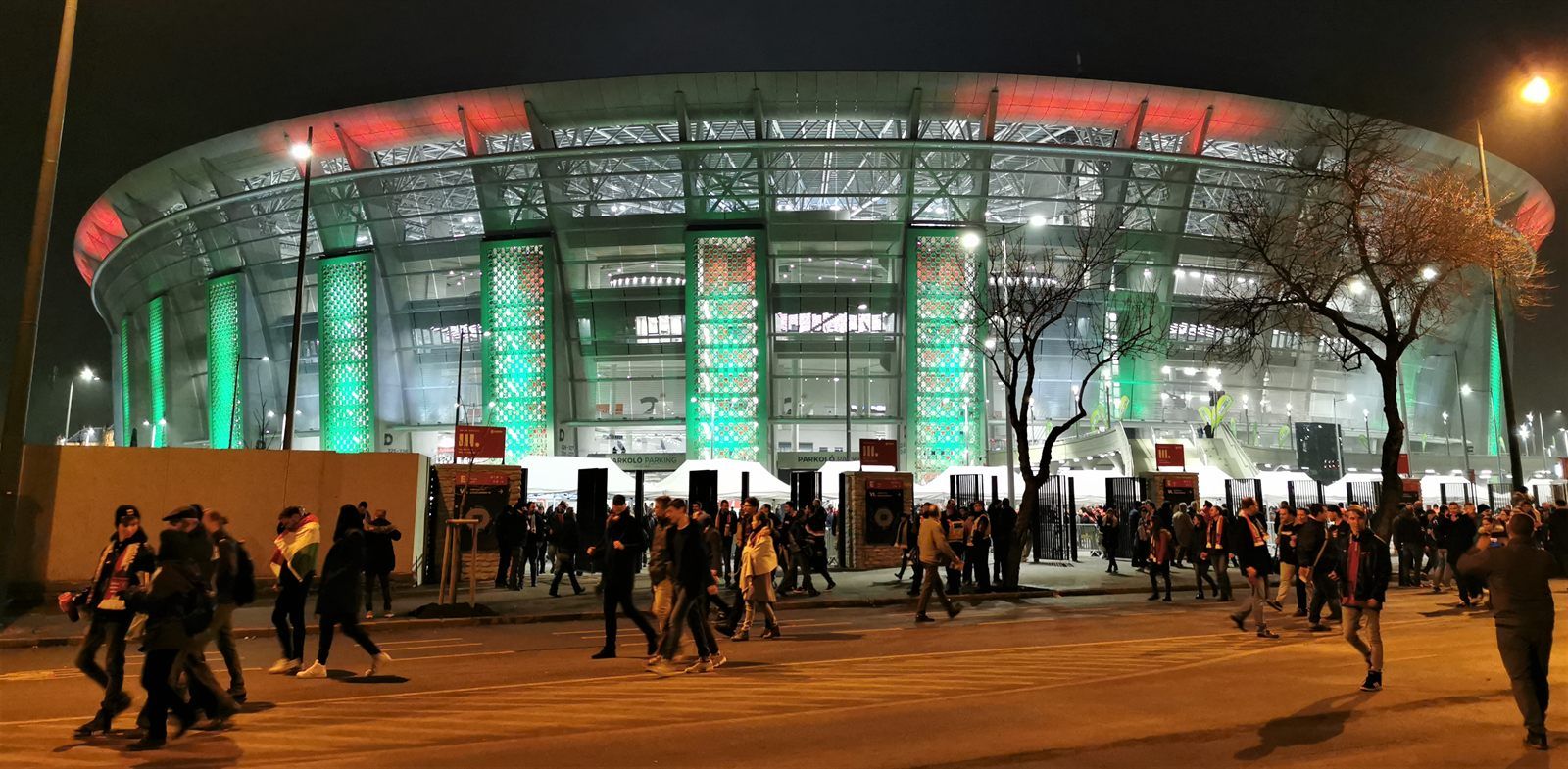
The final at Budapest's Puskas Arena ended 1-1 after extra time before PSG won the shootout 4-3. Kai Havertz gave Arsenal a sixth-minute lead. Ousmane Dembele equalised from the penalty spot in the 65th minute. Arsenal then missed twice in the shootout, through Eberechi Eze and Gabriel Magalhaes, while Nuno Mendes was PSG's only unsuccessful taker.
Those facts explain the result. They do not fully explain the argument that followed.
Arsenal came within a shootout of winning their first Champions League title. Yet the deeper question is whether Mikel Arteta's risk-averse plan gave his team the best chance to win, or merely the best chance to remain alive. That distinction also helps explain why Liverpool's decision to move on from Arne Slot matters: elite clubs are not judged only by isolated results. They are judged by whether their football model can keep generating control under pressure.
The Final in One Table
| Moment | What happened | Why it mattered |
|---|---|---|
| 6th minute | Kai Havertz scored for Arsenal | Arsenal gained the ideal platform for a counterattacking plan |
| 65th minute | Ousmane Dembele converted a penalty | PSG finally turned territorial pressure into an equaliser |
| After 120 minutes | The match remained 1-1 | Arsenal's defensive structure survived, but neither side found a winner |
| Shootout | PSG won 4-3 | Eze and Gabriel Magalhaes missed for Arsenal; Mendes missed for PSG |
| May 30, 2026 | PSG retained the trophy | Luis Enrique's side joined the small group of teams to defend the modern Champions League title |
The scoreline suggests a narrow contest. The underlying match numbers tell a more complicated story.
Arsenal Defended Well, but PSG Owned the Match
According to ESPN's match page, PSG had 75.3% possession and attempted 21 shots. Arsenal had 24.7% possession and seven attempts. PSG registered four shots on goal; Arsenal registered one.
| Match stat | PSG | Arsenal |
|---|---|---|
| Possession | 75.3% | 24.7% |
| Shot attempts | 21 | 7 |
| Shots on goal | 4 | 1 |
| Corners | 11 | 4 |
| Yellow cards | 2 | 4 |
Possession is not a moral virtue. A team can defend deep, attack space and win a major final without apologising for style. Arsenal also deserve credit for limiting PSG's clean chances for long stretches.
But there is a difference between defending with a threat and defending without an exit.
After Havertz's goal, Arsenal increasingly allowed PSG to circulate the ball in front of them. Their compact block protected the penalty area, but deeper recoveries left fewer options when possession changed hands. If the first outlet is isolated and the next pass is a hopeful clearance, the defensive phase begins again almost immediately.
That was the danger of Arteta's plan. Arsenal were not only accepting less of the ball. They were accepting fewer opportunities to ask PSG's centre-backs uncomfortable questions.
The Missed Opportunity Was Not Possession for Its Own Sake
The strongest criticism of Arsenal is not that they failed to dominate PSG. That would be unrealistic against one of Europe's most coordinated possession teams.
The criticism is that Arsenal stopped testing the vulnerability they had already exposed.
Havertz's early goal was evidence that PSG could be attacked before their structure settled. William Pacho and Marquinhos did not always look comfortable when Arsenal played through or beyond the first line. A more balanced plan did not require Arsenal to become reckless. It required them to preserve enough pressure to make PSG hesitate before committing numbers forward.
Instead, PSG could build attack after attack while managing the counterattacking risk. Even when Luis Enrique's side lacked their usual sharpness, they retained the initiative.
This is the tactical difference between protecting a lead and defending a lead for the rest of the night.
| Approach | Benefit | Cost |
|---|---|---|
| Compact defending with active counterpressure | Limits space while preserving attacking exits | Requires courage and coordinated pressing |
| Deep defending with selective counters | Can frustrate a stronger possession side | Leaves little room for error over a long match |
| Repeated clearances and low-risk restarts | Reduces immediate danger | Returns the ball and initiative to the opponent |
Arsenal nearly made the second approach work. The word "nearly" matters in a final.
Why PSG Could Win Without Their Best Performance
PSG did not need to produce a classic. They needed to remain patient enough to keep the match in their preferred territory.
That reflects Luis Enrique's broader achievement. PSG are no longer built around the assumption that a collection of famous attackers will eventually solve every problem. Their strongest identity is collective: the front line works, midfielders offer passing angles, full-backs advance, and the team keeps recovering the ball quickly enough to sustain pressure.
The important change is cultural as much as tactical. A team-first PSG can survive a final in which its combinations are slower and its chances are less spectacular than usual. The system does not collapse when the highlight plays disappear.
Luis Enrique also showed restraint after the equaliser. PSG continued to create more than Arsenal, but they did not open the match so dramatically that Arsenal could turn one transition into the winner. Control did not mean attacking at maximum speed every minute. It meant deciding when the risk was worth taking.
Arsenal's Next Step Is Harder Than Winning the League
Arsenal's domestic success deserves respect. Winning a league requires consistency over 38 matches, and the habits that protect points across a season are valuable.
But a one-off European final creates a different test. A team may need to recognise that the plan keeping it level is also shrinking its chance to win before penalties.
That is the unresolved question for Arteta:
Can Arsenal retain their defensive reliability while becoming more assertive when a major match briefly opens?
The answer is not to abandon structure. It is to develop more than one way to control a match. Sometimes control comes from possession. Sometimes it comes from pressing. Sometimes it comes from a compact block with credible counterattacking outlets. The problem begins when the opponent can predict that every Arsenal decision will reduce risk, even when the match is inviting a bolder choice.
Why the Arne Slot News Belongs in the Same Conversation
Hours around the final, Liverpool confirmed that Arne Slot had left his role as head coach with immediate effect. The club's statement also noted that he departed with a Premier League title and that the process to appoint a successor was under way.
That is a striking reminder of the expectations at the top of European football. Slot's title-winning first season did not make the next season irrelevant. Liverpool's fifth-place finish, reported by Bloomberg, turned the question from gratitude into direction.
The ESPN FC discussion naturally moved toward Andoni Iraola, whose work at Bournemouth has made him an attractive candidate. But Liverpool's official statement does not announce a successor. Iraola should be treated as a candidate, not a completed appointment.
The Liverpool Successor Test
Liverpool should evaluate the next coach against the demands of the job, not only the appeal of a name.
| Question | Why it matters |
|---|---|
| Can the coach restore pressing intensity? | Liverpool's best teams make opponents uncomfortable before they reach the final third |
| Can the coach improve recent signings? | Players such as Florian Wirtz need a structure that amplifies their strengths |
| Can the coach manage elite-club scrutiny? | Every press conference, selection and poor run carries more weight at Liverpool |
| Can the coach balance evolution with identity? | Liverpool need renewal without losing the aggressive habits that made them successful |
| Will the club protect the new coach during difficult stretches? | Tactical change needs institutional backing, especially after an expensive transition |
Iraola's Bournemouth work makes the discussion reasonable. His teams have shown energy, organisation and the ability to improve players. The harder question is whether those ideas scale under Liverpool's pressure, where a short run of poor results becomes a daily referendum.
What These Two Stories Share
PSG's title and Liverpool's coaching decision are not the same story, but they expose the same elite-level tension.
The best teams need a recognisable identity without becoming prisoners of it.
PSG won because Luis Enrique has built a model sturdy enough to handle an imperfect final. Arsenal lost after choosing a model that kept them close but gradually reduced their agency. Liverpool now need a coach who can restore their sense of initiative without pretending that intensity alone solves every problem.
At this level, control is not the same as caution.
Control is the ability to decide where the match is played, which risks are acceptable and when the team must take responsibility for changing the game.
FAQ
What was the score in the 2026 Champions League final?
PSG and Arsenal drew 1-1 after extra time on May 30, 2026. PSG won the penalty shootout 4-3.
Who scored in the PSG-Arsenal final?
Kai Havertz scored for Arsenal in the sixth minute. Ousmane Dembele equalised for PSG from the penalty spot in the 65th minute.
Why was Arsenal's strategy criticised?
Arsenal defended effectively but gave PSG most of the ball and generated little sustained attacking pressure after scoring. ESPN's match data lists Arsenal with 24.7% possession and one shot on goal.
Did Liverpool sack Arne Slot?
Liverpool officially announced that Slot departed his head-coach role with immediate effect. The club also said the search for a successor was under way.
Is Andoni Iraola Liverpool's new manager?
Not based on Liverpool's official statement. Iraola is a plausible and widely discussed candidate, but the club had not announced a successor at the time of publication.