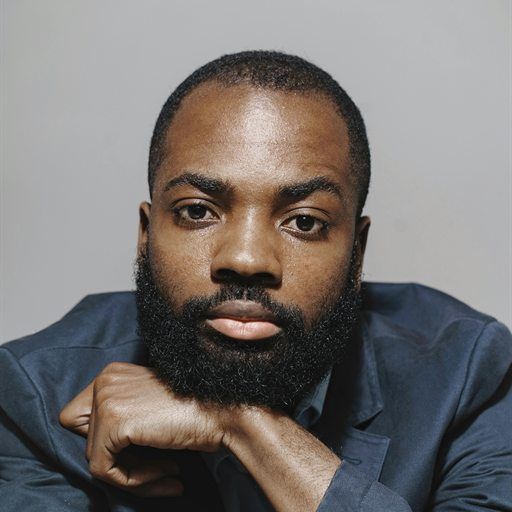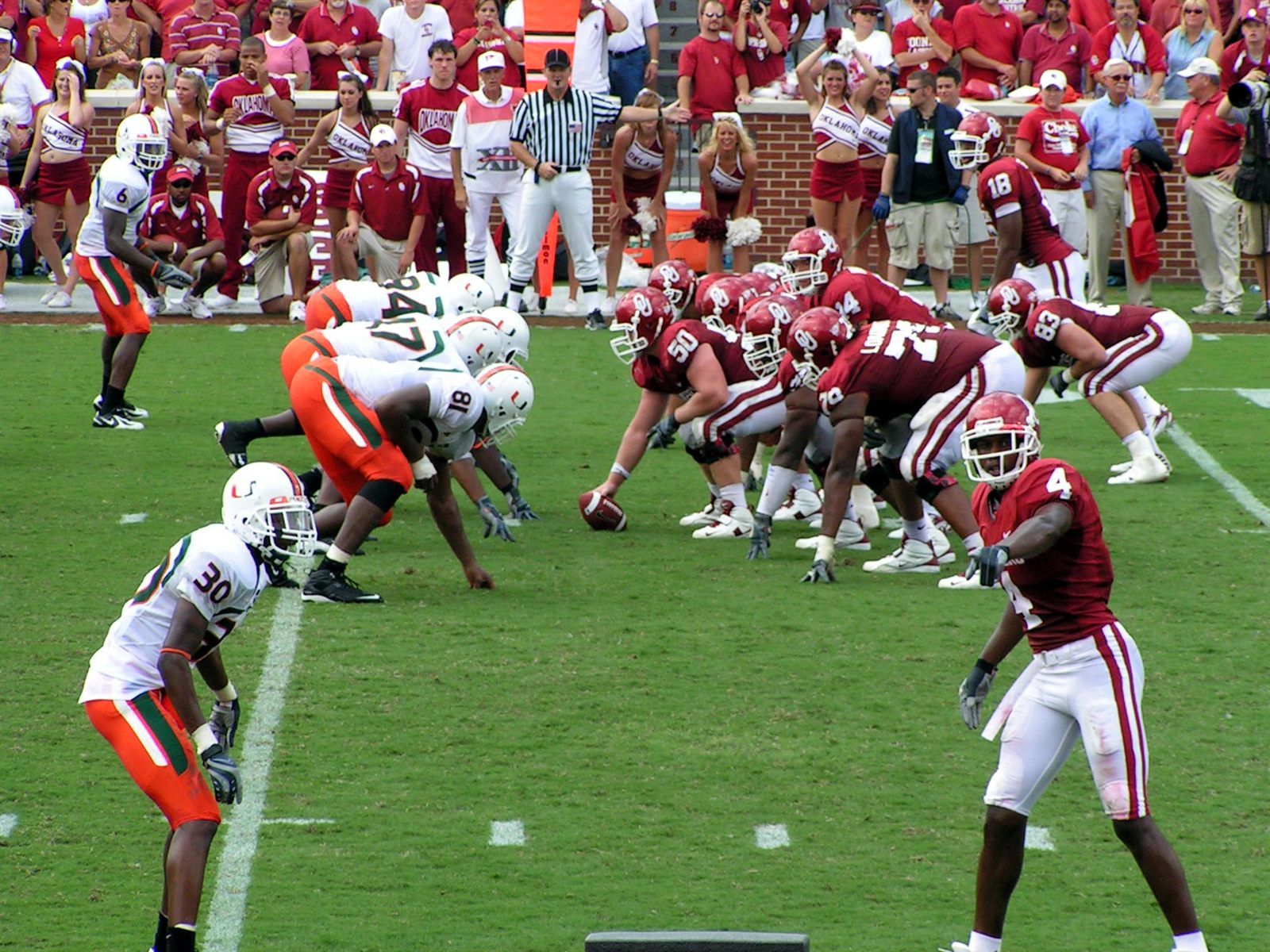
Mario Cristobal's answer to the modern college football problem is not subtle.
Recruit better people. Develop bigger bodies. Practice with more violence. Build through the line of scrimmage. And do it honestly enough that players stay even when the transfer portal gives them an escape hatch.
That was the core message of Cristobal's appearance on This is Football. The interview was framed around one question: how did Miami turn itself back into an NFL talent pipeline?
The timing makes the question fair. Miami's official site reported that nine Hurricanes were selected in the 2026 NFL Draft, including three first-round picks: Francis Mauigoa, Rueben Bain Jr. and Akheem Mesidor. One year earlier, Miami quarterback Cam Ward went No. 1 overall in the 2025 NFL Draft.
That is not a random spike. It is evidence of a program identity.
The Short Version
| Question | Answer |
|---|---|
| What is Cristobal's development thesis? | The "bigs" lead the way: offensive and defensive line development sets the tone. |
| Why is that harder now? | NIL and the transfer portal make it harder to stockpile talented depth for years. |
| What does Miami sell? | Playing time when earned, real development, and proof through draft results. |
| What made the 2026 draft class important? | Nine Miami players were selected, including three first-rounders. |
| What is the broader lesson? | In the portal era, programs cannot just collect talent. They must develop it quickly and honestly. |
Miami's Draft Results Changed the Conversation
The most obvious proof point is the draft.
| Draft year | Miami headline | Why it matters |
|---|---|---|
| 2025 | Cam Ward selected No. 1 overall | Miami produced the top pick and a high-profile quarterback development story |
| 2025 | Six Hurricanes selected | Miami said it was the program's most since 2006 |
| 2026 | Nine Hurricanes selected | A deeper class suggested the pipeline was not only about one quarterback |
| 2026 | Mauigoa, Bain and Mesidor selected in Round 1 | Miami's line-of-scrimmage philosophy translated to premium draft capital |
Cristobal did not present this as a finished product. He said Miami still has a long way to go. But the external signal is strong: NFL teams are buying what Miami is building.
"The Bigs Lead the Way"
The key phrase in the interview was Cristobal's belief that the "bigs" lead the way.
That matters because modern college football often gets discussed through quarterbacks, receivers, NIL collectives and transfer portal movement. Cristobal brought the conversation back to the oldest football truth: if you control the line of scrimmage, everything else has a chance to work.
His development model has four layers:
| Layer | What it means |
|---|---|
| Strength and nutrition | Build NFL bodies before draft evaluators ask for them |
| Practice competition | Make elite players face elite teammates every day |
| Position versatility | Teach linemen and front-seven players multiple roles |
| Character and work habits | Find players who can handle hard coaching without needing constant salesmanship |
That is why Cristobal talked about Mauigoa, Bain and Mesidor in similar language: monsters, relentless workers, daily competitors.
It may sound repetitive, but repetition is the point. A real pipeline does not rely on one outlier. It creates a standard that multiple players can meet.
Why the Portal Era Makes This More Difficult
The interview's most useful section may be the discussion about "de-recruiting."
In the older model, elite programs could sign waves of blue-chip players, bury some on the depth chart, and wait for them to mature. A five-star linebacker could be fifth on the depth chart and still stay because transferring was harder and less attractive.
That world is mostly gone.
NIL and the transfer portal changed the leverage. If a player is not playing, he has options. If a coach overpromises, the player can leave. If a program hoards talent, another program can recruit the unhappy third-stringer.
Cristobal's answer is not to soften the program. It is to be real.
That means:
- keep coaching hard;
- play players early if they are ready;
- maintain contingency plans if someone leaves;
- hire coaches who can develop, not just recruit;
- show proof through draft outcomes.
In the portal era, credibility is retention.
Miami's Advantage Is Practice-on-Practice Competition
Cristobal repeatedly returned to the idea that Miami's top players made each other better.
The three first-rounders did not develop in isolation. They practiced against high-level teammates every day. Cristobal described players seeking each other out in competitive periods because they wanted the best-on-best reps.
That kind of internal competition is difficult to fake.
| Development tool | Why it works |
|---|---|
| Elite daily matchups | Players see NFL-level traits before the draft process |
| Two-minute and pressure periods | Competition becomes situational, not just physical |
| Cross-training along the front | Players learn more roles and increase NFL value |
| Shared standard | Younger players see what a draftable process looks like |
This is where "talent development" becomes more than a slogan. The environment must force improvement.
Why Rueben Bain's Fall Became Fuel
The interview discussed Bain's draft slide and the idea that disrespect can become motivation.
Cristobal's response was balanced. He acknowledged that Bain can use outside slights as fuel, but he also emphasized that anger does not guarantee a single good NFL play. Bain still has to prove himself against better competition.
That is a mature way to talk about motivation.
Many players say they thrive on disrespect. Fewer understand that resentment is only useful if it turns into better habits. Cristobal framed Bain as someone with internal drive who will accept external fuel but still understands the work ahead.
That is the difference between a headline and a professional trait.
Mesidor Shows the Value of Versatility
Akheem Mesidor's development is another example of Miami's approach.
Cristobal described a player who changed positions, changed body types and played multiple alignments. That matters because NFL defensive fronts value multiplicity. A player who can play nose, three-technique, five-technique, nine-technique and even drop in certain looks gives a coordinator more answers.
The modern defensive lineman is not only a size profile. He is a menu of options.
That kind of versatility does not happen by accident. It requires strength work, technique teaching and a willingness to move a player around before he gets comfortable.
The NIL Lesson: Everybody Can Pay, So Development Matters More
Cristobal made a blunt point about NIL: now everybody can pay.
That is not a complaint so much as a new reality. If money is more broadly available, then the separator cannot only be money. Programs need something else.
For Miami, the pitch is development plus evidence.
The Hurricanes can point to Ward, Mauigoa, Bain, Mesidor and the broader draft classes. That makes the recruiting message more concrete: come here, work, compete, and there is recent proof the NFL will notice.
In that environment, development is not old-fashioned. It is the differentiator.
Why Cristobal Thinks College Football Is Flattening
The interview also touched on a broader college football shift: the old talent-hoarding advantage is shrinking.
Cristobal and host Kevin Clark discussed how elite depth used to stay concentrated at a few programs. Now, the third or fourth option at one powerhouse can transfer and become a major contributor somewhere else.
That does not mean talent is equal everywhere. It means the gap is narrower and less stable.
| Old model | New model |
|---|---|
| Stockpile five-stars for years | Players leave if blocked |
| Depth creates separation | Depth must be constantly rebuilt |
| Conference label carries more weight | Team-by-team line play matters more |
| Recruiting ranking predicts more | Development and retention matter more |
This is why Cristobal's phrase "adapt or die" fits the moment. College football is not waiting for programs to feel comfortable.
The Playoff Calendar Problem
Cristobal's playoff expansion comments were practical.
He did not offer a perfect format. He emphasized timing. If the playoff stretches too deep into January while the portal and roster-building calendar are already moving, teams are forced to prepare for high-stakes games while rebuilding the next roster.
That creates a strange tension:
- coaches want to compete for championships;
- players are entering the portal;
- staffs are recruiting replacements;
- NFL draft decisions are looming;
- the next season's roster is already forming.
His preferred instinct is simple: move the calendar up and reduce the collision between postseason football and roster construction.
That is not just self-interest. It is a real operational problem for every contender.
The 2026 Miami Question
The interview turned toward Miami's 2026 team, and Cristobal avoided big predictions.
That restraint is smart.
After a large draft class, the next team has to prove it can replace production, not just celebrate the pipeline. Cristobal's message was essentially "put it on tape." That may be less exciting than a bold claim, but it is the right posture after sending so much talent to the NFL.
The 2026 Hurricanes will be judged by whether the development machine keeps running.
Key questions:
- Can the next wave of linemen hold the line of scrimmage?
- Can the offense replace high-end draft talent?
- Can young players become leaders quickly?
- Can Miami stay physical while the roster turns over?
- Can the program sustain draft production without treating 2025 and 2026 as a one-time peak?
The Bigger Lesson for College Football
Cristobal's interview is not just about Miami.
It is about the new job description for major college football coaches.
They must recruit like salespeople, develop like NFL assistants, manage like general managers, retain like relationship builders and adjust like startup operators. The old model, sign more talent than everyone else and let time sort it out, is not enough.
Miami's recent draft output suggests one path forward:
- Build from the line of scrimmage.
- Hire teachers, not only recruiters.
- Play the best players when they are ready.
- Be honest enough that hard coaching feels credible.
- Use draft proof as the recruiting pitch.
- Prepare for portal losses without changing the program's identity.
That is the blueprint Cristobal described.
Conclusion
Mario Cristobal's Miami is not trying to win the modern college football era by pretending the old one still exists.
The program is adapting to NIL, the transfer portal and a flatter talent landscape by doubling down on something timeless: physical development, line-of-scrimmage play and daily competition.
The draft results give the message weight. Cam Ward went No. 1 in 2025. Nine Hurricanes were selected in 2026. Three went in the first round.
That does not guarantee Miami's next season. But it does prove the pipeline is real again.
In the new college football, collecting talent is not enough. The programs that win will be the ones that can still turn talent into professionals before the market pulls it apart.
FAQ
What was the main point of Mario Cristobal's interview?
Cristobal argued that Miami's NFL pipeline is built through people, physical development, line-of-scrimmage play, hard coaching and daily competition.
How many Miami players were selected in the 2026 NFL Draft?
Miami's official site reported that nine Hurricanes were selected in the 2026 NFL Draft.
Who were Miami's 2026 first-round picks?
Miami reported that Francis Mauigoa, Rueben Bain Jr. and Akheem Mesidor were selected in the first round.
Why does NIL make development more important?
Because players have more options. Programs can no longer rely on stockpiling depth for years. They need honest coaching, early opportunity when earned and visible development proof.
Is this article a transcript?
No. It is based on the interview transcript but independently restructured, fact-checked and expanded with context from Miami and ESPN sources.