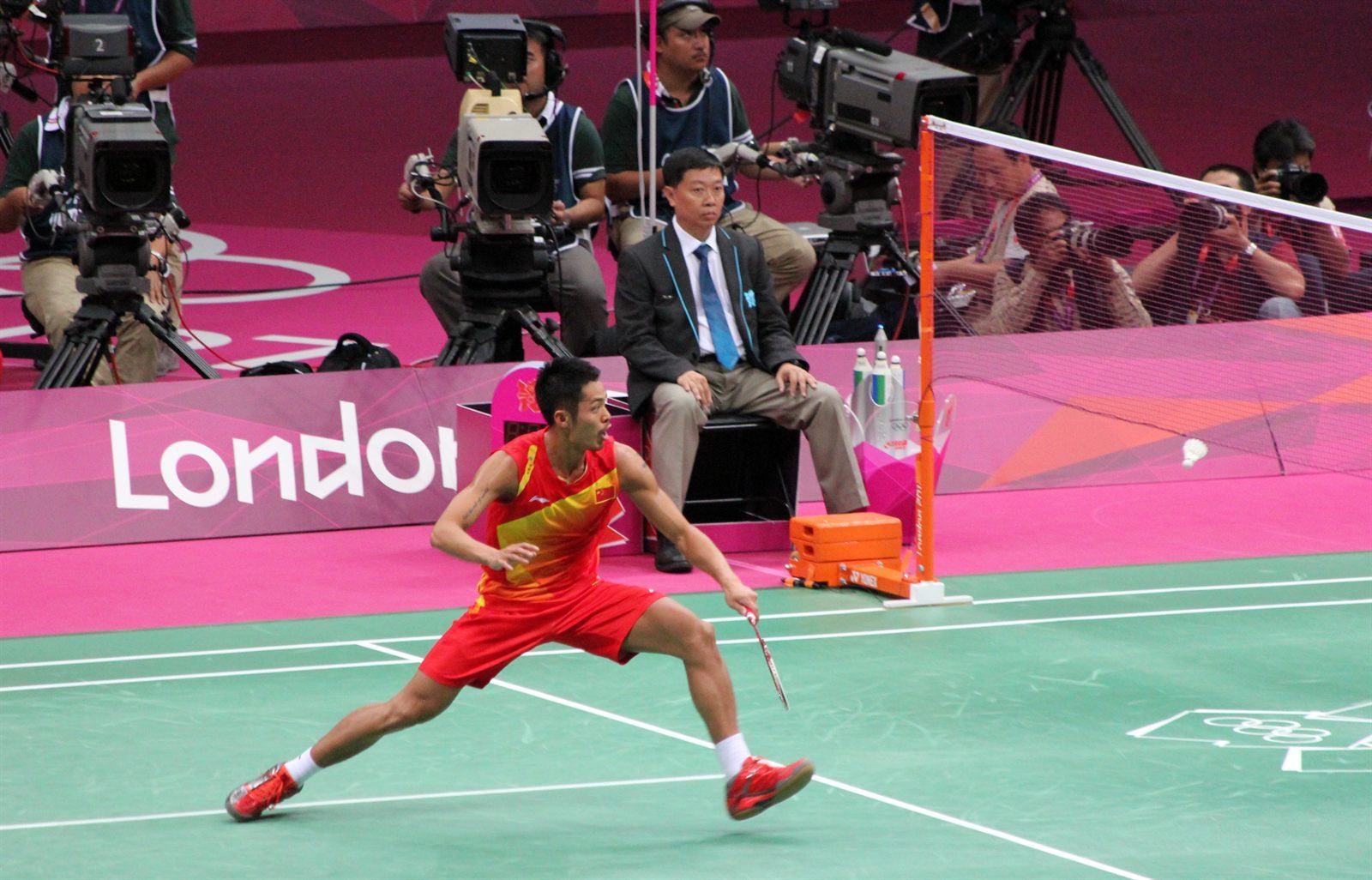
Lin Dan's career is easy to summarize badly: a genius appeared and dominated badminton.
Half of that is true. At his peak, Lin's first step, change of pace, left-handed attack, net pressure and competitive presence looked overwhelming. In the 2008 Beijing Olympic men's singles final, he defeated Lee Chong Wei 21-12, 21-8 in one of the most complete big-match performances badminton has seen. BWF's Olympic channel wrote after the match that Lin had proved he was the best player in the world at the time. BWF Olympics: Beijing 2008 Lin Dan
But calling him only a genius hides the more useful story.
The better question is: how did Lin Dan turn early volatility, Athens 2004 failure and elite rivals into one of the most complete men's singles careers in badminton history?
His greatness was not the absence of flaws. It was the conversion of flaws into weapons.
The Short Answer
| Dimension | Key fact | What it means |
|---|---|---|
| Olympic dominance | Men's singles gold in 2008 and 2012 | A rare Olympic title defense in men's singles |
| World Championship depth | Five men's singles world titles | His major dominance was not one tournament |
| Complete title map | Olympic, Worlds, World Cup, Thomas Cup, Sudirman Cup, All England, Asian Games, Asian Championships and year-end Finals titles | The "Super Grand Slam" made his resume unusually complete |
| Technical model | Left-handed attack, change of pace, net control, defense-to-attack | He was more than a hard smasher |
| Mental growth | From Athens first-round exit to Beijing champion | Pressure management became the key transformation |
| Era rivals | Taufik Hidayat, Peter Gade, Lee Chong Wei, Chen Long and others | Greatness was sharpened by elite opposition |
| Post-career recognition | Elected to BWF Hall of Fame with Lee Chong Wei in 2023 | The Lin-Lee era became badminton public memory |
ESPN's retirement report summarized the headline resume: two Olympic gold medals and five world titles. ESPN: Lin Dan retires
Career Timeline
| Year | Event | Why it matters |
|---|---|---|
| 1983 | Born in Longyan, Fujian | A left-handed attacking talent in China's badminton system |
| Early 2000s | Entered top national-team competition | Talent met discipline and selection pressure |
| 2004 | Lost in the first round at the Athens Olympics | World No. 1 status did not protect him from Olympic pressure |
| 2005 | Beat Taufik Hidayat at the Sudirman Cup, then lost to him in the World Championships final | He could beat elite rivals, but still needed big-final stability |
| 2006 | Won his first World Championships men's singles title | Moved from contender to world champion |
| 2008 | Beat Lee Chong Wei to win Beijing Olympic gold | Completed the Athens-to-Beijing transformation |
| 2010 | Won Asian Games singles gold in Guangzhou | Added another major title category |
| 2011 | Beat Lee Chong Wei in a classic World Championships final | The Lin-Lee rivalry reached a historic level |
| 2012 | Beat Lee again to defend Olympic gold in London | Became the first man to retain the Olympic singles title |
| 2020 | Announced retirement | Ended a two-decade competitive arc |
| 2023 | Elected to BWF Hall of Fame | Recognized alongside Lee Chong Wei as an era-defining figure |
BWF confirmed in 2023 that Lin Dan and Lee Chong Wei were elected to the BWF Hall of Fame together. BWF: Lin Dan, Lee Chong Wei elected to Hall of Fame
Athens 2004 Was the Crucial Crack
At the 2004 Athens Olympics, Lin Dan entered as world No. 1 and top seed. He lost in the first round to Singapore's Ronald Susilo.
That was not just an early defeat.
It showed him that ranking, talent and normal tour dominance do not automatically translate into Olympic success. The Olympics magnify waiting, pressure, venue rhythm, public expectation and single-elimination danger.
Early Lin had elite ability. Athens taught him that elite ability also needs elite order.
| What Athens exposed | What he later had to build |
|---|---|
| Emotion could affect decision-making | Stable execution on pressure points |
| Attack instinct could become over-attack | Ability to control before striking |
| Olympic pressure was different | Point-by-point routine under stress |
| No strong plan for bad momentum | Tactical discipline while trailing |
Athens was not just a blemish. It was the correction point before Super Dan became possible.
Taufik Hidayat Forced Lin to Think Slower
Taufik Hidayat was one of the essential early obstacles in Lin's career.
In 2005, Lin beat Taufik in the Sudirman Cup, but Taufik defeated him in the World Championships final. The matchup mattered because Taufik was not intimidated by speed or attack alone.
His backhand, net craft, timing and big-match temperament showed Lin that sharpness was not enough.
| Pressure from Taufik | Lin's later answer |
|---|---|
| Fine net touch | Better front-court control |
| Big-match experience | Lower-risk pressure-point choices |
| Rhythm variation | Stronger change of pace and defense-to-attack |
| Comfort in attacking exchanges | Attack became more precise, sudden and connected |
Opponents like Taufik are valuable because they do not let a talented player stay comfortable. They force a redesign.
Beijing 2008: Super Dan Completed
The 2008 Beijing Olympics were the central turning point.
Four years after Athens, Lin faced another Olympic pressure test. This time, with a home crowd and huge expectation, he did not collapse into rushed attack. Against Lee Chong Wei, he controlled speed, pressure, line selection and defense with extraordinary clarity.
| Match area | Lin's 2008 final performance | Result |
|---|---|---|
| Start | Raised the speed immediately | Pushed pressure back onto Lee |
| Rear-court attack | Hit with both power and placement | Lee struggled to defend comfortably |
| Net play | Took the shuttle early and forced lifts | Created the conditions for attack |
| Defense | Lifted and blocked with quality | Lee could not finish points easily |
| Emotion | Fired up but not tactically chaotic | Energy served the plan |
That is why the match still matters. It did not only show force. It showed maturity: aggression with structure.
London 2012: Why Defending Was Harder
After 2008, Lin had already proved he could win Olympic gold.
London 2012 asked a harder question: could he do it again when everyone knew exactly who he was?
Yes.
In the 2012 London Olympic final, Lin again faced Lee Chong Wei and won 15-21, 21-10, 21-19. ESPN's results page and match report record the score and note that Lin became the first man to retain the Olympic badminton singles title. ESPN London 2012 results, ESPN: Lin Dan repeats in singles
London was different from Beijing. Beijing was domination. London was survival. Lin lost the first game, adjusted in the second, and held the final game by the narrowest margins.
That made his legacy more complete. He could crush a final, and he could rescue one.
Why Lin Needed Lee Chong Wei
Lin would have been great without Lee Chong Wei.
But without Lee, Lin's greatness would have less drama and less definition.
Lee was one of the most consistent men's singles players ever: fast, resilient, technically clean and mentally durable across seasons. To beat that kind of player repeatedly in the biggest matches, Lin needed more than highlights. He needed solutions.
| Area | Lin Dan | Lee Chong Wei |
|---|---|---|
| Main image | Big-match ceiling, killer instinct, title conversion | Long-term consistency, speed, sustained elite level |
| Olympic story | Beat Lee in 2008 and 2012 finals | Three Olympic silver medals after repeated gold-medal pushes |
| Technical feel | More likely to suddenly raise intensity at decisive moments | Maintained an extremely high baseline throughout matches |
| Shared value | Together they made men's singles more dramatic and marketable | The Lin-Lee rivalry became one of badminton's defining modern stories |
BWF inducting both men into the Hall of Fame in the same year says a lot about their shared historical role.
Lin Dan Was Not Just a Smasher
Casual viewers remember the jump smashes.
But Lin's real genius was that he could create the conditions for those attacks. He did not simply hit hard from neutral positions. He manipulated rhythm, drew lifts, defended without panic, and attacked at the moment when the opponent's base was unstable.
| Technical module | Lin's strength | Why it mattered |
|---|---|---|
| Left-handed attack | Uncomfortable angles and lines | Forced right-handed opponents into extra adjustments |
| Change of pace | Sudden acceleration after slower exchanges | Kept opponents off rhythm |
| Net play | Early contact, tight net shots, forced lifts | Made rear-court attack possible |
| Defense-to-attack | Could turn defense into pressure quickly | Raised the cost of attacking him |
| Big-match rhythm | Knew when to raise intensity | Finals often turned on a few sudden points |
"Super Dan" was not a nickname for power alone. It was a name for a complete pressure system.
The Super Grand Slam
Lin's resume is often summarized as winning almost everything that mattered.
Media outlets have used "Super Grand Slam" to describe his collection of Olympic Games, World Championships, World Cup, Thomas Cup, Sudirman Cup, All England Open, Asian Games, Asian Championships and year-end Finals titles. NDTV reported in 2011 that Lin won the BWF Super Series Finals and completed badminton's first "Super Grand Slam." NDTV: Lin Dan wins first Super Grand Slam
That phrase matters because it looks at structure, not just total count.
| Title category | What it tests |
|---|---|
| Olympics | Four-year pressure and low margin for error |
| World Championships | Single-event world title quality |
| Thomas Cup / Sudirman Cup | Team responsibility and national-system strength |
| All England Open | Historic prestige and tour performance |
| Asian Games / Asian Championships | Elite Asian badminton depth |
| Year-end Finals | Late-season fitness and state management |
Lin's achievement was not only that he had one perfect night. It was that he found answers across formats, calendars and pressure types.
Why Late-Career Decline Does Not Shrink Him
Lin declined in the later years of his career.
That is normal. Speed drops. Recovery slows. Younger players learn the patterns. In 2020, he retired. Reports still described him as one of the greatest badminton players ever because the full career had already answered the important questions.
A fair evaluation separates layers:
| Layer | Lin's answer |
|---|---|
| Highest peak | Beijing 2008 showed near-perfect big-match suppression |
| Sustained major value | Five world titles and repeated Olympic finals |
| Rivalry history | Lee, Taufik, Gade, Chen Long and others gave the era context |
| Resume completeness | Multiple categories of major titles |
| Cultural impact | "Super Dan" became a global badminton symbol |
Decline is part of a career arc. It does not erase the peak.
How to Watch Lin Dan
If you rewatch classic Lin matches, do not wait only for smash highlights.
Watch these details:
| Detail | What to observe |
|---|---|
| Pace changes | When does he suddenly accelerate, and when does he slow the rally? |
| Net quality | How does he force opponents to lift? |
| The shot before the smash | The winner is often created one stroke earlier |
| Defense-to-attack | How does he regain initiative after being under pressure? |
| Pressure-point choices | Does he choose quality and margin when the score gets tight? |
Seen this way, Lin becomes more than a powerful jumper. He becomes a complete athlete who used speed to create time gaps, net play to create attack, defense to survive danger, and big-match intelligence to finish.
FAQ
Was Lin Dan naturally unbeatable?
No. He had early volatility, an Athens first-round exit and painful lessons against elite rivals. Super Dan was built through correction.
Was he only an attacking player?
No. Attack was the obvious label, but his net play, defense-to-attack, pace control and pressure-point management were just as important.
Does Lee Chong Wei's lack of Olympic gold make him far inferior?
No. Lin's major-title record is stronger, but Lee's consistency and long-term world-class level were extraordinary. Their rivalry elevated both.
Is Lin Dan the badminton GOAT?
Many people place him first because of two Olympic golds, five world titles, the Super Grand Slam and his era-defining influence. GOAT debates are subjective, but Lin is clearly one of the most complete and representative men's singles champions in badminton history.
Conclusion
The most useful part of Lin Dan's story is not that he was talented.
Talent was only the beginning. Super Dan was created by Athens, by Taufik, by Lee Chong Wei, by China's badminton system, and by the repeated need to repair what pressure exposed.
He had sharpness, but also order. He had emotion, but learned management. He had smashes, but also the setup before the smash. He had dominant finals and survival finals.
So the idea that "a god is not born" fits Lin Dan well.
Not because he lacked talent, but because talent without failure, discipline, rivals and structure never becomes historical greatness.
Super Dan did not automatically change from low resolution to high definition.
He sharpened himself frame by frame.