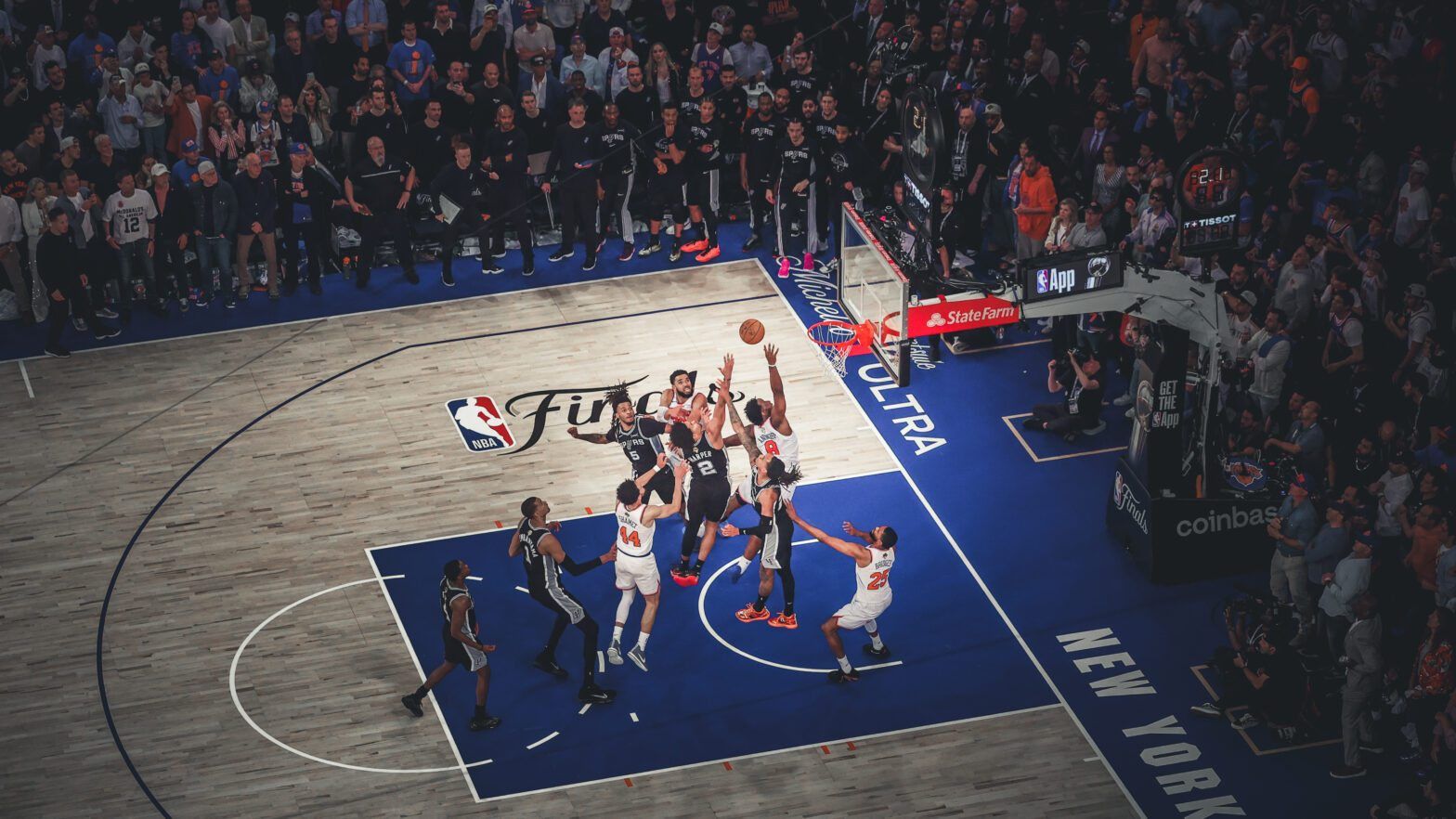
The New York Knicks beat the San Antonio Spurs 107-106 in Game 4 of the 2026 NBA Finals, taking a 3-1 series lead.
That sentence does not capture the scale of what happened.
San Antonio led by 29 points. The Spurs led 76-49 at halftime. Then the Knicks dragged the game back possession by possession, and OG Anunoby tipped in Jalen Brunson's miss with 1.2 seconds left to complete one of the most dramatic comebacks the Finals have ever seen.
The source video frames the loss as a Spurs humiliation, with heavy criticism of Victor Wembanyama, De'Aaron Fox and the coaching staff. The emotion is understandable. But a publishable analysis should go deeper than blame.
The real question is how a team loses a 29-point Finals lead, and how the opponent stays organized enough to steal it.
The Verified Game 4 Picture
| Category | What happened |
|---|---|
| Game | 2026 NBA Finals, Game 4 |
| Venue | Madison Square Garden, New York |
| Final score | Knicks 107, Spurs 106 |
| Series | Knicks lead 3-1 |
| Largest deficit erased | 29 points |
| Halftime score | Spurs 76, Knicks 49 |
| Winning play | OG Anunoby putback with 1.2 seconds left |
| Knicks leaders | Jalen Brunson: 36 points, 7 assists; Anunoby: 33 points, 7 made threes |
| Spurs leader | Victor Wembanyama: 24 points, 13 rebounds |
| Historical note | NBA.com called it the largest comeback in NBA Finals history |
The Knicks did not control most of the game. They controlled the part that mattered most.
That is why this game will live longer than a normal one-point finish.
How the Comeback Happened
| Stage | Game state | Why it mattered |
|---|---|---|
| First half | Spurs built a 76-49 lead | San Antonio's shooting and early energy looked overwhelming |
| Third quarter | Knicks raised defensive pressure | The Spurs' rhythm started to turn into harder shots |
| Early fourth | Brunson kept attacking | New York turned a chase into a pressure test |
| Final seconds | Fox attacked quickly and was blocked by Anunoby | San Antonio gave New York one more live possession |
| 1.2 seconds left | Anunoby tipped in Brunson's miss | New York took the lead at the only moment it needed |
A comeback this large is never caused by one play.
Anunoby's putback finished it. But the collapse was built earlier: rushed offense, missed chances to slow the game, late free-throw pressure, uneven shot selection and a failure to keep Brunson from dictating the final stretch.
Wembanyama's Box Score Was Not Enough
Wembanyama finished with 24 points and 13 rebounds. That is not a bad line.
But the Finals standard is different, especially when a team blows a 29-point lead. The question is not whether the star produced. It is whether he stabilized the game when the opponent's run became dangerous.
| Question | Why it mattered |
|---|---|
| Could Wembanyama create reliable second-half offense? | A leading team needs safe possessions, not just highlight plays |
| Could he punish New York inside? | Deep catches and free throws slow the game down |
| Could he convert late free throws? | AP reported key misses that became part of the collapse |
| Could he control the defensive tone for 48 minutes? | New York's late drives and rebounds changed the feel of the game |
This does not mean Wembanyama failed as a franchise player. It means he got a Finals lesson.
When a young superstar has a huge lead, his job is not only to score. His job is to make the game boring, slow and predictable. San Antonio never found that version of the game.
Fox's Late Decision Was a Basketball Error, Not a Character Trial
The source video attacks Fox harshly. The better way to discuss the play is through clock and risk.
NBA.com's live recap described Fox grabbing the ball in a full sprint with under 10 seconds left, attacking the rim and having the layup blocked by Anunoby. That sequence gave New York the final possession.
The problem was not only that the layup failed.
| Decision | Risk |
|---|---|
| Attacking quickly | Left time for New York |
| Choosing speed over clock control | Removed San Antonio's biggest late-game advantage |
| Driving into pursuit defense | Created a block-and-scramble situation |
| Not forcing a foul, timeout or reset | Let the game become chaotic |
When a team is leading late, time is more valuable than pace.
Fox's choice reopened the game. Anunoby's block and later putback punished it.
The Spurs Lost the Low-Variance Game
The most useful criticism from the source video is about shot selection.
When a team trails, it needs volatility: quick threes, long rebounds, transition chances and chaos.
When a team leads big, it needs the opposite: clock, paint touches, free throws, fewer long rebounds and fewer live-ball mistakes.
San Antonio did not fully shift into that low-variance mode.
The Spurs' hot first half made the game feel easier than it was. But Finals leads are not protected by continuing to chase the same rush. They are protected by changing the texture of the game.
That is often the hardest lesson for a young team: building a lead and closing with a lead are different skills.
Why the Knicks Deserved the Comeback
New York did not simply wait for San Antonio to panic.
Brunson scored 36 points and added seven assists. He was the pressure engine. Even when the Knicks were far behind, he kept forcing San Antonio to guard deep into the clock.
Anunoby's performance was bigger than one tip-in. He scored 33 points, hit seven threes, blocked Fox's late layup and then made the winning play. That is two-way star impact, not just a role-player outburst.
| Knicks contributor | Impact |
|---|---|
| Jalen Brunson | Created the comeback pressure with scoring and playmaking |
| OG Anunoby | Elite shooting, late defense and the winning putback |
| Mitchell Robinson | Gave New York second-chance pressure and rim presence |
| Josh Hart and supporting wings | Added physicality, rebounding and transition stress |
| Coaching adjustments | Raised defensive aggression after the first-half collapse |
The Knicks earned the chaos.
You do not erase 29 points in the Finals with luck alone. You need defensive stops, shot-making, offensive rebounding, crowd energy and enough belief to keep playing after the scoreboard says the game should be over.
What Game 4 Means for the Series
A 3-1 lead is not mathematically final, but it changes everything.
The Knicks are now one win from their first championship since 1973. The Spurs are still alive, but they must solve both the basketball problems and the emotional damage of losing a game they had essentially controlled.
| Spurs Game 5 problem | Knicks Game 5 opportunity |
|---|---|
| Stabilize Wembanyama's second-half role | Keep Brunson attacking late switches |
| Reduce Fox's late-game risk | Force San Antonio into time-pressure decisions |
| Control shot selection with a lead | Turn every Spurs miss into transition pressure |
| Use clock and paint touches better | Keep Anunoby involved as shooter and defender |
| Recover mentally from the collapse | Turn the 3-1 lead into urgency, not comfort |
San Antonio's first half showed its ceiling. New York's comeback showed its resilience.
The Finals now ask which trait travels better into Game 5.
The Bottom Line
Knicks 107, Spurs 106 will be remembered because it had everything: a 29-point lead, a historic comeback, Brunson's push, Anunoby's explosion, Wembanyama's pressure, Fox's late decision and the final 1.2-second putback.
But the cleanest lesson is simple.
New York did everything it still had time to do right. San Antonio did too many things a leading team cannot afford to do wrong.
In the Finals, a 29-point lead is not a win.
The last 1.2 seconds still count.
FAQ
What was the final score of Knicks vs Spurs Game 4?
The Knicks beat the Spurs 107-106 in Game 4 of the 2026 NBA Finals.
Is this the largest comeback in NBA Finals history?
NBA.com described it as the largest comeback in NBA Finals history. The Knicks erased a 29-point deficit.
Who made the winning shot?
OG Anunoby tipped in a missed Jalen Brunson shot with 1.2 seconds left.
What were Brunson and Anunoby's numbers?
Brunson scored 36 points with 7 assists. Anunoby scored 33 points and made seven three-pointers.
How did Wembanyama play?
Wembanyama had 24 points and 13 rebounds, but New York limited his second-half impact and his late missed free throws became part of the Spurs' collapse.
Can the Spurs still win the series?
They can, but they now trail 3-1. Game 5 requires better late-game clock management, steadier shot selection and a more reliable second-half offensive structure around Wembanyama.